
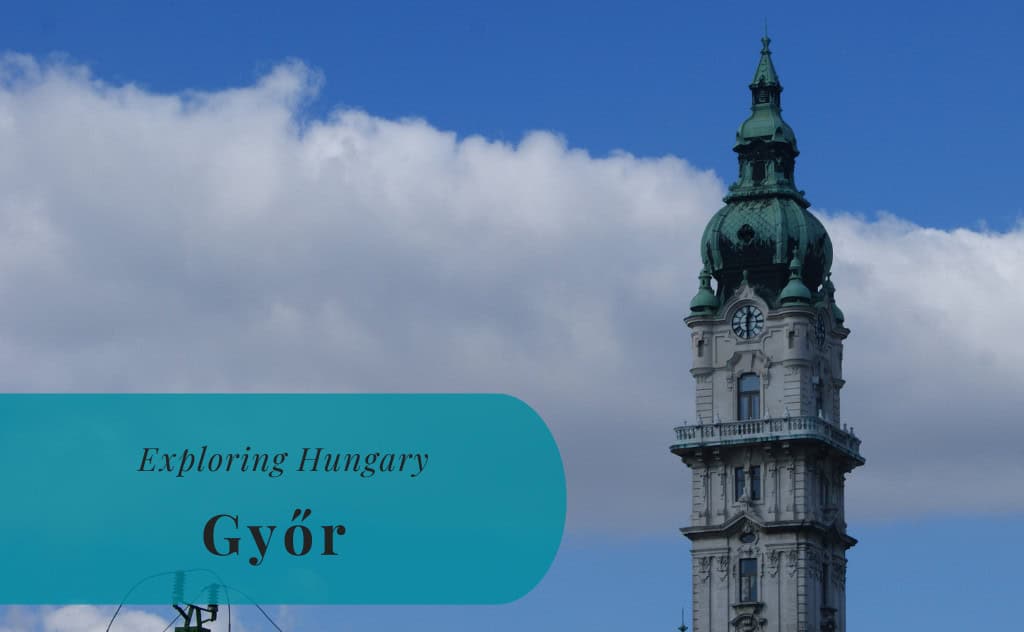
Győr | Exploring Hungary
Győr is a city in western Hungary and the county seat of Győr-Moson-Sopron County. It is situated at the confluence of three rivers: the Moson-Danube, the Rába, and the Rábca. With a population of approximately 132,000 residents, it is a key economic and cultural hub in the region. The city is a major center for the automotive industry and is home to the Audi Hungaria factory. Győr is located about 120 kilometers west of Budapest, 125 km from Vienna, and 85 km from Bratislava.
The city’s character is defined by its preserved Baroque city center and its industrial importance. The historic old town, which is centered around Káptalan Hill and Széchenyi Square, contains numerous listed buildings and monuments. This historical core exists alongside the modern industrial zones that drive the city’s economy. The presence of the rivers has also shaped the city’s layout and identity, giving it the informal title “the city of rivers.”



A Short History of Győr
The history of Győr reflects its strategic importance as a Roman outpost, a royal bishopric, and a key border fortress between Western Europe and the Ottoman Empire. Its development was marked by periods of conflict, followed by extensive reconstruction that gave the city its current architectural character.
Roman Foundations and Royal Seat
The history of Győr stretches back to ancient times when the area was first settled by Celtic tribes. Later, the Romans established a fortress and town called Arrabona around 10 AD. The settlement was located on the important Amber Road trade route. After Roman rule, various Germanic tribes and Avars passed through the area. By the 10th century, Hungarian tribes settled the region, and King Stephen I established a bishopric here in the early 11th century, solidifying Győr’s importance as a religious center.
Border Fortress and Ottoman Wars
The city endured numerous invasions throughout its history and was almost entirely destroyed by Mongol invaders in 1241. During the Ottoman occupation of Hungary, Győr became a crucial border fortress for the Habsburg Empire. It was known as the “Iron Gate” due to its defensive strength. The Ottomans eventually captured the fortress in 1594, but Habsburg forces under Archduke Maximilian retook it in 1598. This event was a significant military victory for the Habsburgs.
Baroque Reconstruction and Industrialization
Following the withdrawal of the Ottomans from the region, Győr experienced a major rebuilding phase in the 17th and 18th centuries. This process transformed it into a prominent Baroque city, with many of its key buildings constructed during this time. The city’s modern development accelerated in the 20th century, especially after the establishment of the Audi factory in 1993. This facility grew to become one of Europe’s largest engine production plants and is central to the city’s contemporary economy.



Things to Do and See
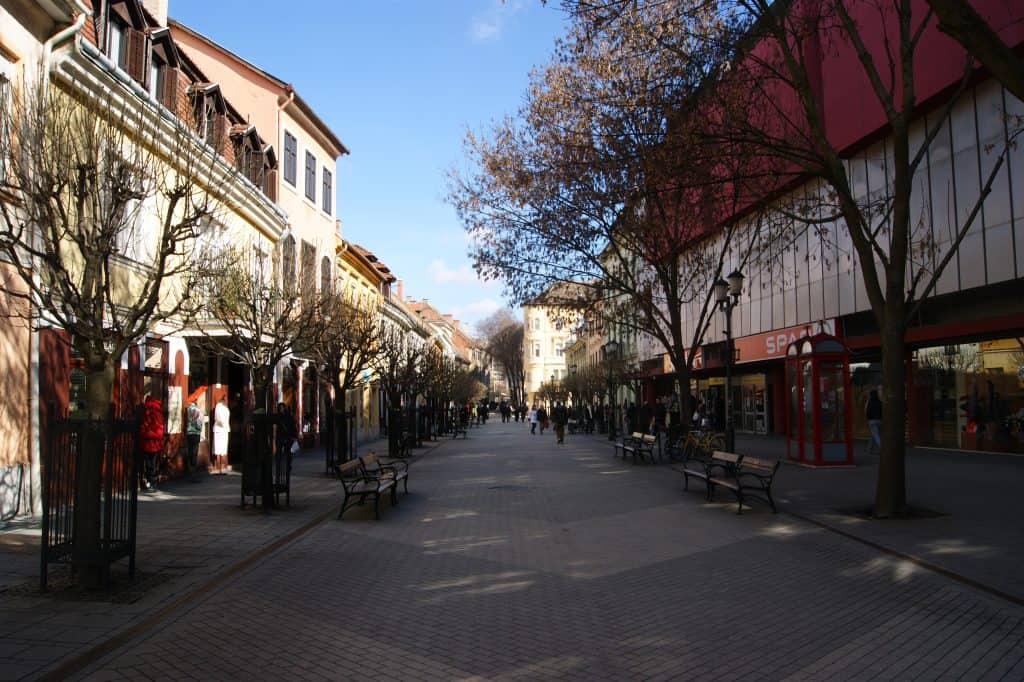
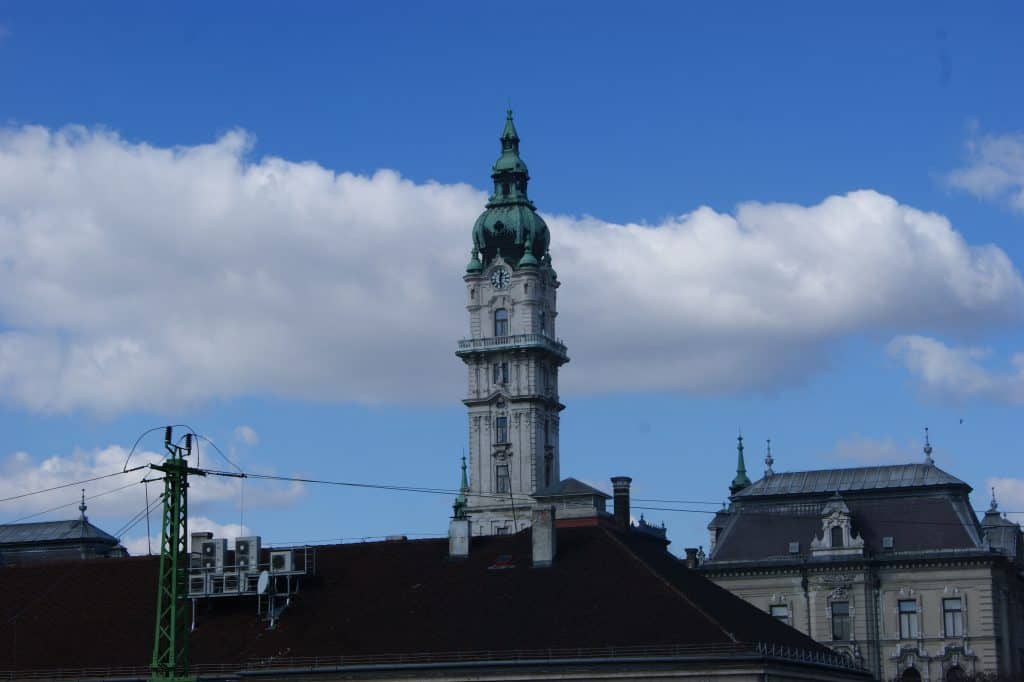
Győr’s sights are concentrated in its well-preserved Baroque Old Town. The area is known for its historic churches, palaces, and public squares. The city’s location at the confluence of three rivers also adds to its specific character.
Győr Basilica
The Győr Basilica (Cathedral Basilica of the Assumption of Our Lady) stands on Káptalandomb (Chapter Hill), the highest point in the historic center. Its origins trace back to the 11th century. The current structure is a blend of Romanesque, Gothic, and Baroque styles. The basilica is a major pilgrimage site because it houses two important relics. These are the Herm of Saint Ladislaus, a reliquary containing the skull of King Ladislaus I, and the Miraculous Icon of the Weeping Virgin Mary.
Benedictine Church of St. Ignatius of Loyola
The Benedictine Church of St. Ignatius of Loyola (Bencés templom) is a primary example of Baroque architecture in Győr. It was built between 1634 and 1641 by Italian architect Baccio del Bianco. The church’s design was inspired by the Gesù Church in Rome. Its interior features rich Baroque frescoes by the artist Paul Troger. The adjacent Benedictine monastery also houses a historic library with over 60,000 volumes.
Széchenyi Tér
Széchenyi Square (Széchenyi Tér) is the main square of Győr’s historic Old Town. This Baroque square is surrounded by preserved 17th and 18th-century buildings. Notable structures include the Apatúr House, which houses the János Xántus Museum, and the historic Pharmacy Museum. The square is dominated by the Mary Column, a monument erected in 1686 to commemorate the recapture of Buda from the Ottoman Empire. The square is a popular meeting point and hosts various events.
Bishop’s Castle and Episcopal Palace
The Bishop’s Castle and Episcopal Palace (Püspökvár és Püspöki Palota) complex sits atop Káptalan Hill, adjacent to the Basilica. The castle dates back to the 13th century and has been the residence of the Bishops of Győr for centuries. The Bishop’s Tower, a medieval residential tower, is the oldest surviving part of the structure. A viewing platform on the tower offers panoramic views of the city and the confluence of the rivers. The palace itself showcases a blend of Gothic and Baroque architectural styles.
János Xántus Museum
The János Xántus Museum (Xántus János Múzeum) is a museum showcasing the history and culture of Győr and the surrounding region. It is housed in the historic Apatúr House on Széchenyi Square. The museum’s collections span archaeology, ethnography, and local history. It features exhibits on the Roman town of Arrabona and the city’s industrial past. A key highlight is the “Iron Rooster” (Vaskakas), a 17th-century weather vane that is a symbol of the city.
Carmelite Church
The Carmelite Church (Karmelita templom) is another important Baroque landmark, located on the bank of the Rába river. Built in the early 18th century, its design is attributed to the Carmelite friar Athanasius Wittwer. The church has an elliptical dome and a single tower. Its most notable feature is the black Loretto Chapel, which contains a statue of the Virgin Mary. The adjacent monastery building is now a hotel.
Zichy Palace
The Zichy Palace (Zichy-palota) is a Rococo-style palace located in the historic center. Built in 1775, it is known for its ornate corner balcony, which is a key example of the city’s architectural details. The palace was once the residence of the Zichy family. Today, the building is used for various purposes, including hosting weddings and cultural events. It is a well-preserved example of the aristocratic residences from the 18th century.
Rába Quelle Spa
The Rába Quelle Spa, Thermal and Adventure Bath is a modern wellness complex located on a peninsula at the confluence of the Moson-Danube and Rába rivers. The spa utilizes the city’s thermal waters, which are certified as medicinal. The complex includes numerous indoor and outdoor pools, water slides, and a large sauna area. It is one of the city’s primary recreational facilities, open year-round for both residents and visitors.
Sports in Győr
Győr has an active sports culture with a strong tradition in team sports, especially handball. The city’s professional clubs have achieved national and European success, fostering a strong sense of local identity. The city’s location on the rivers also provides opportunities for water-based recreational activities.
Football
Football holds a significant place in Győr’s community. The city’s primary football club has a long history and commands local loyalty. Matches are social events that unite generations of fans and foster a strong sense of belonging. The club’s performance often draws significant local attention and is a key part of the city’s sporting identity.
Győri ETO FC
The city’s most prominent football club is Győri ETO FC. Founded in 1904, the club has a rich history, having won the Hungarian League (Nemzeti Bajnokság I) four times. They have also won the Hungarian Cup four times and have participated in European competitions. They play their home matches at the ETO Park, a modern stadium with a capacity of 16,000. The club currently competes to return to the top flight of Hungarian football.
Handball
Handball has an exceptionally strong and successful presence in Győr, particularly in the women’s professional game. The city is home to one of the most dominant forces in European handball. This has made Győr a globally recognized center for the sport. The club’s success is a major point of focus for the local community.
Győri Audi ETO KC
The professional women’s handball club, Győri Audi ETO KC, is one of the most successful in the world. Founded in 1948, the club consistently competes in the Nemzeti Bajnokság I (top tier of Hungarian women’s handball). They are a perennial contender in the EHF Champions League, Europe’s premier club competition. They have won the Champions League multiple times, including victories in 2013, 2014, 2017, 2018, 2019, and 2024. Their home arena is the Audi Aréna Győr, a modern venue with a capacity of 5,500.
Basketball
Basketball is another team sport with a professional presence in the city. The local club competes in the top tier of the Hungarian basketball league system. The sport is popular among the city’s youth and provides another option for sports fans in the region. The team contributes to the diverse athletic landscape of Győr.
ETO-SZESE
The city’s professional men’s basketball team is ETO-SZESE. The club competes in the Nemzeti Bajnokság I/A, the highest level of men’s basketball in Hungary. The team plays its home games at the Egyetemi Edzőcsarnok, the university’s sports hall. They represent the city at the national level, competing against teams from across the country.

Getting Around in Győr
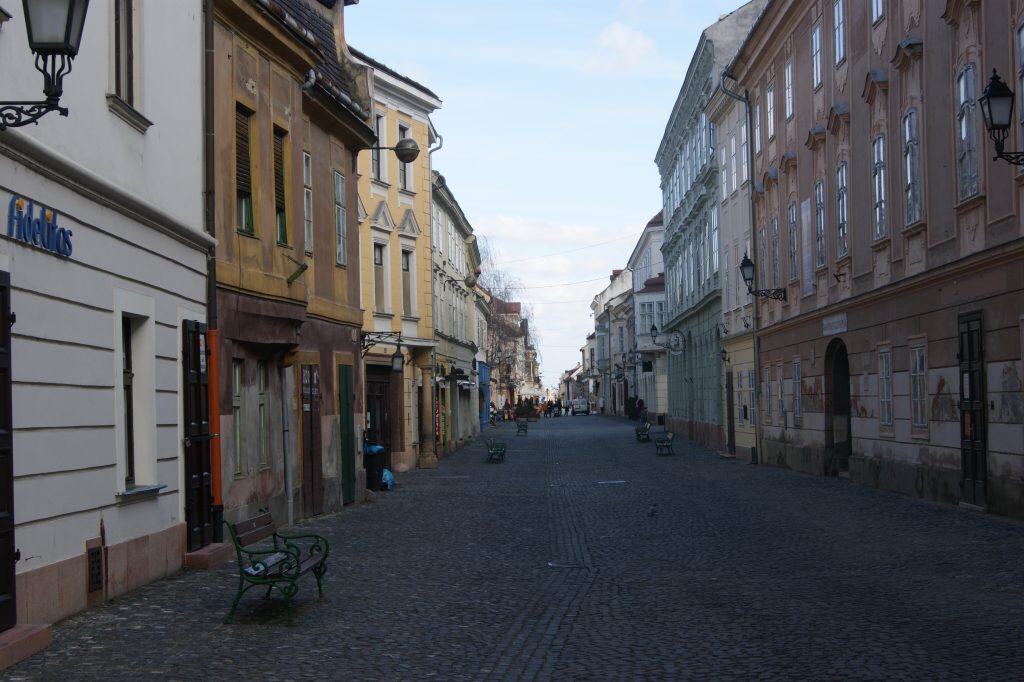
Navigating Győr is straightforward. The city has a compact and highly walkable historic center. An efficient local bus network connects the city center with the outer districts and main transport hubs.
On Foot: The Baroque Center
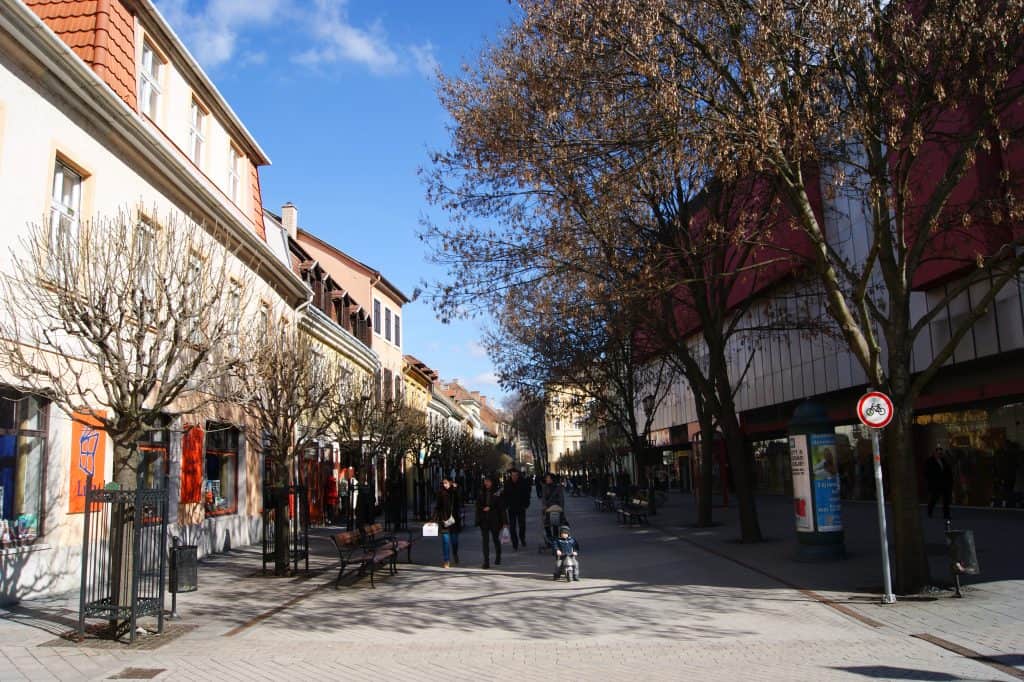
Walking is the best way to explore Győr’s historic Old Town. The area around Széchenyi Square and Káptalan Hill is filled with pedestrian-friendly streets and squares. All the main sights, including the Basilica, the Bishop’s Palace, and the Benedictine Church, are within a short walking distance of each other. This allows visitors to see the city’s Baroque architecture up close.
Local Buses
Győr has a comprehensive local bus network operated by Volánbusz. The buses connect the city center with all residential and industrial districts, as well as the main train and bus stations. This is the primary mode of public transport for longer distances within the city. Tickets can be purchased at newsstands or from the driver. Always check official sources for the most up-to-date ticket information.
How to Get to Győr
Reaching Győr is convenient due to its strategic location between Budapest, Vienna, and Bratislava. The city is a key regional hub and is exceptionally well-connected by both motorway and international rail lines.
Arriving by Air: A Trio of Airports
Győr has a small regional airport, Győr-Pér International Airport (QGY), which has limited commercial passenger services. For most international travelers, the three nearby capital city airports are the main gateways. Budapest Ferenc Liszt International Airport (BUD) is approximately 140 kilometers away. Vienna International Airport (VIE) is around 130 kilometers away, and Bratislava Airport (BTS) is the closest at about 85 kilometers. From all three airports, there are frequent onward train or bus connections to Győr.
The Open Road: Driving on the M1
Driving to Győr is very efficient, as the city sits directly on the M1 motorway. This is the main highway connecting Budapest and Vienna. The journey from Budapest takes approximately 1 hour and 20 minutes. From Vienna, the drive is also about 1 hour and 20 minutes. This prime location makes it an easy stop on a road trip between the two capitals. Remember that a digital motorway vignette is required to use Hungarian motorways.
Connecting by Coach
Bus services provide an economical way to reach Győr. The main bus station is centrally located near the train station. Volánbusz provides frequent routes connecting Győr with all major Hungarian cities. International services from companies like FlixBus also connect Győr directly to Vienna, Bratislava, and other European cities. The bus journey from both Vienna and Bratislava is typically under 1.5 hours.
On Track: A Key Rail Hub
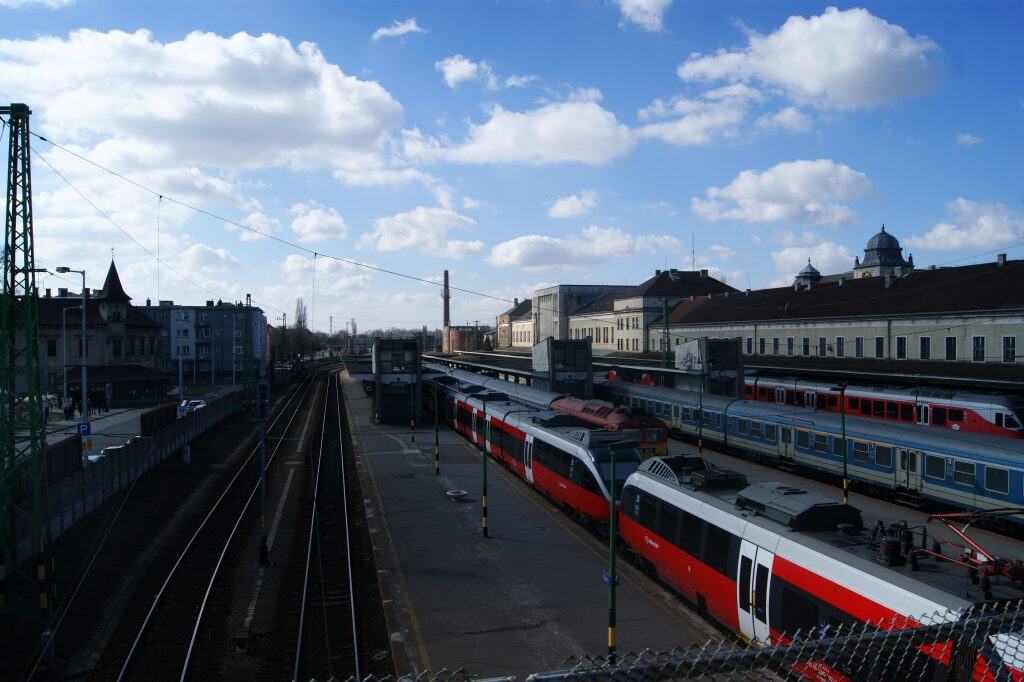
Traveling to Győr by train is highly efficient. The Győr railway station is a major hub on the main international line between Budapest and Vienna. Hungarian State Railways (MÁV-START) and Austrian Federal Railways (ÖBB) operate frequent services. Direct Railjet and EuroCity trains run from Budapest’s Keleti station in about 1 hour 20 minutes. Direct trains from Vienna’s Hauptbahnhof take approximately 1 hour 15 minutes. There are also direct connections from Bratislava.
Driving Distances
The driving distance from 5 major Hungarian cities as well as 3 regional capitals, according to Google Maps:
- Budapest – 121 kilometers (1 h 20 min)
- Debrecen – 377 kilometers (3 h 50 min)
- Szeged – 289 kilometers (3 h)
- Pécs – 304 kilometers (3 h 10 min)
- Miskolc – 279 kilometers (2 h 50 min)
- Vienna, Austria – 126 kilometers (1 h 30 min)
- Bratislava, Slovakia – 82 kilometers (1 h 00 min)
- Prague, Czech Republic – 412 kilometers (4 h 20 min)
Looking to Explore more of Hungary and Europe?




Nice. A friend of mine is there at the moment.