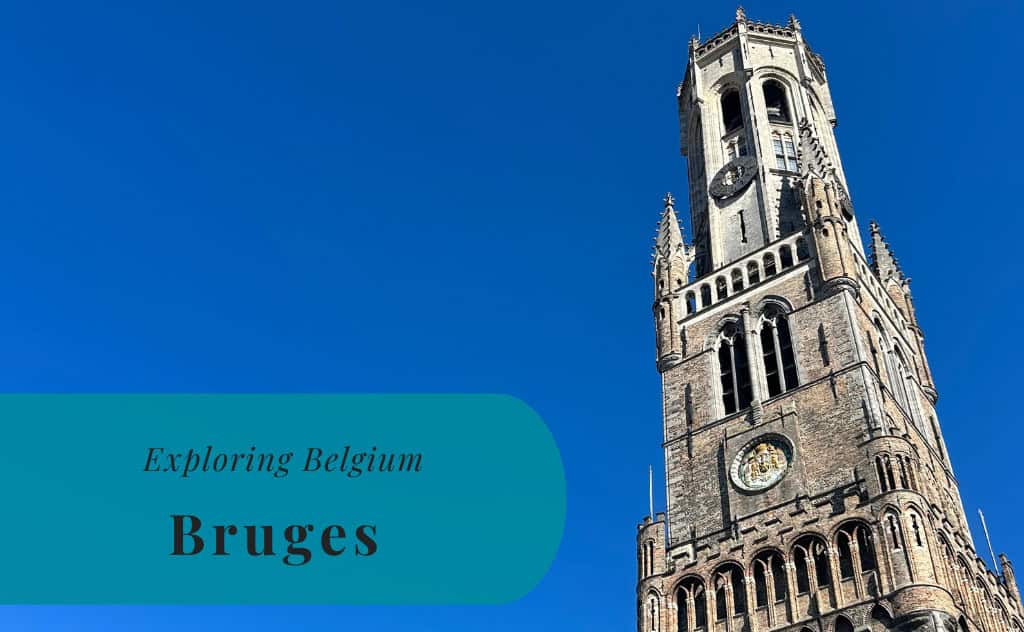
Bruges, Flanders | Exploring Belgium
Bruges, known in Dutch as Brugge, is the capital and largest city of the province of West Flanders in the Flemish Region of Belgium. The city is located in the northwestern part of the country, approximately 15 kilometers from the North Sea coast. With a population of approximately 119,000 residents, Bruges serves as a key economic and cultural hub for the region. Its historic city center is a prominent UNESCO World Heritage Site, recognized for its well-preserved medieval architecture and its network of canals, which has earned it the nickname “The Venice of the North.”
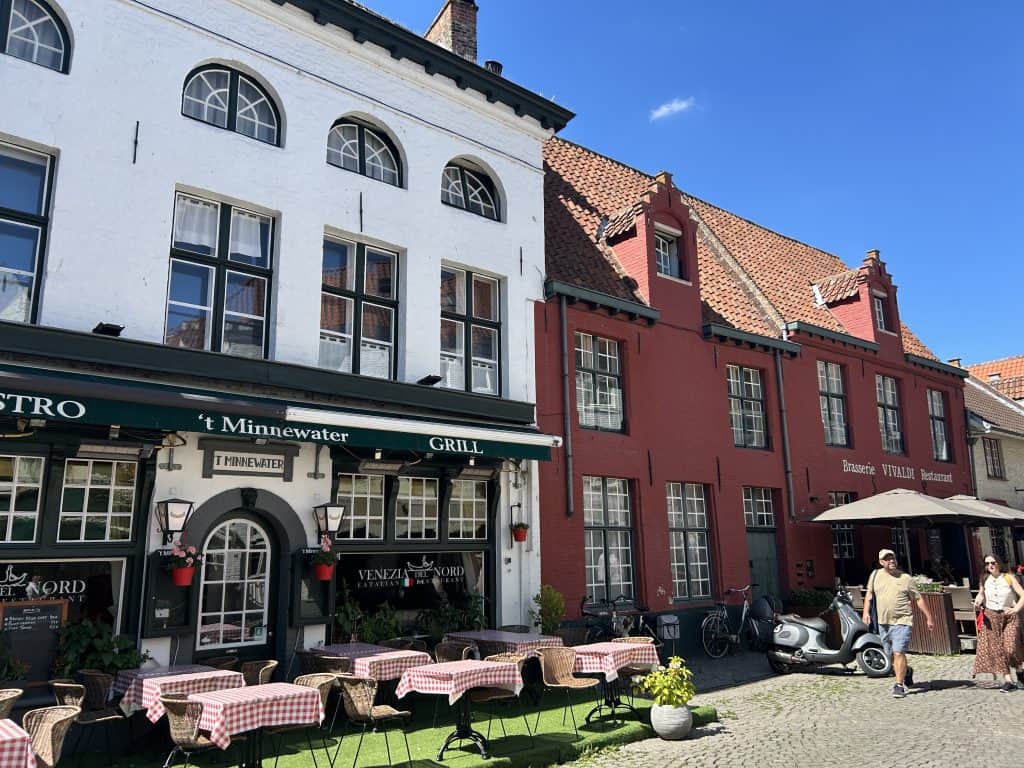
The character of Bruges is defined by its role as a living museum of a medieval European trading metropolis. The city’s layout, with its cobblestone streets, historic market square, and Gothic buildings, reflects its golden age in the late Middle Ages. This preserved historical core exists alongside a modern, active city that has found innovative ways to protect its heritage. This blend of preservation and modernity is exemplified by unique projects like the famous underground beer pipeline, built by a local brewery to protect the historic city center from heavy traffic. The canals that wind their way through the city are a central feature of the urban landscape, providing a unique mode of transport and a key part of its identity.
As one of Belgium’s most popular tourist destinations, the city’s identity is deeply connected to the preservation of its heritage. The absence of heavy industrialization in its later history inadvertently protected its medieval fabric from the large-scale redevelopment seen in many other European cities. This allows visitors to experience a city that has retained much of its historical appearance. This combination of a preserved medieval city, a rich artistic legacy, and a vibrant modern culture gives Bruges its specific character.

Good to Know When Visiting Bruges
To help with planning a visit, here are several practical points covering daily essentials, timing, and efficient exploration of the city. Understanding these details can make a trip to Bruges more convenient. This information is intended to provide a general overview for travelers preparing to visit this major Belgian city.
The Daily Essentials
The official currency used in Bruges is the Euro (EUR). Credit and debit cards are widely accepted in most hotels, restaurants, and shops, but it is useful to have some cash for smaller purchases at market stalls or for some smaller cafes. The official language is Dutch, in its Flemish variant. French and English are also very widely spoken, especially in all tourist areas, hotels, and restaurants. Tipping is not generally expected, as a service charge is included in restaurant bills, but it is common to round up the bill or leave a small additional amount for good service. The tap water in Bruges is safe to drink. The electrical system uses Type E sockets with a standard voltage of 230V. Bruges is considered a very safe city, but as it is a major tourist destination, visitors should be mindful of their belongings in crowded areas.
Planning Your Calendar
Bruges is a year-round destination, but the experience varies significantly by season. The spring (April-June) and autumn (September-October) months are often considered the best time to visit. They offer mild and pleasant weather for exploring the city on foot, with fewer crowds than in the peak summer season. The summer (July-August) is the busiest time, with warm weather and many outdoor events. The winter is cool and can be damp, but the city’s Christmas market is a major attraction in December. A key event is the Procession of the Holy Blood, a major religious procession that takes place on Ascension Day and is inscribed on the UNESCO list of Intangible Cultural Heritage. For a first visit, two to three full days is generally sufficient to see the main sights.
A Tourist’s Toolkit for Exploration
The historic center of Bruges is very compact and is best explored on foot. For those wishing to see multiple museums, the Musea Brugge Card can be an economical option, offering access to numerous city-run museums and sights for a 72-hour period. It is highly advisable to book accommodation well in advance, especially if visiting during the peak summer season or on weekends. It is also a good idea to check the opening hours for specific museums, as many are closed on Mondays. Canal boat tours are one of the most popular activities in the city and provide a different perspective on its architecture. Tickets for these tours can usually be purchased on the day.



A Short History of Bruges
The history of Bruges is that of its dramatic rise as one of the wealthiest commercial metropolises in medieval Europe, followed by a long period of decline that ultimately preserved its historic fabric. Its story is one of maritime trade, artistic innovation, and the consequences of changes in both geography and global commerce. The city’s well-preserved state today is a direct result of both its medieval prosperity and its later economic stagnation. This journey from a global trading hub to a “sleeping city” and finally to a major tourist destination defines its past.
Early Origins and Golden Age
The history of settlement in the Bruges area dates back to the Roman period. The city’s name likely derives from the Old Norse word Bryggja, meaning ‘landing stage.’ Its fortunes began to rise in the early Middle Ages due to its strategic location and a tidal inlet known as the Zwin, which provided direct access to the North Sea. Bruges grew rapidly and became one of the most important commercial centers in Northern Europe. It was a key city for the Flemish cloth industry and was a major hub for the Hanseatic League, with foreign merchants establishing trading posts here.
This period, from the 12th to the 15th century, was the golden age of Bruges. The city was a center of immense wealth and was the seat of the powerful Dukes of Burgundy. This prosperity funded the construction of its magnificent public buildings and churches, such as the Belfry and the Church of Our Lady. The city was also a major center of culture and art. It was the home of the Flemish Primitive painters, such as Jan van Eyck and Hans Memling, whose work defined a new era of realism in European art.
Decline and a Sleeping City
The fortunes of Bruges began to decline in the late 15th century. The primary reason for this was the silting up of the Zwin channel. This natural process gradually cut off the city’s direct access to the sea, and trade began to move to the nearby port of Antwerp. The political situation, including the departure of the Burgundian court, also contributed to its decline. For the next few centuries, Bruges entered a long period of economic stagnation.
This long period of decline, however, had the unintended consequence of preserving the city’s medieval architectural fabric. With little wealth for new construction, the historic center remained largely untouched by the architectural changes of the Renaissance and Baroque periods. The city became known as “Bruges-la-Morte” (“Bruges the Dead”), a name popularized by a 19th-century novel. A small revival occurred with the development of the lace industry, which became a key local craft.
Modern Revival and Tourism
In the late 19th and early 20th centuries, Bruges was rediscovered, primarily by British and French tourists. They were drawn to the city’s preserved medieval character and its romantic, sleepy atmosphere. A new port was constructed at Zeebrugge on the coast, which reconnected Bruges to the sea. The city began to focus on preserving its historic monuments.
The city was fortunate to avoid major destruction during both World War I and World War II. In the 20th century, a concerted effort was made to restore the historic buildings and to promote the city as a major cultural destination. This culminated in the designation of its entire historic center as a UNESCO World Heritage Site in 2000. The city was also named a European Capital of Culture in 2002. Today, tourism is the primary driver of the city’s economy.


Things to Do and See
The sights in Bruges are a reflection of its history as a major medieval commercial and cultural center. The attractions are concentrated in the well-preserved historic center, which is a UNESCO World Heritage site. The city is known for its Gothic architecture, its network of canals, and its world-class art museums. The main landmarks include its famous belfry, its two most important churches, and the historic market square.
A visit to Bruges allows for an exploration of one of the best-preserved medieval cities in Europe. The sights are all located within a compact, walkable area. The canals provide a unique way to see the city’s architecture from the water. The art museums contain masterpieces from the era of the Flemish Primitives, who were based in the city during its golden age. The combination of these historical, architectural, and artistic sights makes Bruges a key cultural destination.
The Historic Centre of Bruges
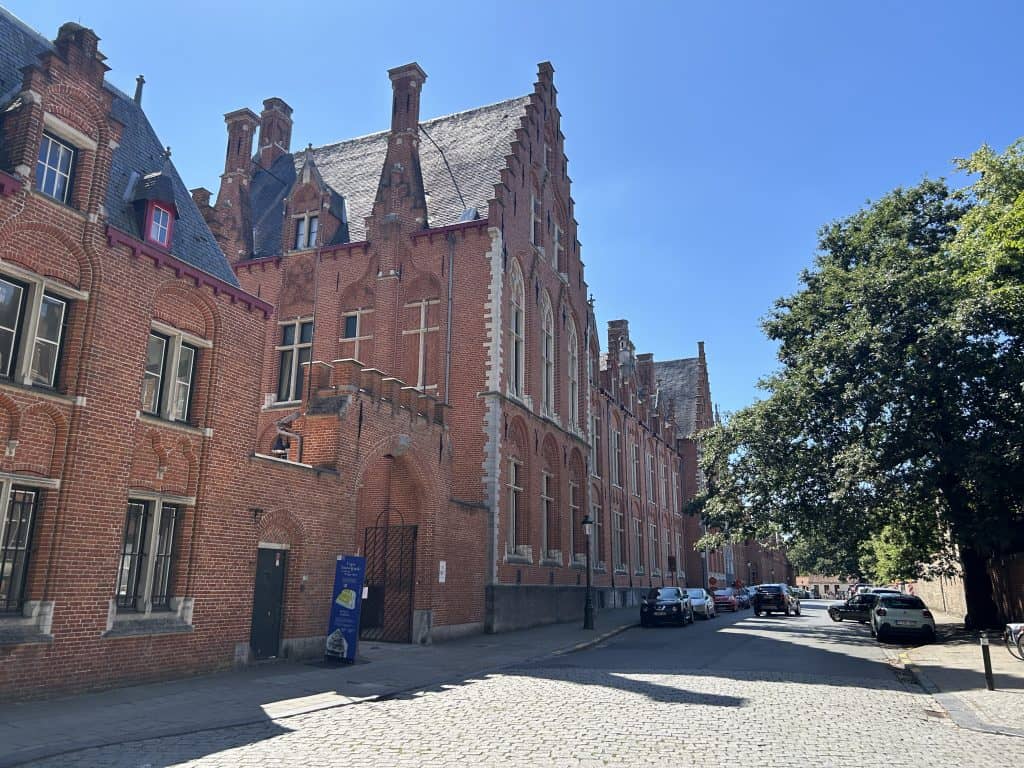
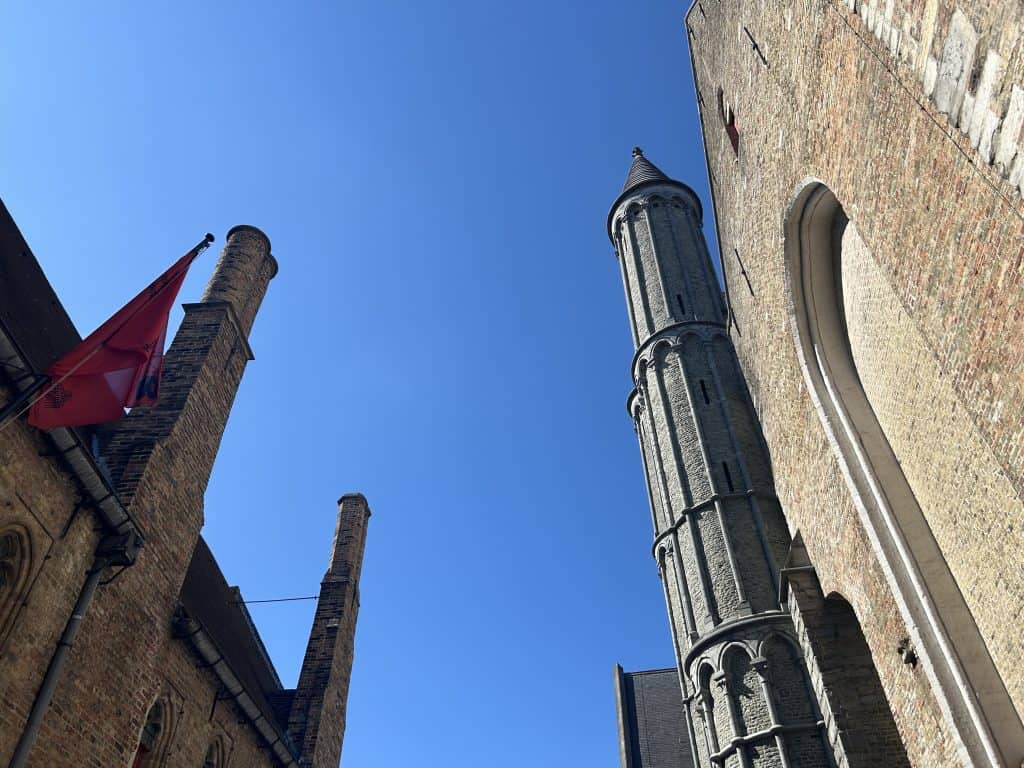
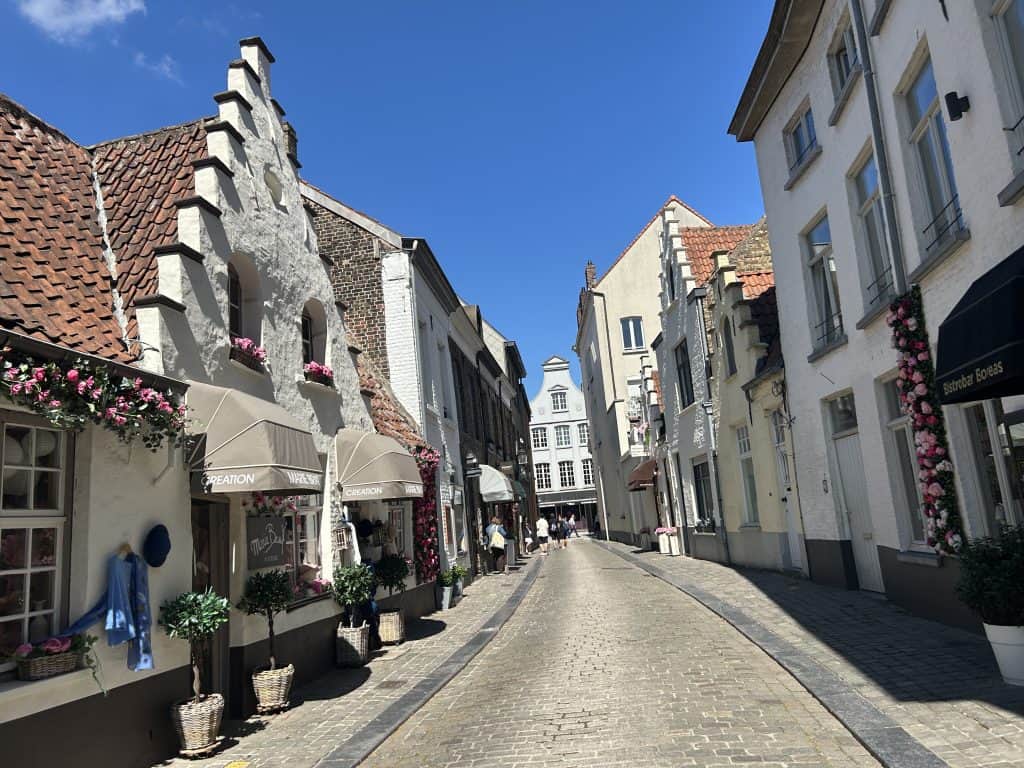
The Historic Centre of Bruges is the entire medieval core of the city. It was designated a UNESCO World Heritage Site in 2000. The site is recognized for its outstanding example of a medieval historic settlement, which has maintained its historic fabric as it has evolved over the centuries. The area is defined by its network of canals, its cobblestone streets, and its well-preserved Brick Gothic architecture. The UNESCO designation covers the most significant buildings, such as the Belfry and the Beguinage, as well as the surrounding urban landscape of historic houses.
The Belfry of Bruges
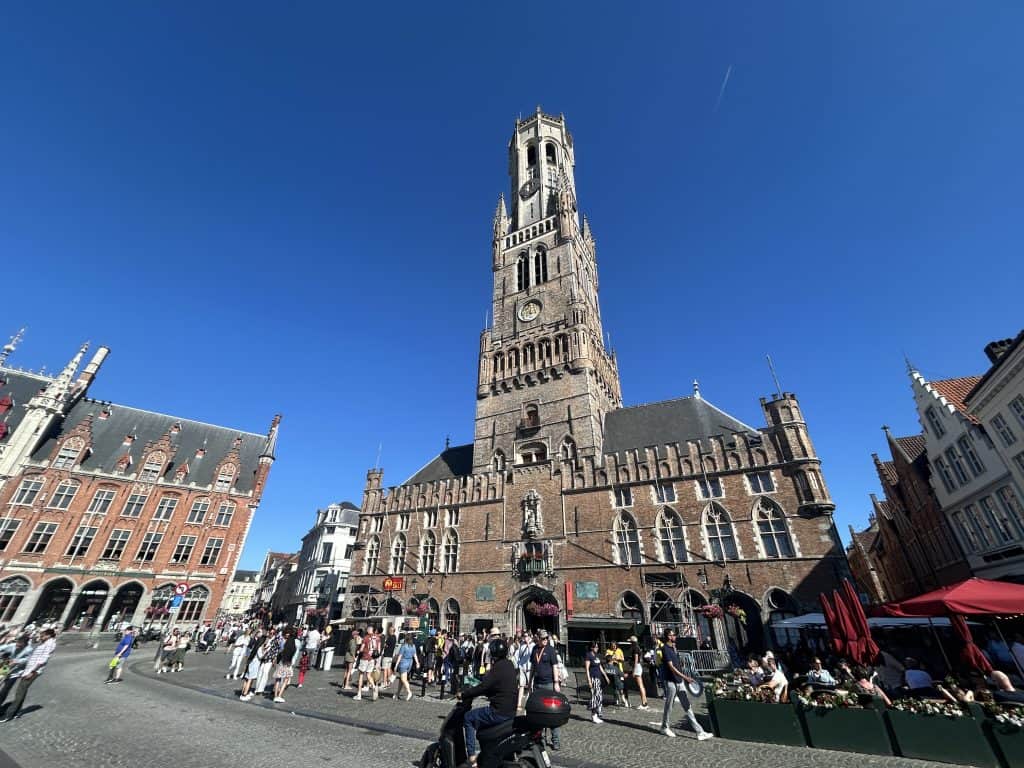
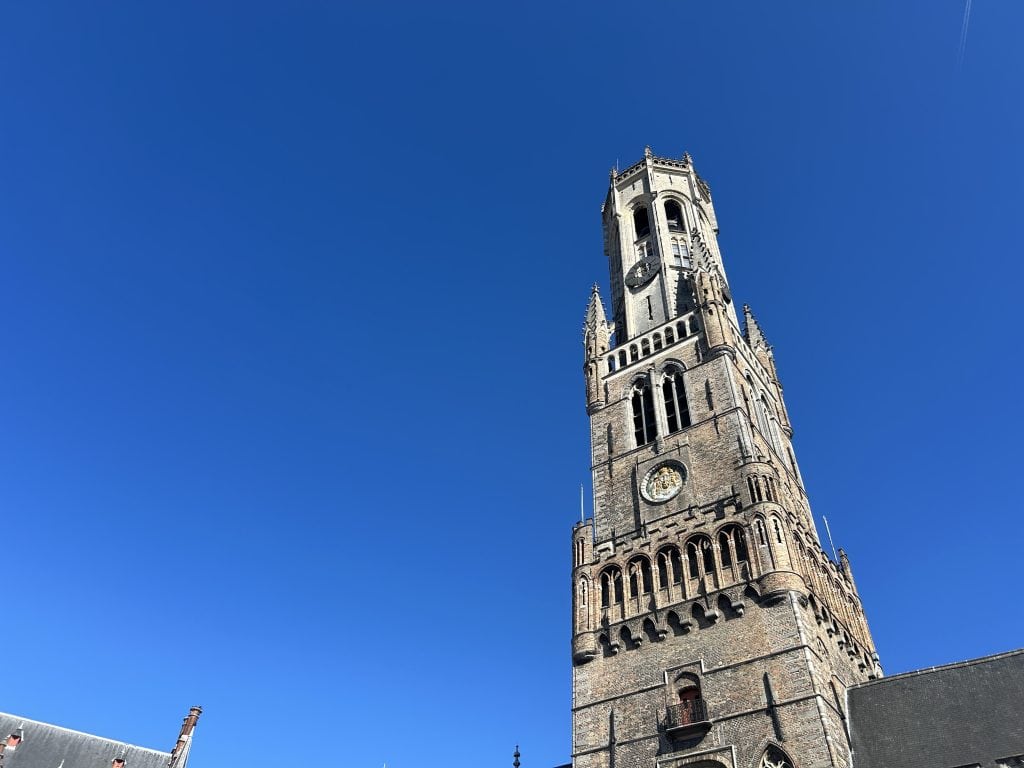
The Belfry of Bruges (Belfort van Brugge) is the city’s most famous landmark. The medieval bell tower is located on the main Market Square. The tower stands 83 meters tall. It leans slightly to the east. Visitors can climb the 366 steps to the top for panoramic views of the city. The belfry was a symbol of the city’s civic power and independence in the Middle Ages. It houses a carillon with 47 bells, which are still played regularly.
Market Square
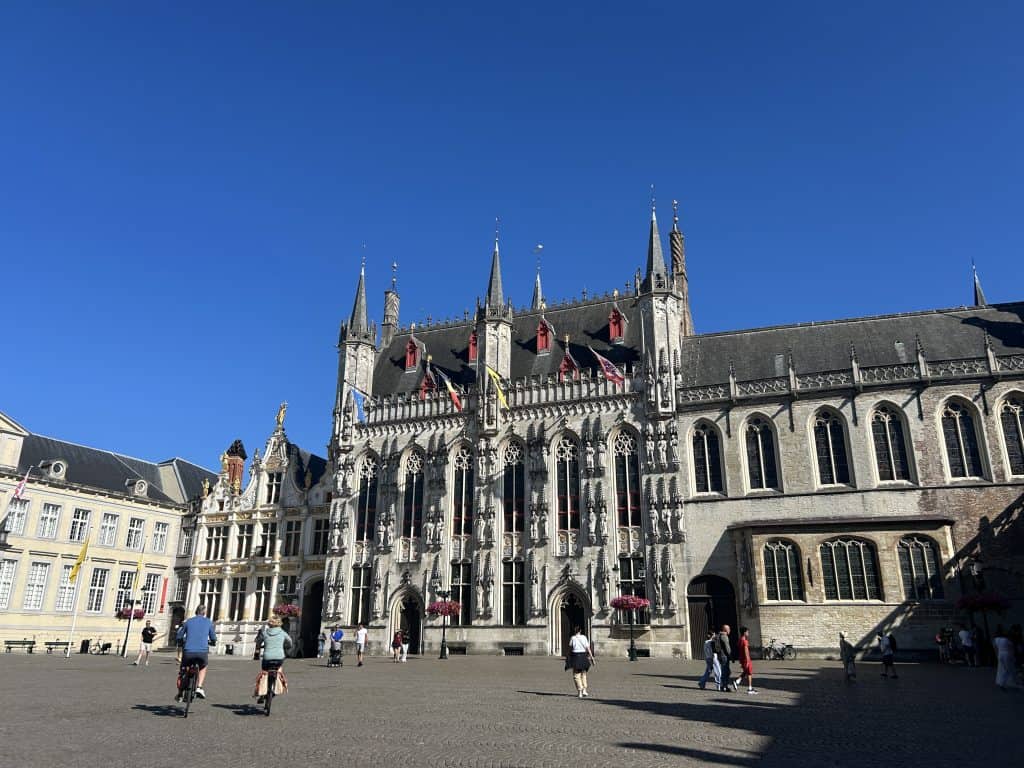
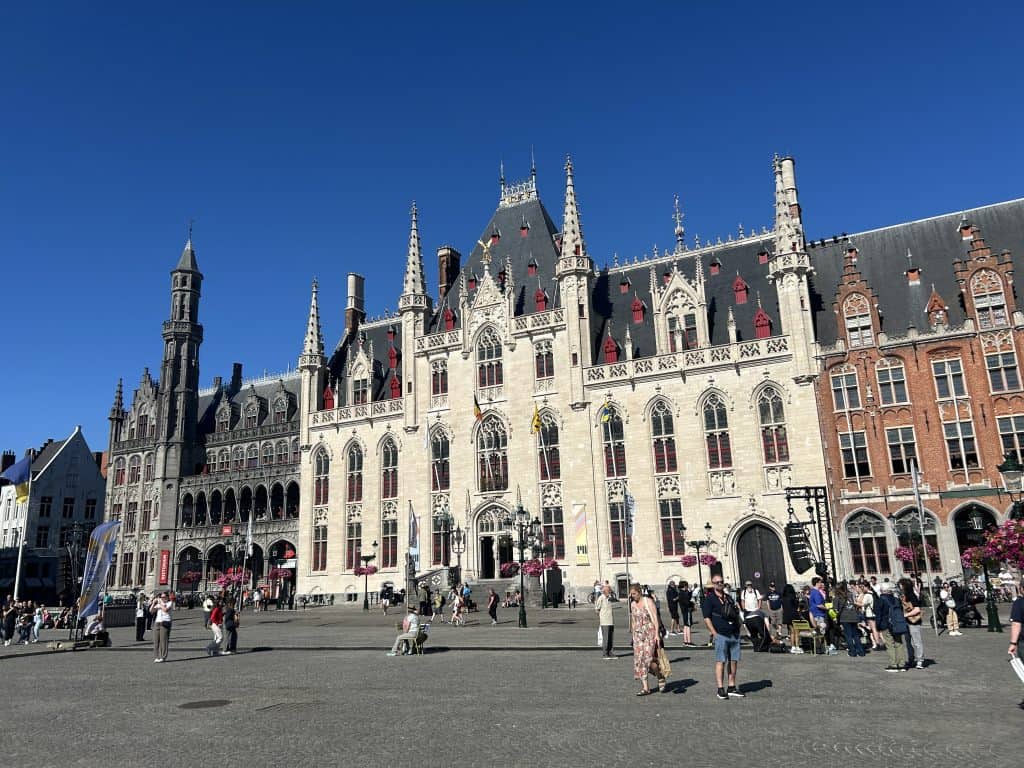
The Market Square (Markt) is the historic heart of Bruges. The large public square has been the center of commercial and public life in the city for centuries. It is surrounded by a collection of historic buildings. This includes the impressive Provincial Court building and numerous historic guildhalls, which now house restaurants and cafes. A large statue of Jan Breydel and Pieter de Coninck, heroes of the Battle of the Golden Spurs in 1302, stands in the center of the square.
Church of Our Lady
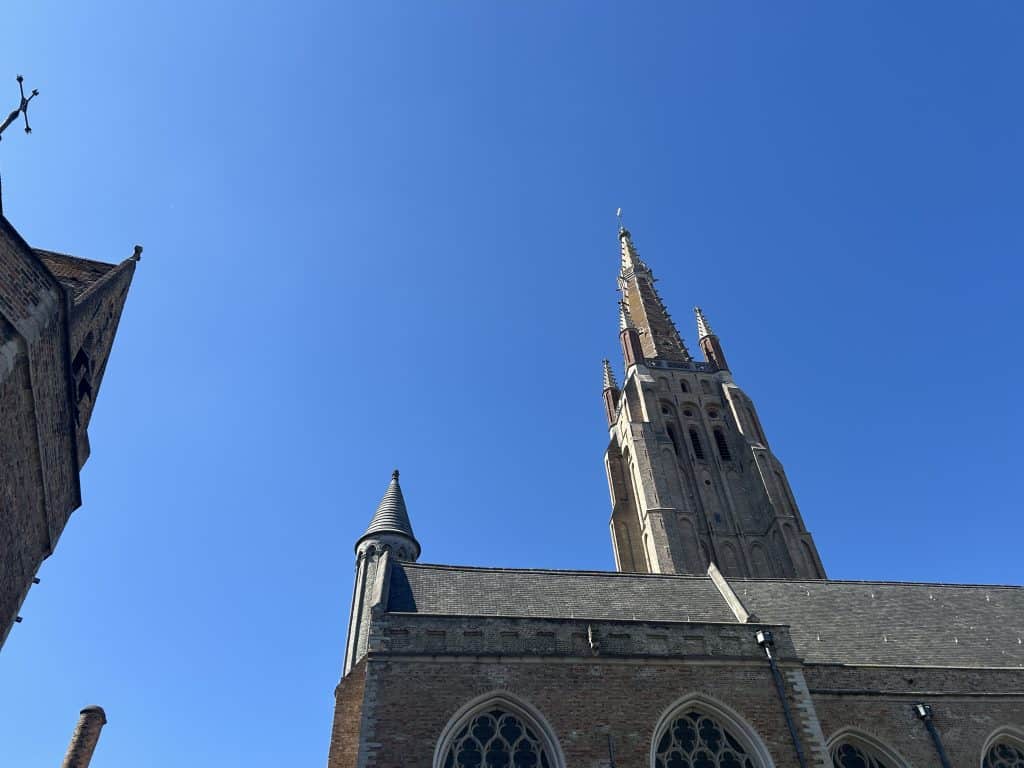
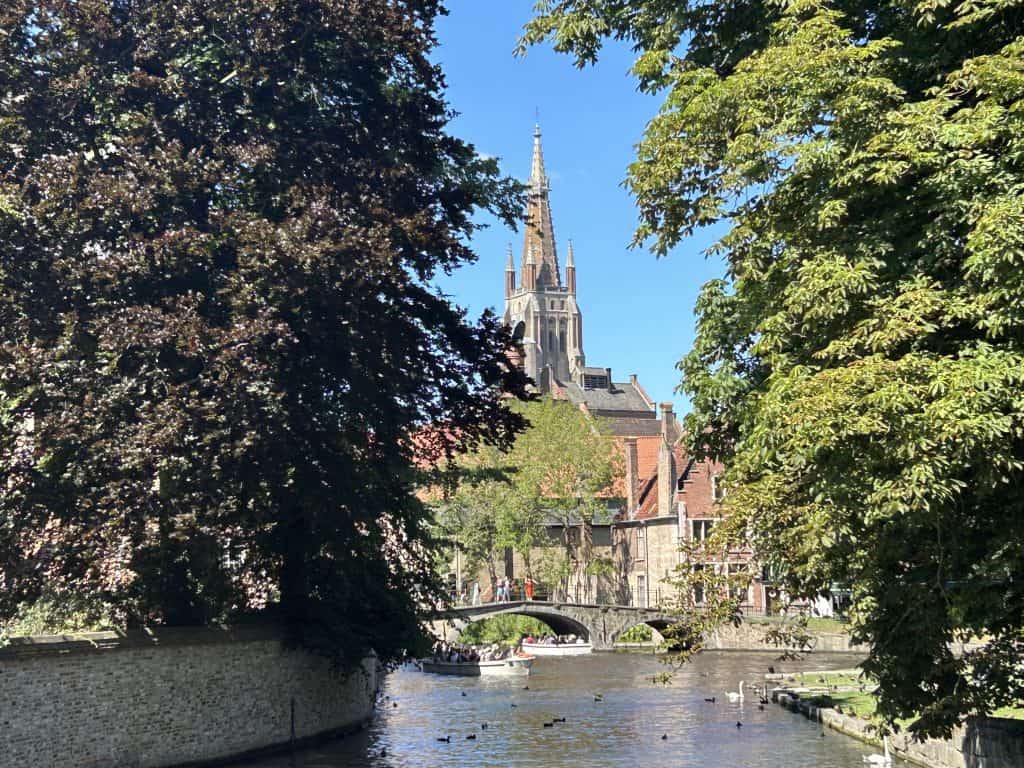
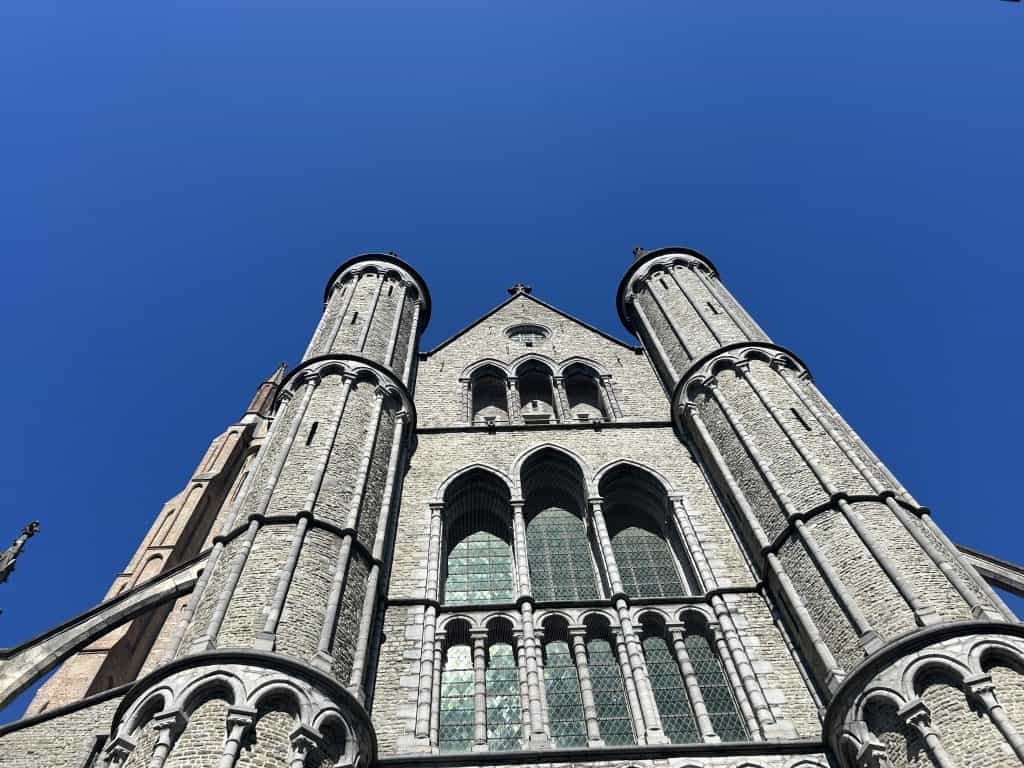
The Church of Our Lady (Onze-Lieve-Vrouwekerk) is a major church in Bruges. Its brick tower, at 115.6 meters, is the second-tallest brickwork tower in the world. The church was built over several centuries, from the 13th to the 15th century. It showcases the Gothic architectural style. The church is most famous for housing a white marble sculpture, the Madonna and Child, which was created by Michelangelo around 1504. It is one of the very few of his works to be found outside of Italy.
Basilica of the Holy Blood
The Basilica of the Holy Blood (Heilig-Bloedbasiliek) is located in the Burg Square, next to the City Hall. The basilica consists of two chapels. The lower chapel is a preserved Romanesque church from the 12th century. The upper chapel was rebuilt in the Gothic Revival style in the 19th century. The basilica is famous for housing a venerated relic: a phial said to contain a cloth with the blood of Jesus Christ. The relic is brought out for public veneration each day.
The Beguinage
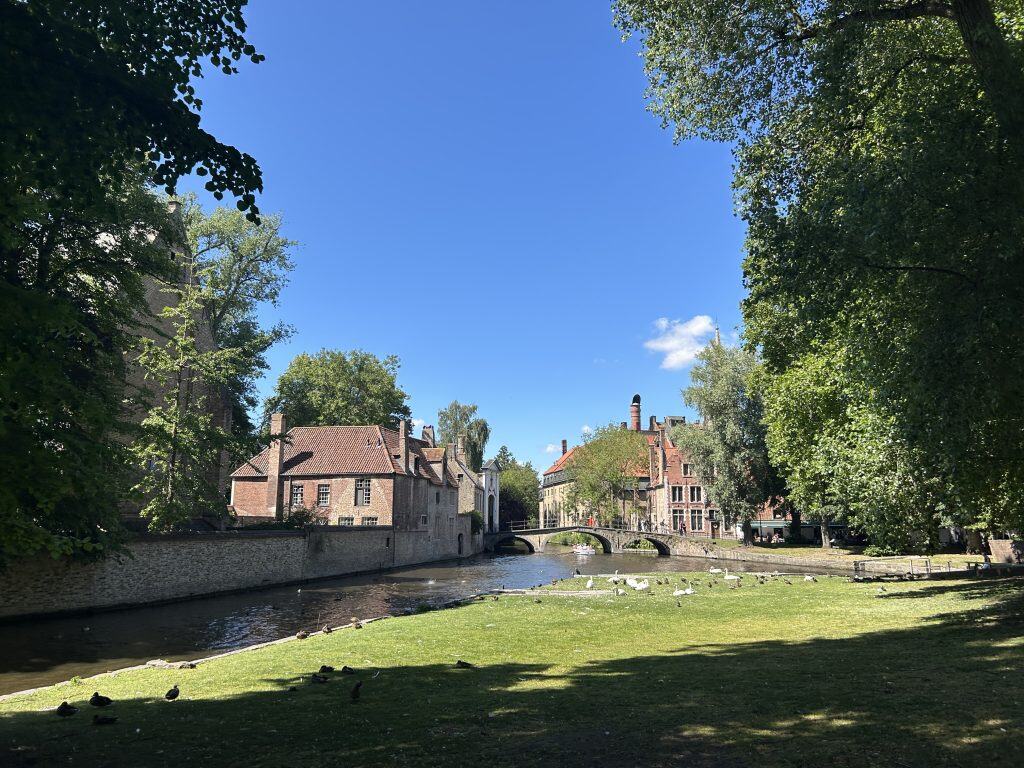
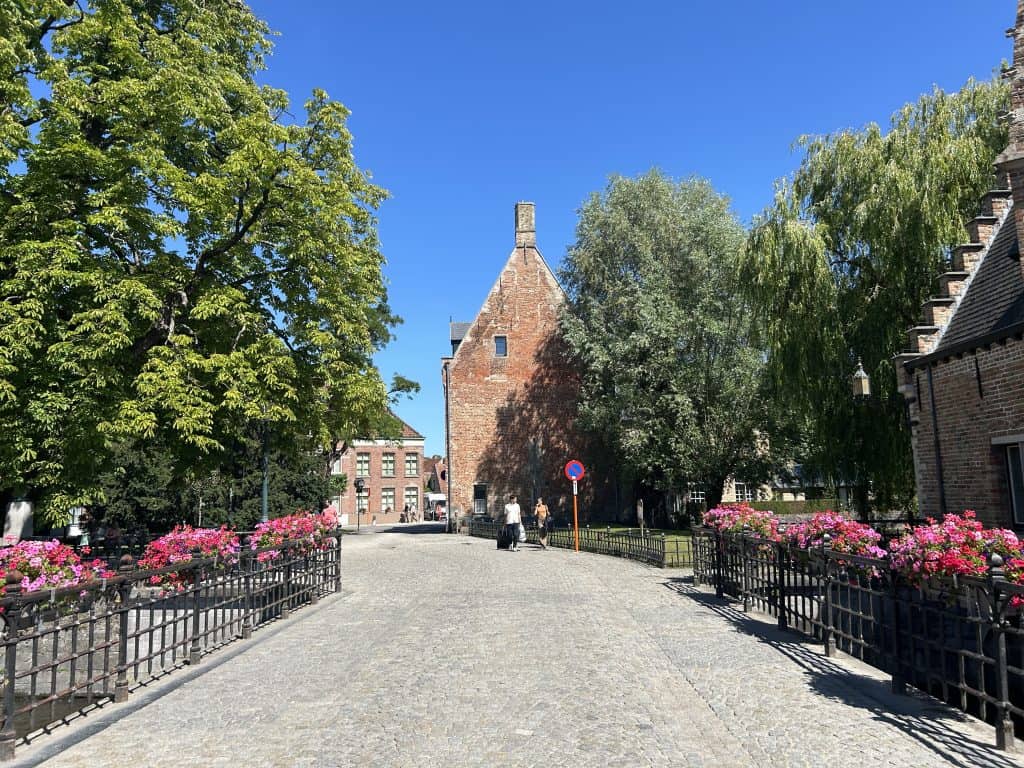
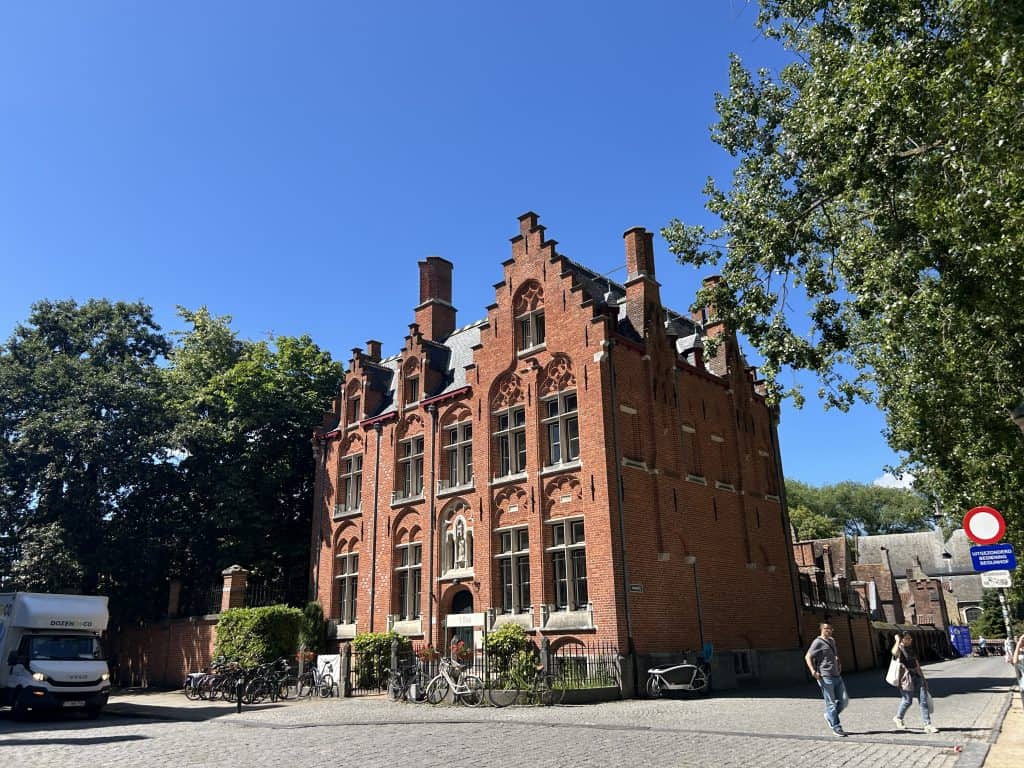
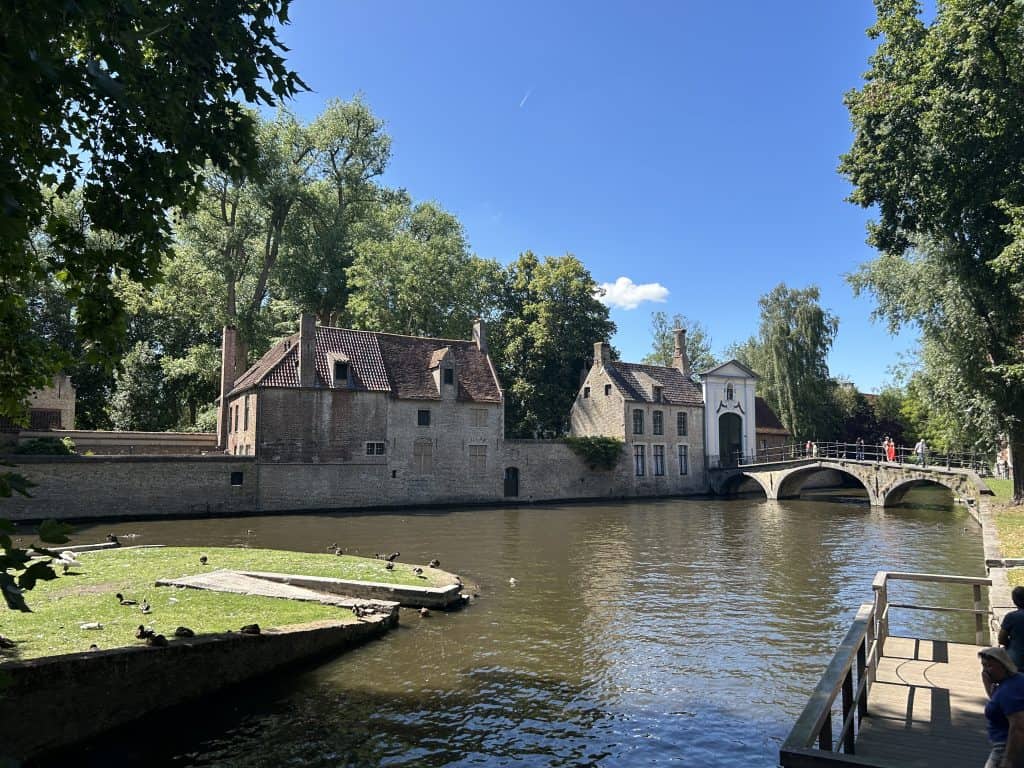
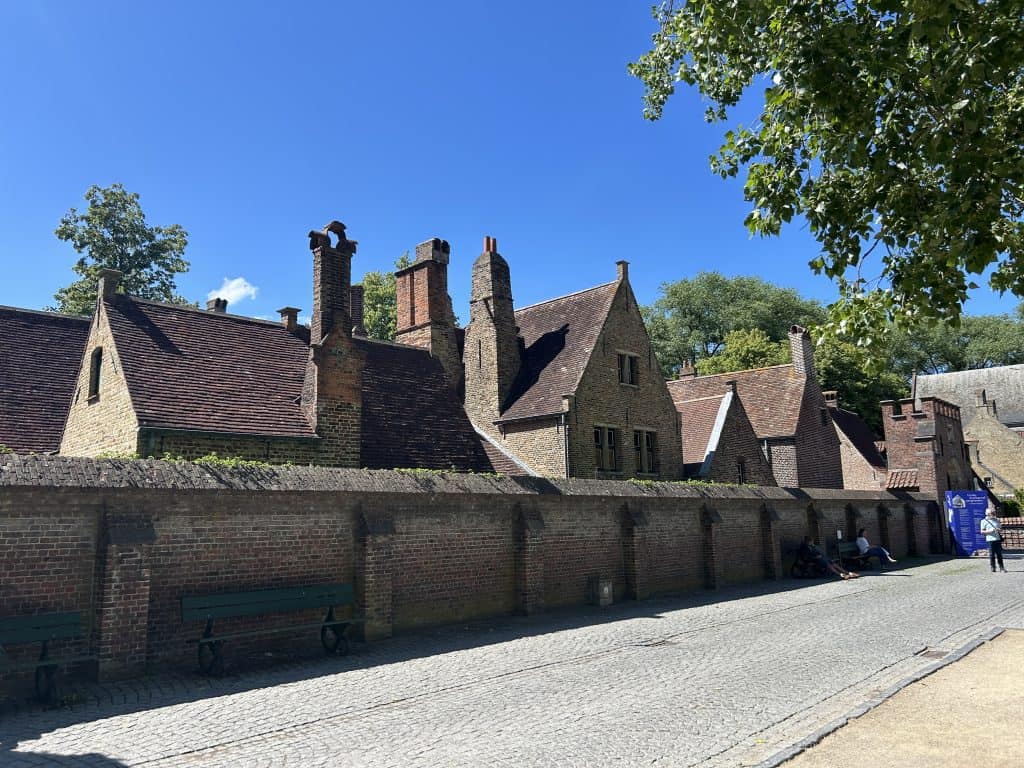
The Princely Beguinage Ten Wijngaerde (Begijnhof) is a historic complex that was once the home of Beguines, who were lay religious women. The Beguinage was founded in 1245. It consists of a collection of white-painted houses arranged around a central courtyard with tall poplar trees. The site is a UNESCO World Heritage site. Today, it is inhabited by Benedictine nuns. The site provides a tranquil and quiet atmosphere away from the busy city center.
Groeningemuseum
The Groeningemuseum is the main art museum in Bruges. The museum’s collection provides a comprehensive overview of six centuries of Belgian and Flemish art. It is particularly known for its world-class collection of works by the Flemish Primitive painters, who were active in Bruges during its golden age. This includes masterpieces by Jan van Eyck, Hans Memling, and Hieronymus Bosch. The collection also includes works from the Renaissance and Baroque periods, as well as modern art.
The Canals of Bruges
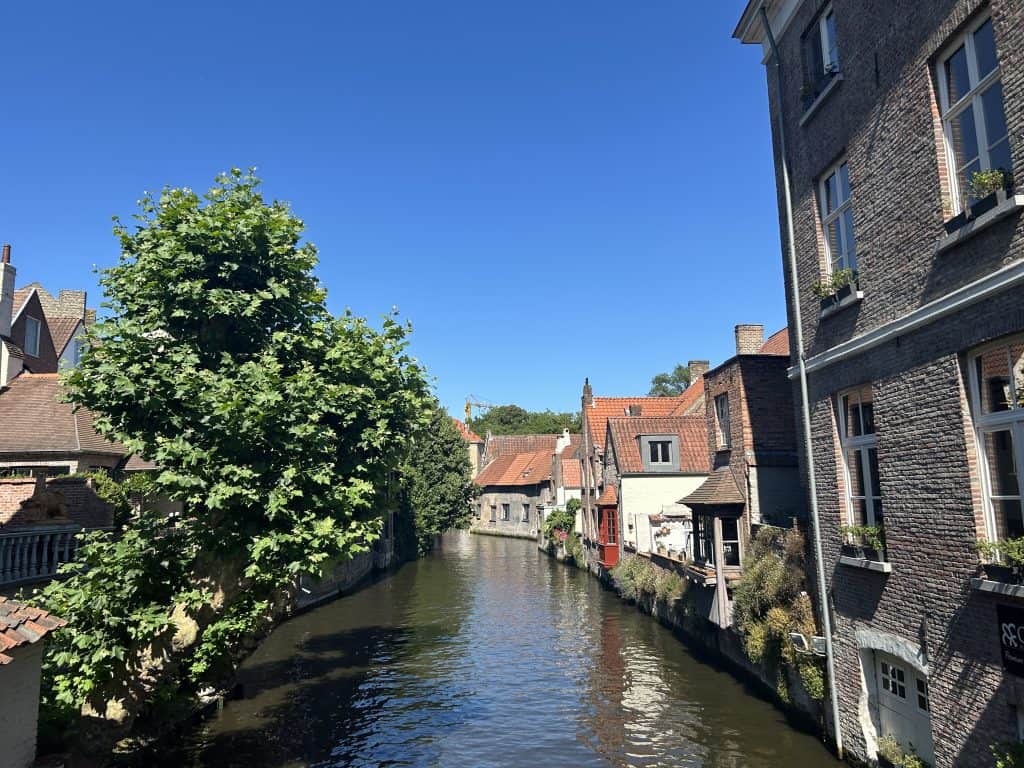
The canals of Bruges are a defining feature of the city’s landscape and have given it the nickname “The Venice of the North.” The network of canals, known as reien, runs through the historic center. The canals were once the main arteries for merchant trade in the city. Today, they are primarily used for tourist boat tours. These tours provide a different perspective on the city’s medieval architecture. They pass by many of the main landmarks.
Minnewater (Lake of Love)
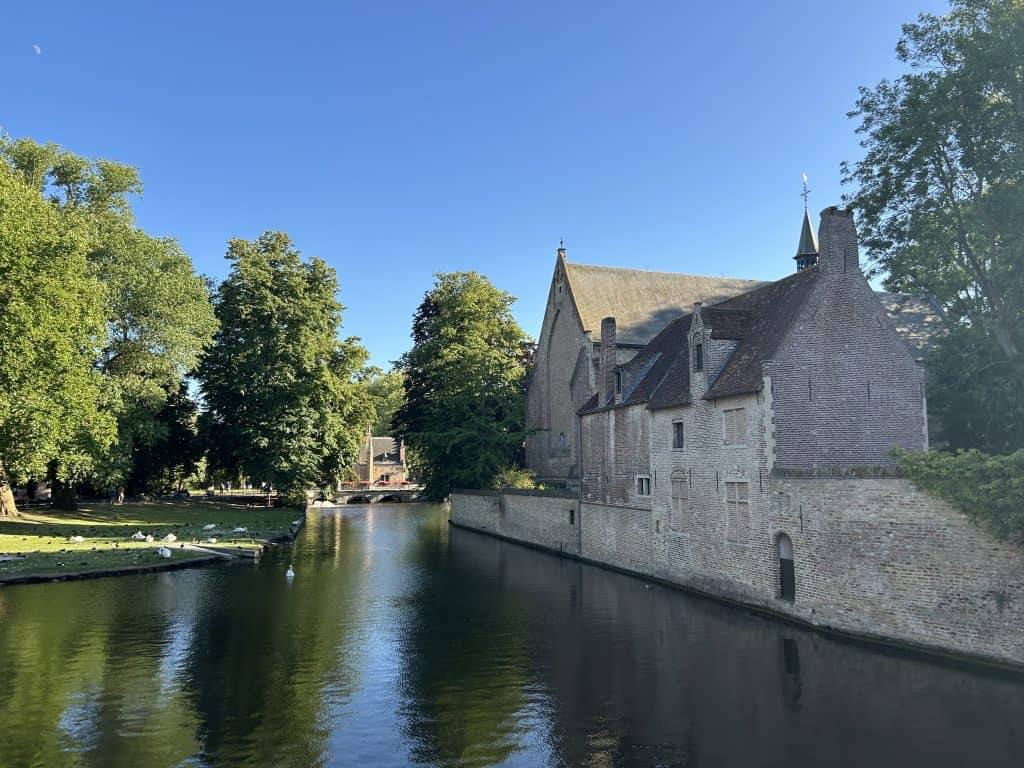
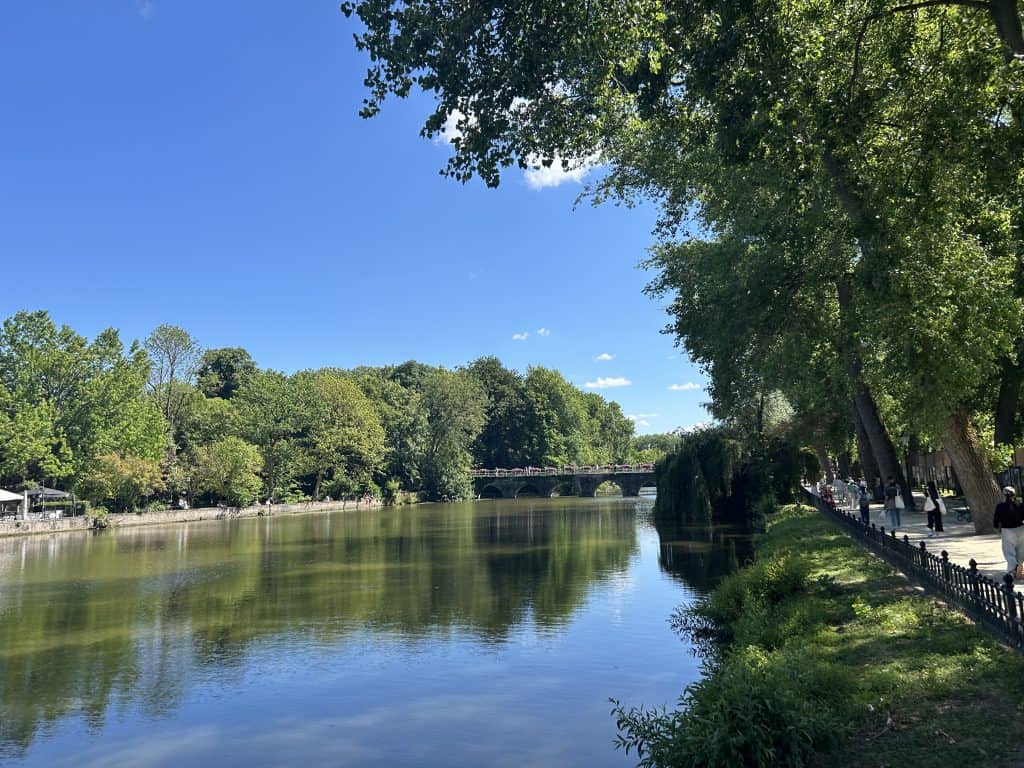
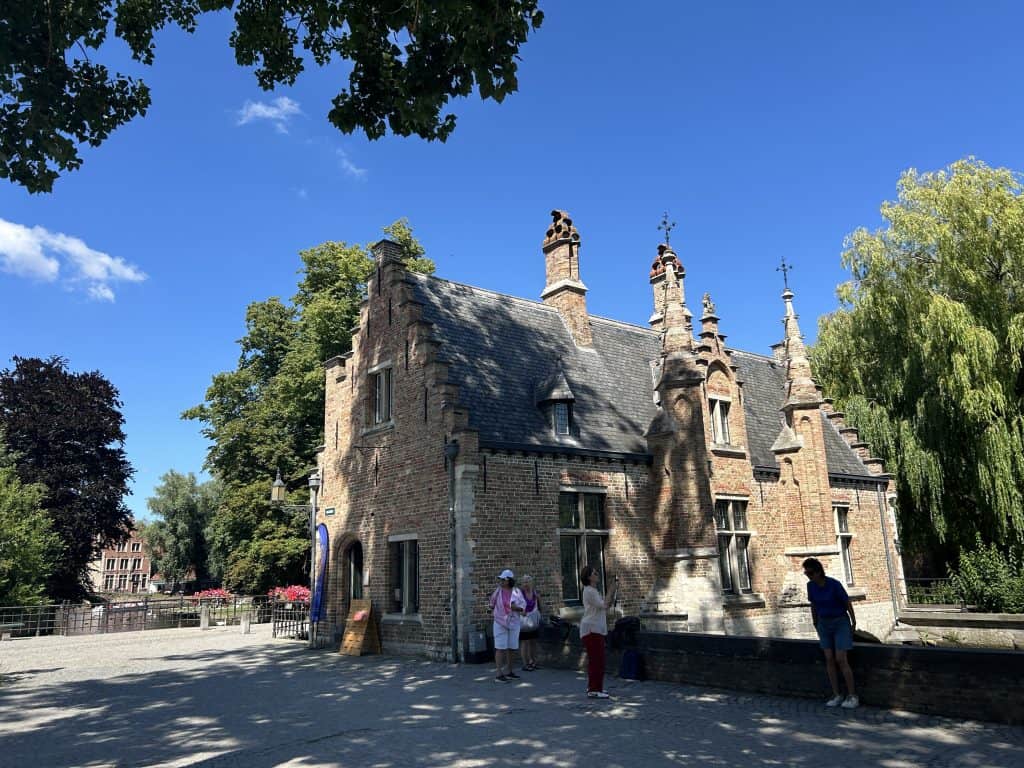
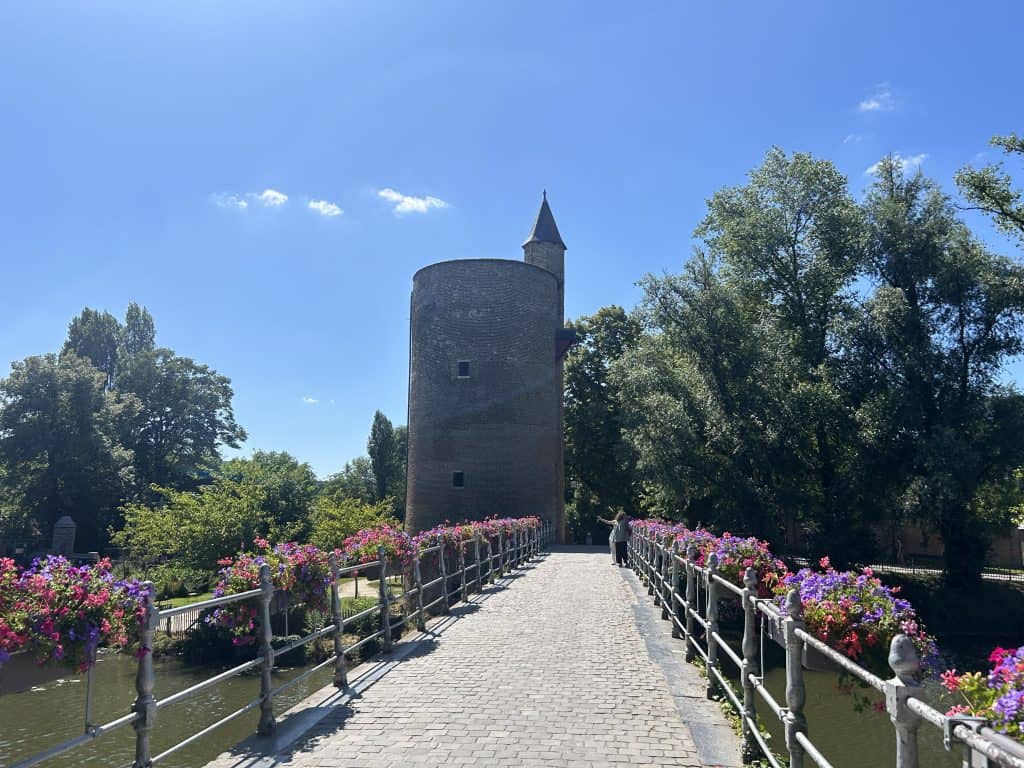
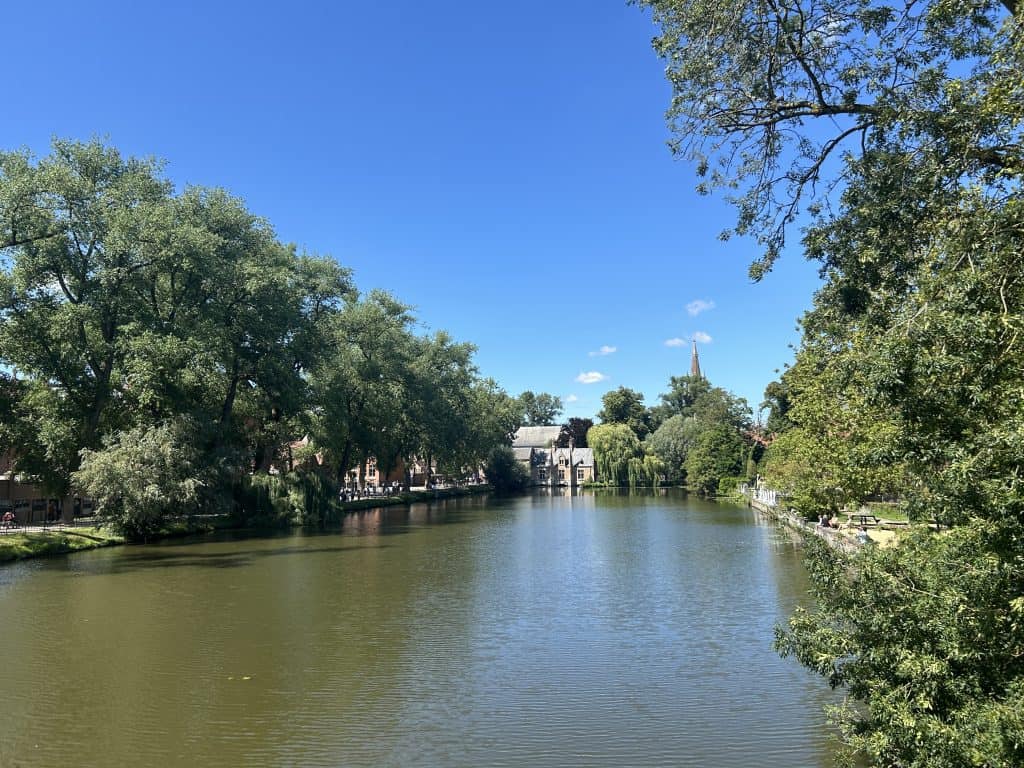
The Minnewater, or “Lake of Love,” is a scenic rectangular lake located at the southern end of the historic center. The lake was once part of the city’s outer moat and was used as a reservoir for the canal system. Today, it is a part of a park and is known for its romantic atmosphere. A bridge crosses the lake, and it is a popular spot for a walk. The lake is often home to a large number of swans, which are a symbol of the city.
De Halve Maan Brewery
The De Halve Maan Brewery is the last remaining active family brewery in the historic center of Bruges, with a history dating back to the 16th century. The brewery is famous for its popular beers, including the Brugse Zot and Straffe Hendrik. Visitors can take guided tours to see the brewing process and learn about the brewery’s long history. The brewery is also known for a major modern innovation: a 3-kilometer-long underground beer pipeline. This pipeline was built in 2016 to transport beer from the historic brewery to its bottling plant in the suburbs, thus removing heavy tanker trucks from the fragile medieval streets. The project was famously partly crowdfunded by local and international beer enthusiasts.
Sint-Janshospitaal
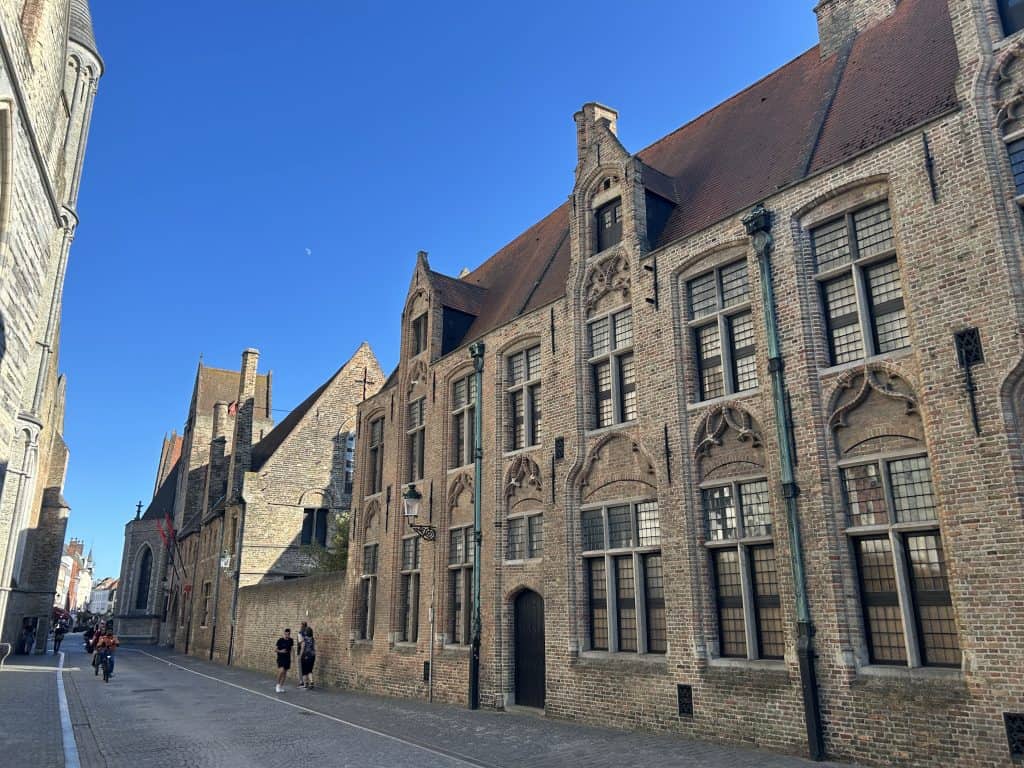
The Sint-Janshospitaal is one of the oldest preserved hospital buildings in Europe. The hospital was founded in the 12th century to care for sick pilgrims and residents. The historic medieval wards are now open to the public as a museum. The museum also houses a collection of artworks, including several masterpieces by the Flemish Primitive painter Hans Memling, who lived and worked in Bruges. The old hospital pharmacy is also preserved and on display.
Sports in Bruges
The sporting life in Bruges is dominated by football. The city has the unique distinction of being home to two professional football clubs that compete in the top tier of Belgian football. Both teams share the same stadium, which makes for intense local rivalries. The city’s location in the heart of Flanders also makes it a major center for the sport of cycling, with one of the most famous professional races in the world starting in the city.
This combination of a strong local football culture and a connection to a major international cycling event defines the city’s sporting identity. The clubs are a key part of the social fabric of the city, with dedicated fanbases that represent different parts of the community. The city’s infrastructure supports these top-level professional sports. The surrounding flat landscape of West Flanders also provides extensive opportunities for recreational cycling.
Football
Football is the most popular sport in Bruges. The city is one of the few in Europe that has two different clubs competing in the country’s top professional league, the Belgian Pro League. The rivalry between the two clubs, Club Brugge and Cercle Brugge, is a key feature of the city’s sporting life. Both teams play their home games at the Jan Breydel Stadium, which is a municipally owned stadium.
Club Brugge KV
Club Brugge KV is one of the most successful and widely supported football clubs in Belgium. Founded in 1891, the club has won the Belgian league championship numerous times, making them one of the most decorated clubs in the country’s history. They have also won the Belgian Cup multiple times. Club Brugge has a long history of competing in European competitions and reached the final of the European Cup (now the UEFA Champions League) in 1978. Their team colors are blue and black, and they have a large national fanbase.
Cercle Brugge KSV
Cercle Brugge KSV is the city’s other major professional football club. Founded in 1899, it is one of the oldest football clubs in Belgium. While not as successful in the modern era as their city rivals, Cercle Brugge has a proud history, having won the Belgian league championship three times. The club’s team colors are green and black. They have a dedicated and loyal local following. The derby matches between Cercle and Club Brugge are major events in the city.
Cycling
Cycling is a central part of the culture in the Flanders region, and Bruges plays a key role in the sport. The city has been the starting point for one of the most famous and prestigious one-day professional cycling races in the world. The flat landscape of the surrounding region, combined with the challenging cobbled climbs further south, makes it an ideal location for the sport.
Tour of Flanders
The Tour of Flanders (Ronde van Vlaanderen) is one of the five “Monuments” of cycling, which are the most prestigious one-day races in the world. For many years, from 1998 to 2016, the race started on the Market Square in Bruges. While the start has since moved to Antwerp, Bruges remains deeply associated with the race. The event takes place in the spring and is known for its cobbled roads and steep, short climbs. It is a major sporting and cultural event in Flanders, drawing hundreds of thousands of spectators.

Getting Around in Bruges
Navigating Bruges is best done on foot, as the historic center is compact and largely pedestrian-friendly. The city has a local public transport network of buses that is useful for reaching the train station and areas outside the immediate center. The city’s famous canals also provide a unique mode of transport for sightseeing. Understanding these options is key to exploring the well-preserved medieval city.
The local bus system is operated by De Lijn. Tickets can be purchased at kiosks, from vending machines, or via a mobile app. It is also possible to use a contactless bank card to pay for a journey on the bus. A day pass can be an economical option for visitors planning to use the network frequently. The city’s main bus hub is located at the train station, which allows for easy transfers.
On Foot: The Medieval Center
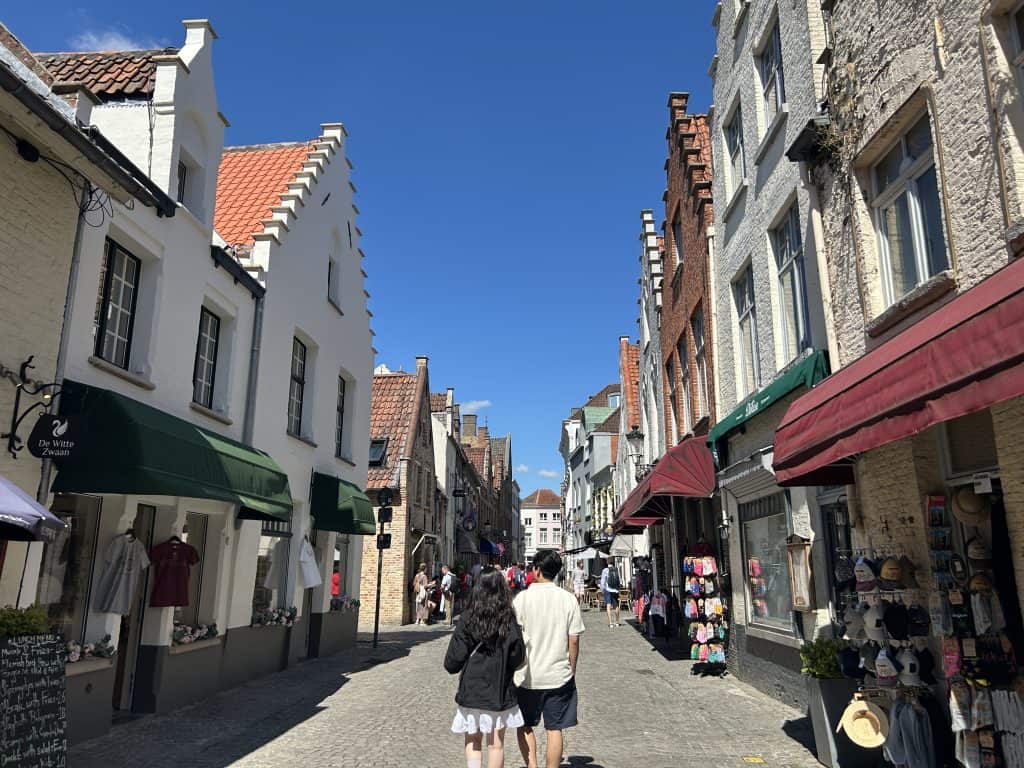
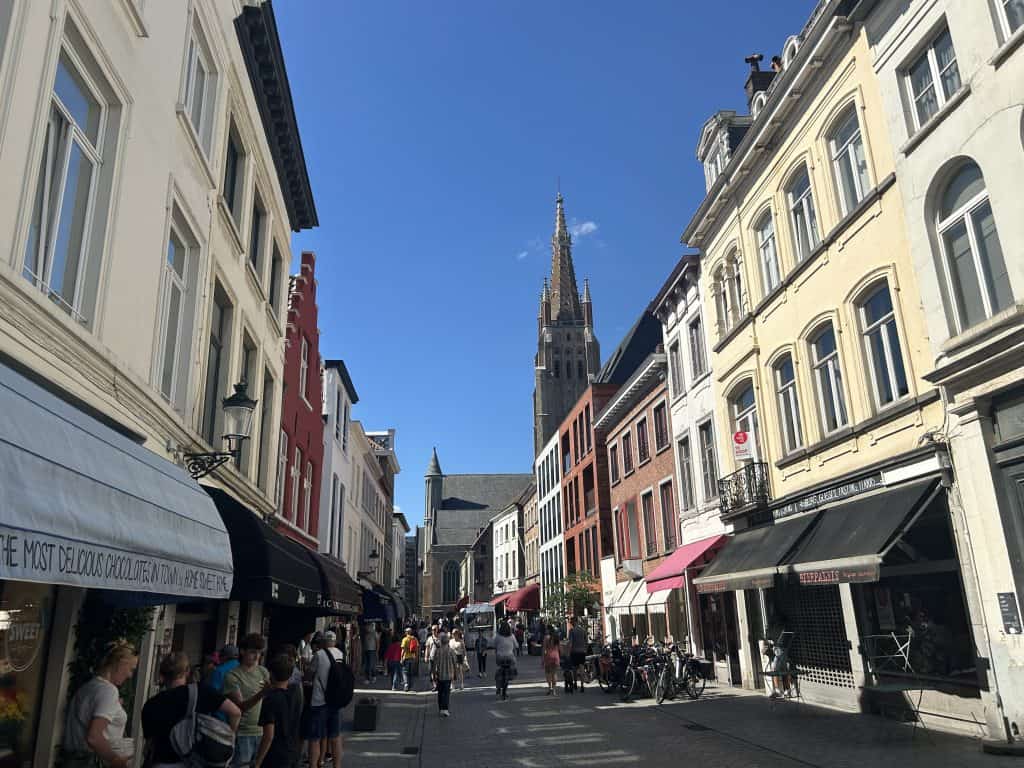
Walking is the best way to explore the historic core of Bruges. The entire UNESCO World Heritage site is a maze of cobblestone streets and narrow alleys that are best experienced at a slow pace. Almost all the major sights, including the Market Square, the Belfry, and the Church of Our Lady, are located within this compact, walkable area. The city has made a concerted effort to limit car traffic in the center, making it very pedestrian-friendly. Comfortable footwear is essential for the uneven stone streets.
Local Buses
Bruges has a comprehensive local bus network operated by De Lijn. These buses connect the city center with all the residential districts and the outer parts of the city. The most useful route for visitors is the one that connects the main train station with the city center. Several bus lines run frequently on this route. The buses are modern and provide clear information on their destinations. They are the primary mode of public transport for traveling within the city.
On Two Wheels: Cycling
Cycling is a very popular way to get around Bruges, as it is throughout the Flanders region. The city has a good network of dedicated cycle paths, and the terrain is almost completely flat. A bicycle is an ideal way to explore the areas just outside the historic center or to travel along the canals that lead out into the surrounding countryside. Several shops in the city offer bicycle rentals for visitors. The city also has a bike-sharing scheme.
By Boat: Canal Tours
A unique way of getting around and seeing the city is by taking a canal boat tour. Several companies operate guided tours of the city’s network of canals. The tours typically last about 30 minutes and provide a different perspective on the medieval architecture of the city. The boats depart from several landing stages located in the city center. While it is primarily a tourist activity, it is also a mode of transport that allows you to see a large part of the city from the water.



How to Get to Bruges
Reaching Bruges is convenient by road and rail. Its location in the northwest of Belgium, close to the North Sea coast and the French border, makes it highly accessible. The city is a major tourist destination, and its transport links are well-developed. The primary mode of transport for reaching the city is by train, as it is on a major international railway line. The city is also easily accessible from the nearby ferry port of Zeebrugge.
On Track: A Key Railway Hub
Traveling to Bruges by train is highly efficient and is the most recommended option. The Bruges railway station is a major hub on the Belgian national railway network. The Belgian National Railway Company (SNCB/NMBS) operates frequent InterCity train services. There are direct and frequent trains to Bruges from Brussels, with a journey time of about one hour. Direct trains also connect Bruges with other major Belgian cities like Ghent and Antwerp. The station is located a short walk from the historic city center.
Arriving by Air: Brussels Gateway
The closest and most convenient major international airport is Brussels Airport (BRU). It is located approximately 110 kilometers from Bruges. BRU is a major international hub with extensive global connections. From the airport, there is a direct train service to Bruges, which runs hourly. This makes the transfer from the airport very simple and efficient. Other smaller airports in the region include Ostend-Bruges International Airport (OST), which has a limited number of seasonal flights.
The Open Road: Driving the Motorways
Driving to Bruges offers flexibility for exploring the wider Flanders region. The city is located at the junction of two major motorways. The E40 motorway is a key east-west route that connects Brussels with the coast at Ostend. The E403 motorway connects Bruges with the south of Belgium and with France. Be aware that the historic center of Bruges is a low-traffic zone, and parking is very limited. It is recommended to use the large public car parks located on the edge of the city center.
Connecting by Coach
Long-distance bus services from companies like FlixBus connect Bruges with many cities across Europe. The main long-distance bus stop is located at the main train station. This provides an economical option for reaching the city. However, for travel from major hubs like Brussels, the train is generally much faster and more convenient than the bus. Regional buses operated by De Lijn also connect Bruges with the surrounding towns and the coastal resorts.
The North Sea Route: Arriving by Ferry
Bruges is located very close to a major international ferry port. The Port of Zeebrugge, located on the North Sea coast about 15 kilometers away, is the second-busiest port in Belgium. P&O Ferries operates an overnight ferry service that connects Zeebrugge with Hull in the United Kingdom. From the ferry terminal in Zeebrugge, it is a short journey by bus or taxi to reach the center of Bruges.
Driving Distances
The driving distance from 20 regional cities, according to Google Maps:
- Ghent, Belgium – 50 kilometers (0 h 50 min)
- Lille, France – 77 kilometers (1 h 10 min)
- Antwerp, Belgium – 92 kilometers (1 h 20 min)
- Brussels, Belgium – 98 kilometers (1 h 20 min)
- Rotterdam, Netherlands – 159 kilometers (2 h 10 min)
- Amsterdam, Netherlands – 248 kilometers (3 h 10 min)
- Düsseldorf, Germany – 271 kilometers (3 h 10 min)
- Reims, France – 285 kilometers (3 h 10 min)
- Paris, France – 299 kilometers (3 h 30 min)
- Cologne, Germany – 309 kilometers (3 h 30 min)
- Luxembourg City, Luxembourg – 309 kilometers (3 h 30 min)
- London, UK – 340 kilometers (5 h 00 min, includes ferry/tunnel)
- Frankfurt, Germany – 463 kilometers (5 h 00 min)
- Strasbourg, France – 513 kilometers (5 h 30 min)
- Hamburg, Germany – 575 kilometers (6 h 10 min)
- Manchester, UK – 679 kilometers (9 h 20 min, includes ferry/tunnel)
- Zurich, Switzerland – 762 kilometers (8 h 20 min)
- Berlin, Germany – 786 kilometers (8 h 20 min)
- Dublin, Ireland – 860 kilometers (12 h 20 min, includes ferry)
- Edinburgh, Scotland – 1,003 kilometers (12 h 40 min, includes ferry/tunnel)
Looking to Explore more of Belgium and Europe?