Big Basin Redwoods State Park, California | Exploring the United States
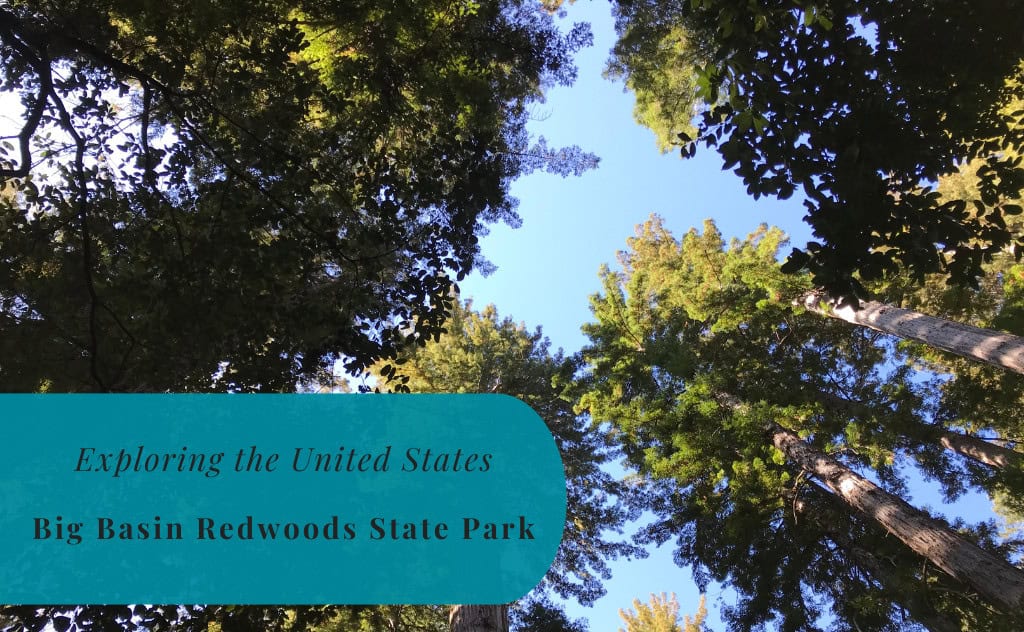
Big Basin Redwoods State Park is a state park located in the Santa Cruz Mountains of California, United States. It is situated in Santa Cruz County, approximately 35 kilometers northwest of the city of Santa Cruz. The park covers over 18,000 acres of terrain. It is most famous for its large groves of ancient coast redwood (Sequoia sempervirens) trees. Established in 1902, it is California’s oldest State Park.
The character of Big Basin is currently defined by its remarkable resilience and its ongoing process of rebirth. The park was devastated by a major wildfire in 2020, which burned over 97% of its area and destroyed all of its historic infrastructure. The landscape is now a mix of giant, fire-scarred but surviving redwood trees and a recovering forest floor. This has transformed the visitor experience into one that is focused on witnessing the long-term ecological processes of a redwood forest’s recovery from fire.


A Short History of Big Basin Redwoods State Park
The history of Big Basin Redwoods State Park is the story of the birth of the modern conservation movement in California. Its creation was a landmark achievement for early environmental advocates who fought to protect the last remaining old-growth redwood forests from logging. The park’s long history as a beloved destination was dramatically interrupted by a catastrophic fire in the 21st century. Its modern story is one of recovery and reimagining how a state park can be managed in an era of climate change.
The Conservation Movement
The history of the park began in the late 19th century, at a time when the vast old-growth redwood forests of the Santa Cruz Mountains were being heavily logged. A group of concerned citizens, led by the photographer Andrew P. Hill, began a campaign to preserve a large tract of these ancient trees. They formed the Sempervirens Club in 1900, one of the earliest conservation organizations in the state. Their successful lobbying and fundraising efforts led to the state of California purchasing the land for a new park.
California’s First State Park
Big Basin Redwoods State Park was officially established in 1902. This made it the very first state park in the California State Parks system. For over a century, the park grew into a major destination for camping and hiking. A historic park headquarters, a lodge, a nature museum, and numerous campgrounds were built in the heart of the main redwood grove. Generations of visitors came to walk among the giant trees, including the famous “Mother of the Forest” and “Father of the Forest.”
The 2020 CZU Fire and Rebirth
A defining event in the park’s history was the CZU Lightning Complex Fire of August 2020. This massive wildfire burned over 86,000 acres in the Santa Cruz Mountains. It swept through Big Basin with incredible intensity, destroying the historic park headquarters, the lodge, the campgrounds, and almost all of the park’s infrastructure. While the fire was a human and historical tragedy for the park, the ancient redwood trees themselves proved to be remarkably resilient. Their thick, fire-resistant bark protected them, and most of the old-growth trees survived. The park is now undergoing a long-term process of rebuilding and has begun a phased reopening to the public.


Things to Do and See
The sights in Big Basin are focused on the redwood forest and the evidence of its recovery from the 2020 wildfire. The visitor experience has changed from one of a developed park to a more rustic and nature-focused one. The main points of interest are the surviving giant trees and the signs of new life in the forest.
The Old-Growth Redwoods
The primary attraction of Big Basin is its grove of old-growth coast redwood trees. Many of these trees are over 1,000 years old and are among the tallest living things on Earth. The fire of 2020 burned through the grove, leaving the massive trunks blackened with soot. However, the vast majority of these ancient trees survived. Visitors can now see the remarkable sight of new, green shoots sprouting from the trunks and crowns of these fire-scarred giants.
The Redwood Loop Trail
The main way to experience the heart of the old-growth grove is on the Redwood Loop Trail. This is a short, relatively flat, and accessible trail that winds its way past some of the largest and most famous trees in the park. The trail was rebuilt and was one of the first parts of the park to reopen to the public after the fire. Walking this trail allows visitors to see both the scale of the ancient trees and the signs of the forest’s recovery.
Waterfalls and Creeks
The park is home to several creeks and waterfalls. The main waterway is Waddell Creek, which flows through the western part of the park to the sea. Several waterfalls, including the scenic Sempervirens Falls and Berry Creek Falls, are located within the park’s boundaries. The areas around these waterfalls are also in a process of ecological recovery. Access to some of these more remote areas of the park is being gradually restored.
Skyline-to-the-Sea Trail
The Skyline-to-the-Sea Trail is a famous long-distance hiking trail that passes through Big Basin. The trail is approximately 48 kilometers long. It starts at Castle Rock State Park, high in the Santa Cruz Mountains, and descends through Big Basin Redwoods State Park to the Pacific Ocean at Waddell Beach. The section of the trail that runs through Big Basin takes hikers through the heart of the redwood forest. It is a key recreational route for backpackers and long-distance hikers.


Recreational Activities in Big Basin Redwoods State Park
The primary recreational activities in Big Basin National Park are hiking and backpacking. The park has an extensive network of trails that offers a variety of experiences, from short nature walks to multi-day treks.
Hiking
Hiking is the main activity for visitors to Big Basin. The park features over 130 kilometers of trails. Since the 2020 fire, the trail network is being reopened in phases as safety assessments are completed and trails are rebuilt. The available trails allow visitors to experience the recovering redwood forest and the surrounding ecosystems. The park offers a unique opportunity to witness the process of forest regeneration firsthand.
Backpacking
Big Basin is a major destination for backpacking. The park has several trail camps for overnight stays. The most famous backpacking route is the Skyline-to-the-Sea Trail. This trail is a popular multi-day trek that is a key part of the Northern California hiking experience. Backpackers must obtain permits and make reservations for the trail camps in advance.


How to Get to Big Basin Redwoods State Park
Reaching Big Basin Redwoods State Park requires a drive on winding mountain roads. A private vehicle is the only way to access the park. Due to the ongoing recovery from the 2020 fire, access to the park is strictly controlled and requires an advance reservation.
The Open Road: Driving the Mountain Highways
The park is located in a remote part of the Santa Cruz Mountains. The main access is via State Route 236. This is a very narrow and winding two-lane road that runs through the park. It can be accessed from the north via State Route 9 near the town of Saratoga or from the south via State Route 9 from the town of Boulder Creek. Drivers should be prepared for slow and winding roads.
Arriving by Air: San Jose and San Francisco
The closest and most convenient major airport is Norman Y. Mineta San José International Airport (SJC). It is located approximately 40 kilometers away. For more extensive global connections, San Francisco International airport (SFO) is about 80 kilometers away. From either of these airports, a rental car is essential for completing the journey into the Santa Cruz Mountains.
On Track: The Absence of Rail
There is no direct train service to the remote location of Big Basin Redwoods State Park. The closest major train stations for Amtrak and Caltrain are located in the city of San Jose. From the San Jose station, a rental car would be required to make the journey into the mountains.
Connecting by Coach
There are no long-distance or local public bus services that run directly to Big Basin Redwoods State Park. The Santa Cruz METRO public bus system serves the nearby town of Boulder Creek. From Boulder Creek, however, there is no public transport to the park entrance. A private vehicle is the only option for the final part of the journey.
An International Ferry Approach
There is no major passenger ferry service to the Santa Cruz County area. The closest major international ferry ports are located much further south in Los Angeles or north in San Francisco, but these primarily serve cruise ships. The primary means of arrival to this part of the California coast is by land or air.
Driving Distances
The driving distance from 10 regional cities, according to Google Maps:
- Santa Cruz, CA – 35 kilometers (0 h 50 min)
- San Jose, CA – 40 kilometers (1 h 00 min)
- San Francisco, CA – 100 kilometers (1 h 50 min)
- Sacramento, CA – 240 kilometers (3 h 00 min)
- Los Angeles, CA – 535 kilometers (5 h 40 min)
- San Diego, CA – 726 kilometers (7 h 30 min)
- Las Vegas, NV – 849 kilometers (8 h 20 min)
- Portland, OR – 1,077 kilometers (11 h 00 min)
- Phoenix, AZ – 1,140 kilometers (11 h 00 min)
- Seattle, WA – 1,351 kilometers (13 h 50 min)
Looking to Explore more of the United States and the Americas?