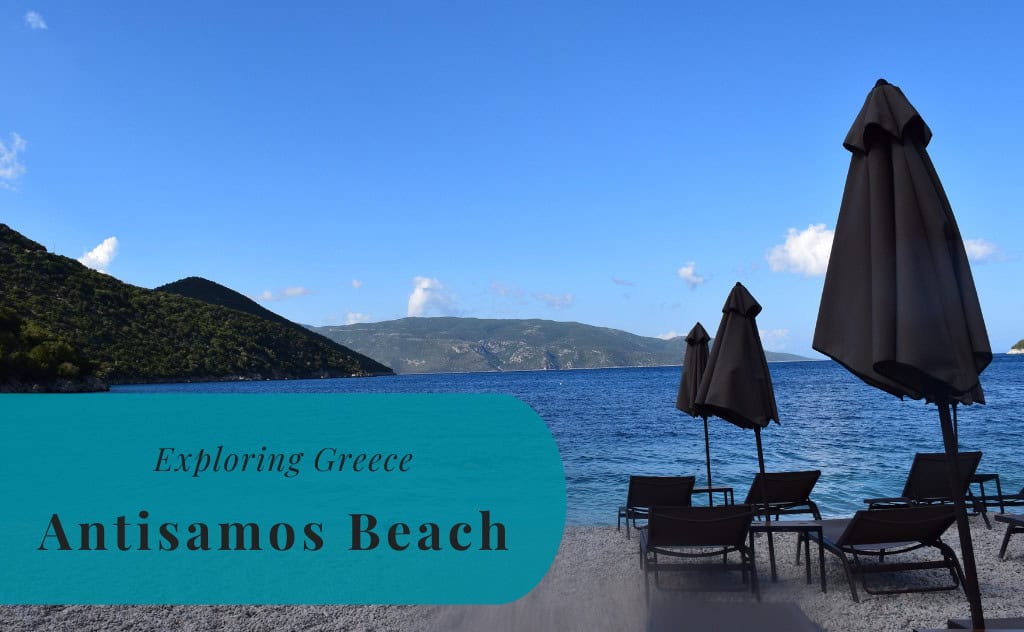
Antisamos Beach, Kefalonia | Exploring Greece
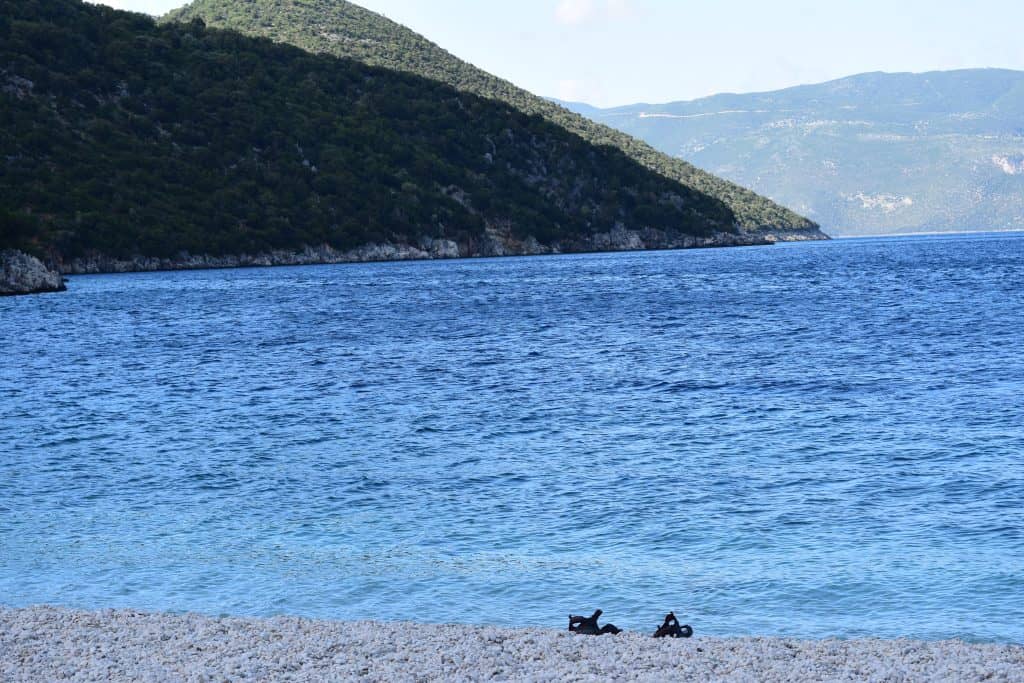
Antisamos Beach is a famous beach located on the eastern coast of the island of Kefalonia, which is one of the Ionian Islands in Greece. It is situated in a secluded bay, just a few kilometers from the main port town of Sami. Antisamos is not a town or a village, but rather a spectacular natural landmark. It is renowned for its beautiful, emerald-green water, its dazzling white pebbles, and the lush, green hills that surround it on all sides, creating a dramatic and enclosed setting.
The identity of Antisamos is that of a stunning natural cove that has become a world-famous film location. The beach’s international fame was cemented after it was prominently featured in the 2001 film Captain Corelli’s Mandolin, where it served as the setting for the Italian encampment. This cinematic history, combined with its undeniable natural beauty, has made it one of the most popular and visited beaches on the island. Today, it is a well-organized beach with excellent facilities, offering visitors a perfect blend of natural splendor and modern comfort.
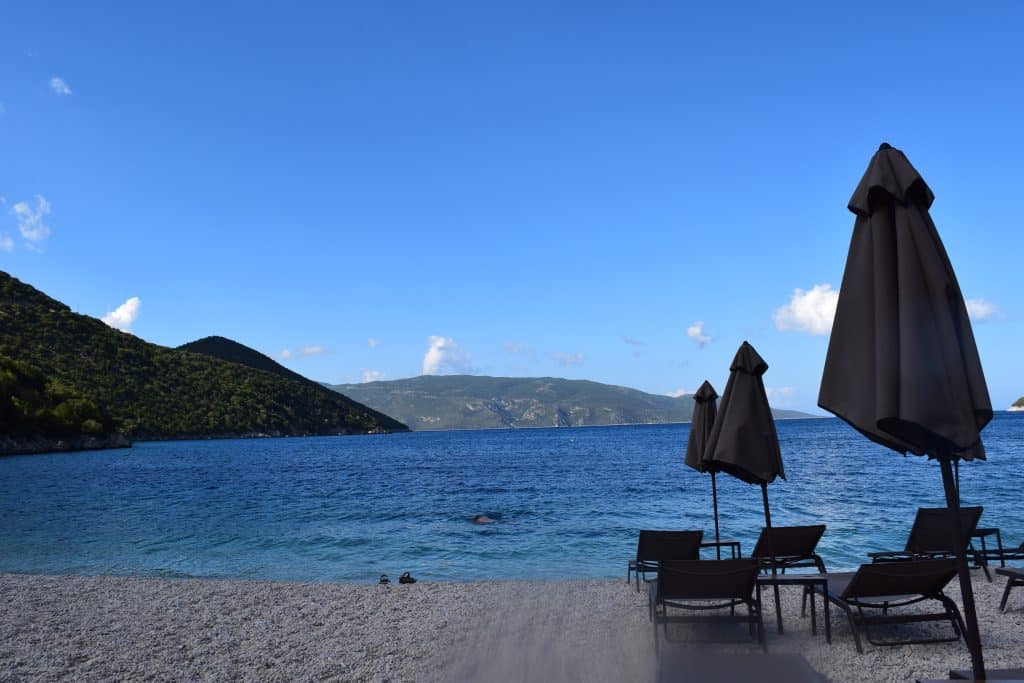
History of Antisamos Beach
The history of Antisamos Beach is primarily a natural one, shaped by the geological forces that created its unique landscape. For centuries, it was a remote and relatively unknown cove, accessible only by a rough track or by sea. Its modern history began with the rise of tourism on Kefalonia and was dramatically accelerated by its appearance on the world stage through cinema. This has transformed the beach from a secluded local spot into an international destination.
A Secluded Natural Cove
For most of its history, Antisamos was a pristine and undeveloped part of the Kefalonian coastline. It was known to local fishermen from the nearby port of Sami, but its relative isolation meant that it saw few visitors. The steep hills that surround the bay made access by land difficult. This lack of development helped to preserve its incredible natural beauty, with its clear water and lush, green surroundings remaining untouched for centuries.
The Impact of “Captain Corelli’s Mandolin”
The major turning point in the history of Antisamos came in 2001 with the release of the Hollywood movie Captain Corelli’s Mandolin. The film, which was set on Kefalonia during World War II, used Antisamos as one of its primary filming locations. The production built a large set on the beach to represent the Italian soldiers’ camp. The stunning images of the beach in the film showcased its beauty to a global audience, and it instantly became one of the most famous and sought-after locations on the island.
A Modern Blue Flag Beach
Following its rise to fame, Antisamos was developed into a modern, organized beach to cater to the growing number of visitors. Today, it is a Blue Flag beach, an international award that recognizes its high standards for water quality, cleanliness, and safety. The beach now has several cafes and beach bars, as well as sunbeds and umbrellas for rent. Despite this development, the surrounding landscape remains protected, and the beach has managed to retain its spectacular natural beauty while offering modern comforts to visitors.

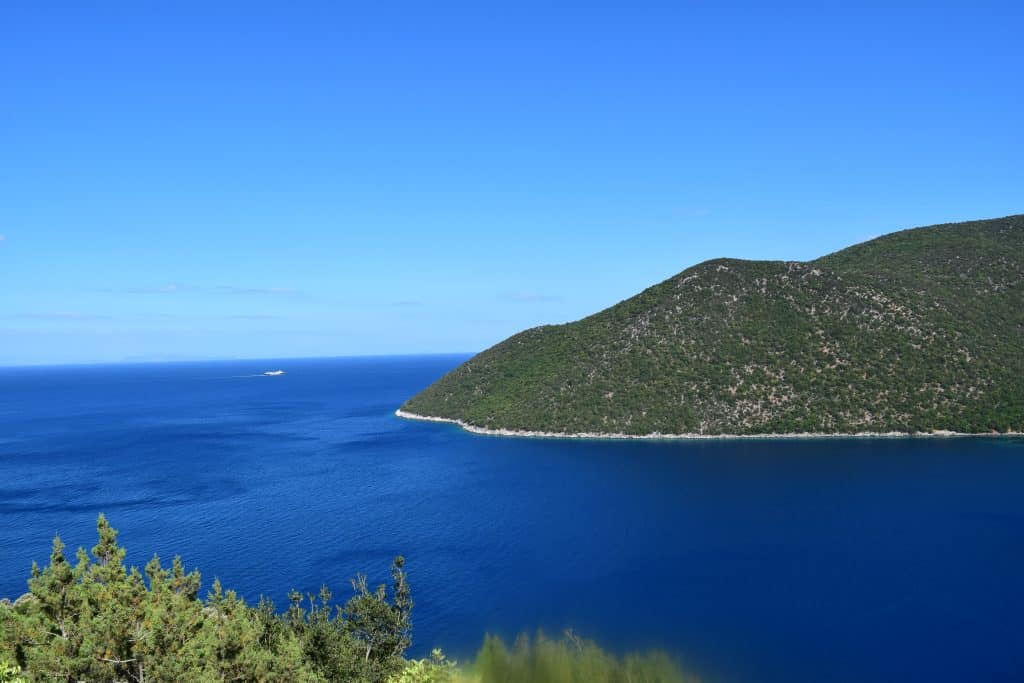
Sights at Antisamos Beach
The sights at Antisamos Beach are entirely focused on its spectacular natural environment. The main attraction is, of course, the magnificent beach itself, with its smooth white pebbles and incredibly clear, emerald-green water. The surrounding landscape of steep, pine-covered hills that plunge directly into the sea creates a dramatic and almost theatrical setting. For those interested in a bit of history, the historic Monastery of Agrilia is located on a hill overlooking the bay, offering panoramic views.
The Beach and Its Scenery
Antisamos Beach is the main sight. It is a long and wide beach composed of smooth, white pebbles and stones. The beach is famous for its stunning natural setting, as it is located in a secluded bay surrounded on all sides by lush, green hills. The water at Antisamos is renowned for its clarity and its striking emerald-green color, which is a result of the reflection from the surrounding vegetation. The beach is a truly spectacular natural wonder, and it is a perfect place for a full day of swimming and relaxation.
The Monastery of Agrilia
Located on a hill overlooking Antisamos Bay is the historic Monastery of Agrilia. This monastery was built in the 18th century and is dedicated to the Virgin Mary. While the monastery itself is not always open to the public, the road up to it provides some of the most spectacular panoramic views of Antisamos Beach and the entire bay. It is a great spot for taking photos of the iconic landscape. A visit to the monastery adds a cultural and historical dimension to a day at the beach.
The Port of Sami
The main port town of Sami is located just a few kilometers from Antisamos, and it is a major sight in itself. Sami is a bustling harbor town with a long waterfront promenade that is lined with numerous excellent tavernas and cafes. The town is also the location of two other major natural attractions on the island: the underground lake of Melissani Cave and the magnificent Drogarati Cave, with its impressive stalactites and stalagmites. A visit to Antisamos can be easily combined with an exploration of these other famous sights.
The Road to Antisamos
The journey to Antisamos Beach is an attraction in itself. The road from the town of Sami winds its way up over a steep hill and then descends dramatically into the bay. The final part of the road offers a breathtaking, bird’s-eye view of the entire beach and the stunning colors of the water. This view is one of the most famous and photographed on the island. There are several places along the road where you can safely stop to admire the panorama and take photos.
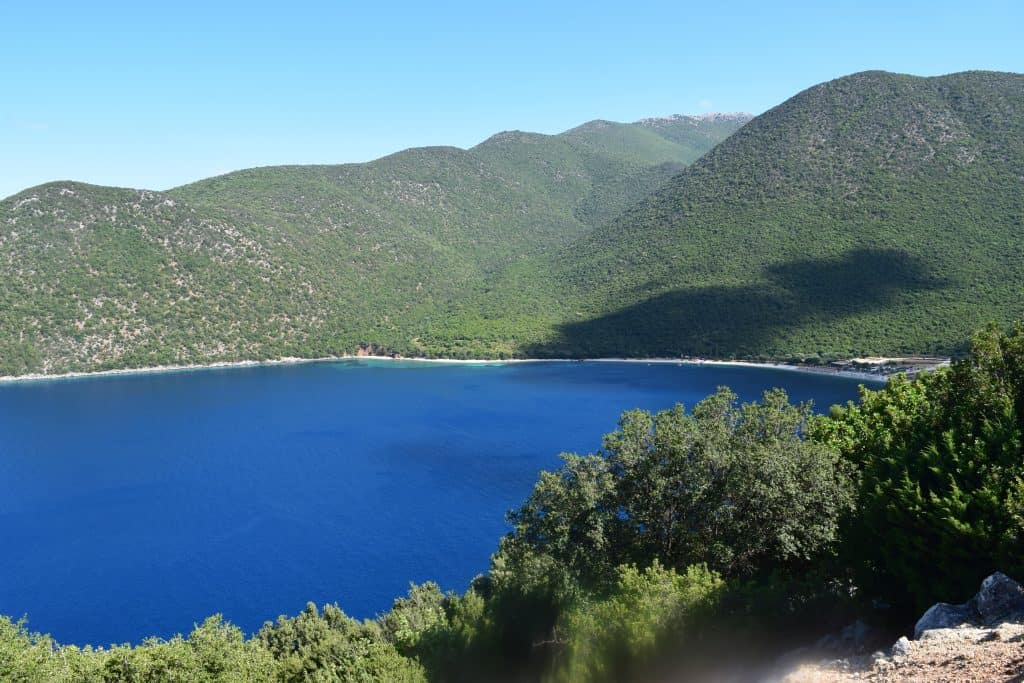
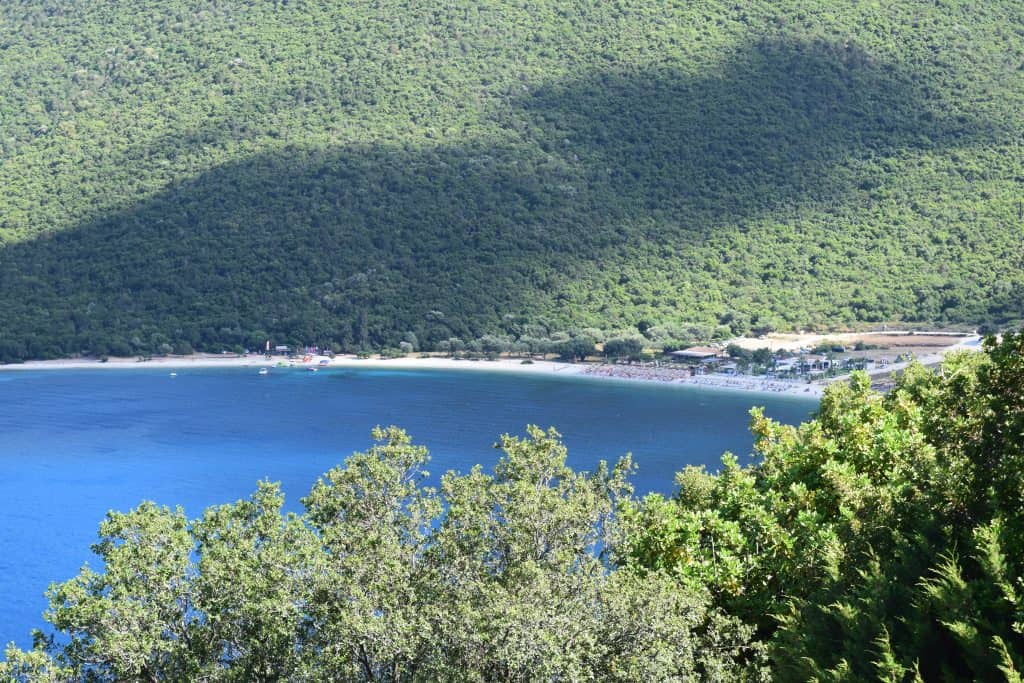
Traveling with Kids
Antisamos Beach is a great destination for families with children, particularly those who are confident swimmers. The beach is composed of small, smooth pebbles, which can be more comfortable for walking on than large stones. The beach is very well-organized, with sunbeds and umbrellas for rent, which is convenient for families needing shade. There are also several beach bars and cafes located directly on the beach, which makes it easy to get lunch and ice cream without having to leave.
Parents should be aware that the water at Antisamos gets deep quite quickly, similar to Myrtos Beach, so it is important to supervise children closely. The beach is located in a sheltered bay, so the water is often very calm, which is great for swimming and snorkeling. The combination of stunning natural beauty and modern, family-friendly facilities makes Antisamos a well-rounded and enjoyable destination for a family beach day.
How to Get to Antisamos Beach?
Antisamos Beach is located on the eastern coast of the island of Kefalonia in Greece. The beach is situated in a secluded bay, just a few kilometers from the main port town of Sami. The main gateway to the island is Kefalonia International Airport (EFL). The island is also connected by ferry to the Greek mainland. Once you are on the island, Antisamos Beach is accessible via a scenic but winding road from Sami.
Arriving by Air
The main airport on the island is Kefalonia International Airport “Anna Pollatou” (EFL). The airport is located in the southern part of the island, near the capital city of Argostoli. It is served by numerous airlines, especially during the summer tourist season, with direct charter and scheduled flights from many cities across Europe. From the airport, the easiest way to reach Antisamos Beach is to rent a car. The drive takes approximately 45-50 minutes.
Arriving by Ferry
Kefalonia is well-connected by ferry to the Greek mainland and to other Ionian Islands. The main port on the island that is closest to Antisamos is in Sami. There are frequent ferry services from the port of Patras on the Peloponnese peninsula and from the island of Ithaca directly to Sami. From the port of Sami, the drive to the beach is very short, taking only about 10-15 minutes.
Driving to the Beach
Driving to Antisamos is a scenic adventure in itself. The beach is located about 30 kilometers from the capital, Argostoli. The most direct route is to drive to the town of Sami. From Sami, a well-signposted road winds its way up over a steep hill and then descends dramatically into the Antisamos bay. The final part of the road offers the iconic, breathtaking view of the entire beach and the stunning colors of the water that is seen in all the famous photographs.
Connecting by Bus
The public bus system on Kefalonia is operated by the KTEL bus company. During the peak summer season, there is a dedicated bus route that connects the main port town of Sami with Antisamos Beach. This service usually runs a few times a day, and it is designed to cater to tourists visiting the famous beach. Outside of the main summer months, this dedicated service may not operate, so it is essential to check the current timetable in advance if you plan to rely on public transport.
Driving Distances
The driving distance from 20 local places, according to Google Maps:
- Sami, Kefalonia – 4 kilometers (0 h 10 min)
- Karavomylos, Kefalonia – 6 kilometers (0 h 15 min)
- Agia Efimia, Kefalonia – 12 kilometers (0 h 20 min)
- Divarata, Kefalonia – 22 kilometers (0 h 35 min)
- Myrtos Beach, Kefalonia – 24 kilometers (0 h 40 min)
- Poros, Kefalonia – 25 kilometers (0 h 40 min)
- Argostoli, Kefalonia – 29 kilometers (0 h 45 min)
- Asos, Kefalonia – 30 kilometers (0 h 50 min)
- Lassi, Kefalonia – 31 kilometers (0 h 50 min)
- Lourdas, Kefalonia – 35 kilometers (0 h 55 min)
- Kefalonia Airport (EFL) – 36 kilometers (0 h 55 min)
- Svoronata, Kefalonia – 37 kilometers (1 h 00 min)
- Skala, Kefalonia – 38 kilometers (1 h 00 min)
- Zola, Kefalonia – 38 kilometers (1 h 00 min)
- Agia Kyriaki Beach, Kefalonia – 40 kilometers (1 h 05 min)
- Fiskardo, Kefalonia – 42 kilometers (1 h 10 min)
- Katelios, Kefalonia – 43 kilometers (1 h 05 min)
- Lixouri, Kefalonia – 48 kilometers (plus ferry)
- Petani Beach, Kefalonia – 50 kilometers (1 h 20 min)
- Xi Beach, Kefalonia – 54 kilometers (plus ferry)
Looking to Explore more of Greece and Europe?