
Adamsfjordfossen, Øst-Finnmark | Exploring Norway
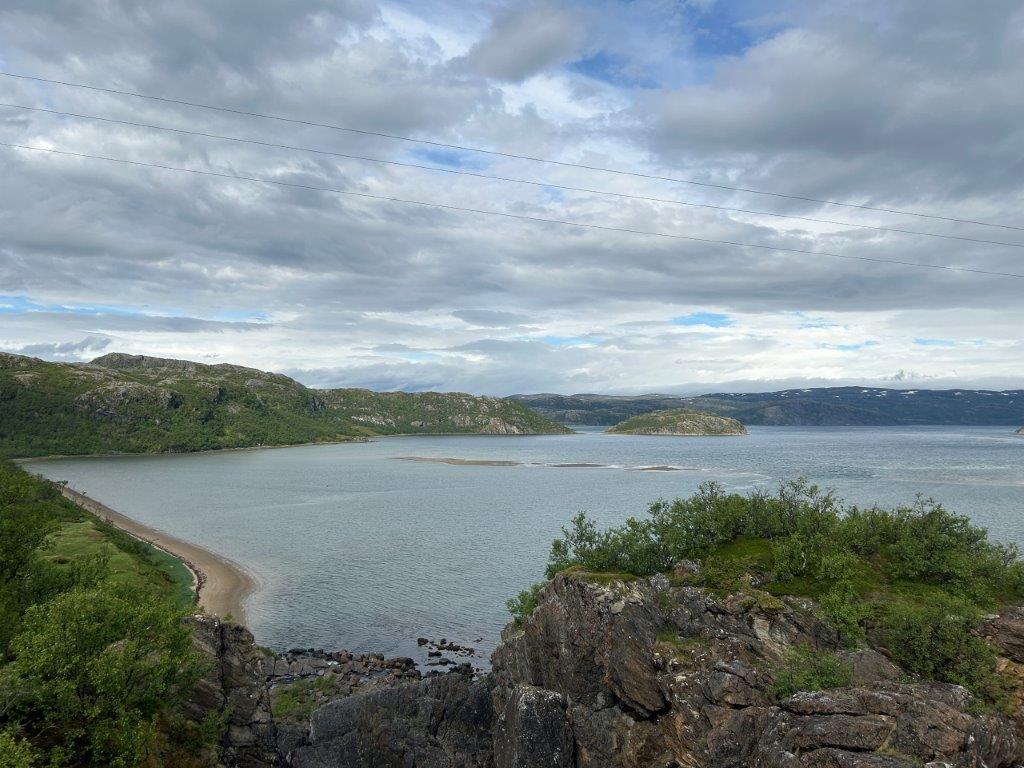
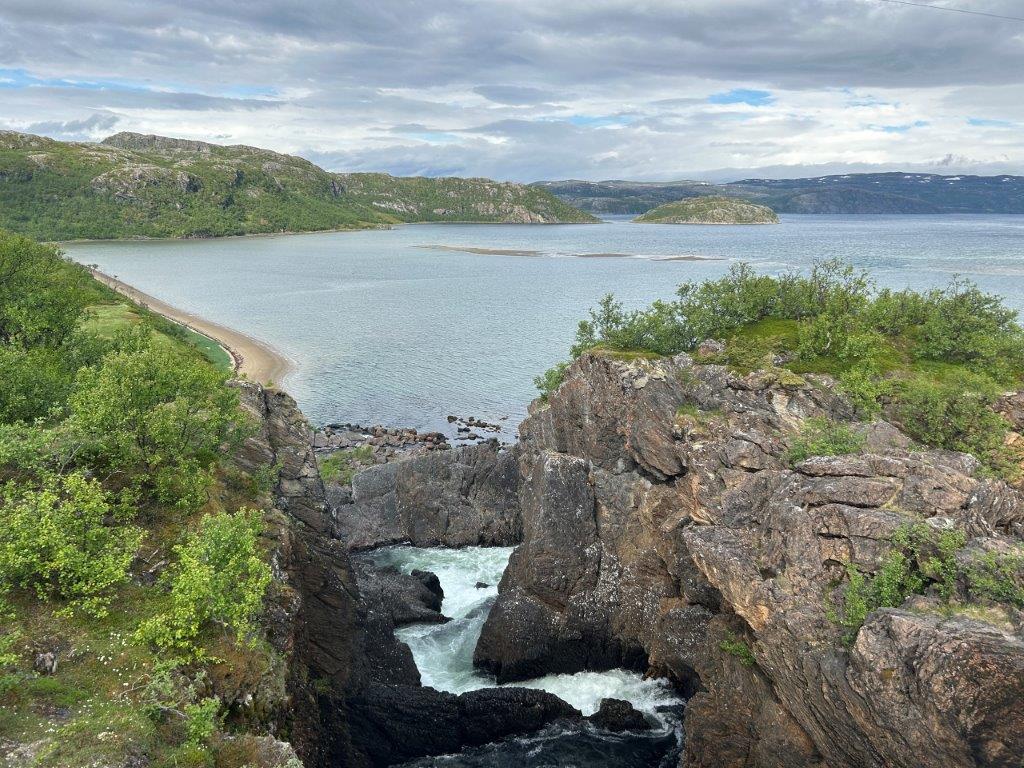
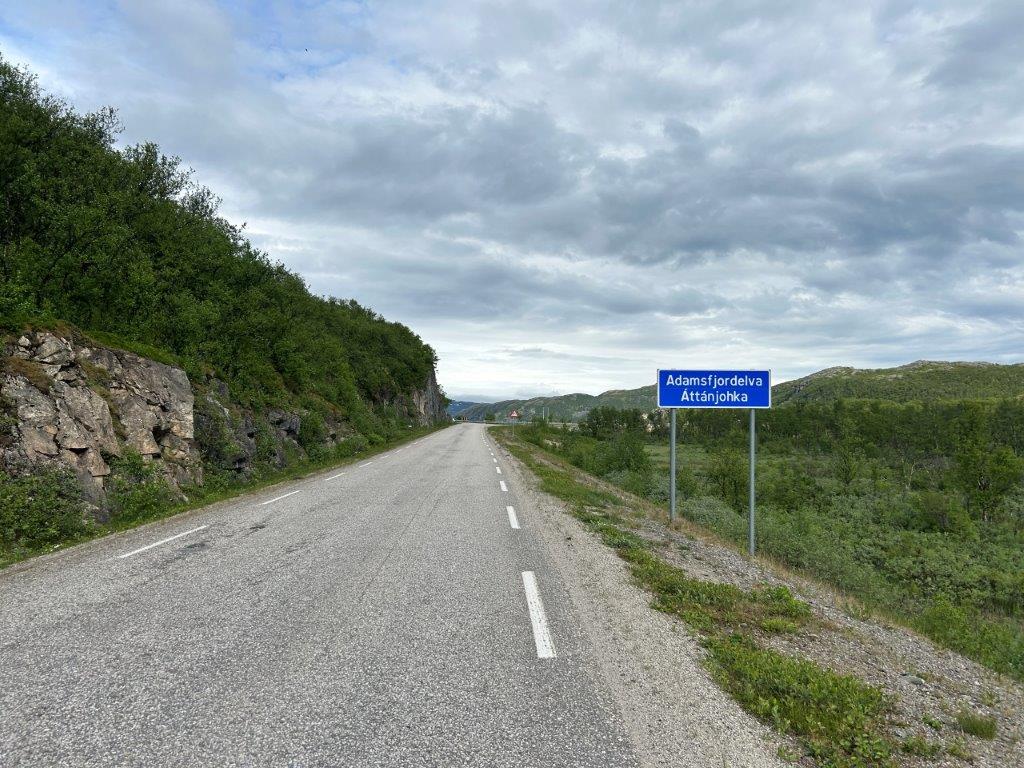
Adamsfjordfossen is a waterfall located in Lebesby Municipality in the county of Finnmark, Norway. Its Northern Sámi name is Áttángorži. The waterfall is situated at the mouth of the Adamselva river, where it flows into the Ifjorden, which is a branch of the larger Laksefjorden. With a total height of 38 meters, the waterfall descends over a rock cliff in two separate drops. It is located directly next to Norwegian County Road 98, making it an accessible natural landmark for those traveling through the region.
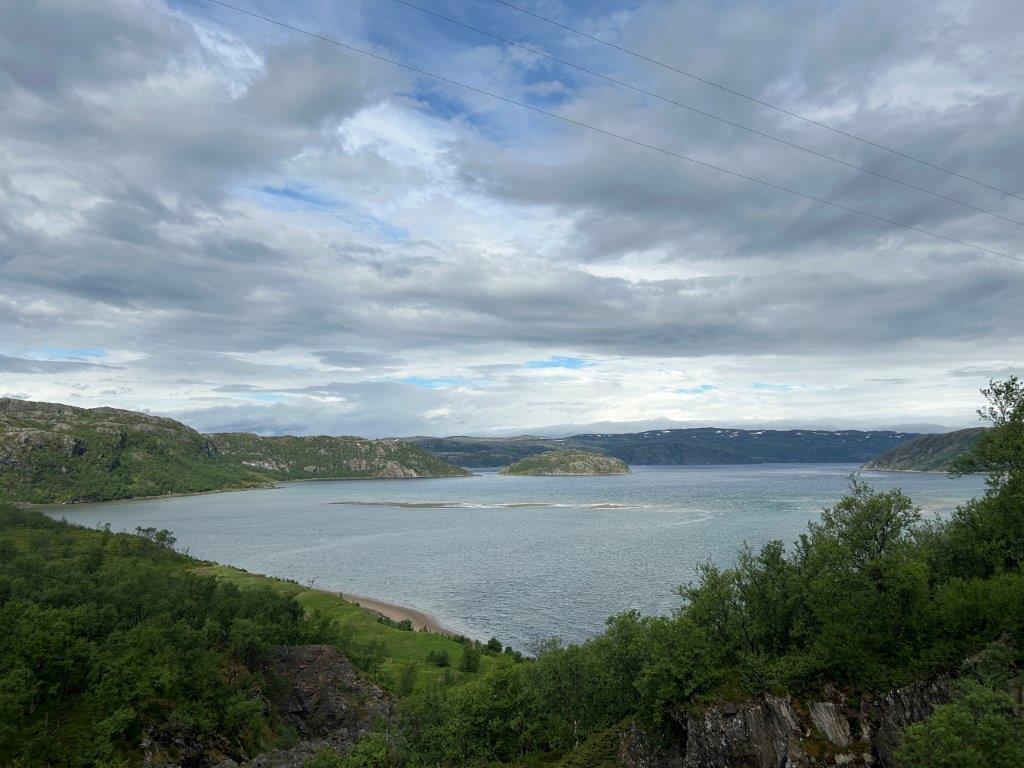
The character of Adamsfjordfossen is that of a natural feature significantly altered by modern industrial development. Since the construction of a hydroelectric power plant in the 1970s, the water flow in the river and over the falls has been greatly reduced for most of the year. Despite this, the site remains a point of interest due to the geology of the cliffs and the views it offers over the fjord. A designated rest area at the top of the falls serves as the primary viewing point. The waterfall is part of the protected Adamsfjord Nature Reserve.
A Short History
The story of Adamsfjordfossen is one of a natural landmark in a remote Arctic landscape that was harnessed for hydroelectric power in the 20th century. This development has defined its modern state. The surrounding area remains a protected nature reserve, important for local birdlife. The waterfall itself is a direct illustration of the balance between industrial needs and the natural environment in northern Norway.
The Adamselv Power Plant
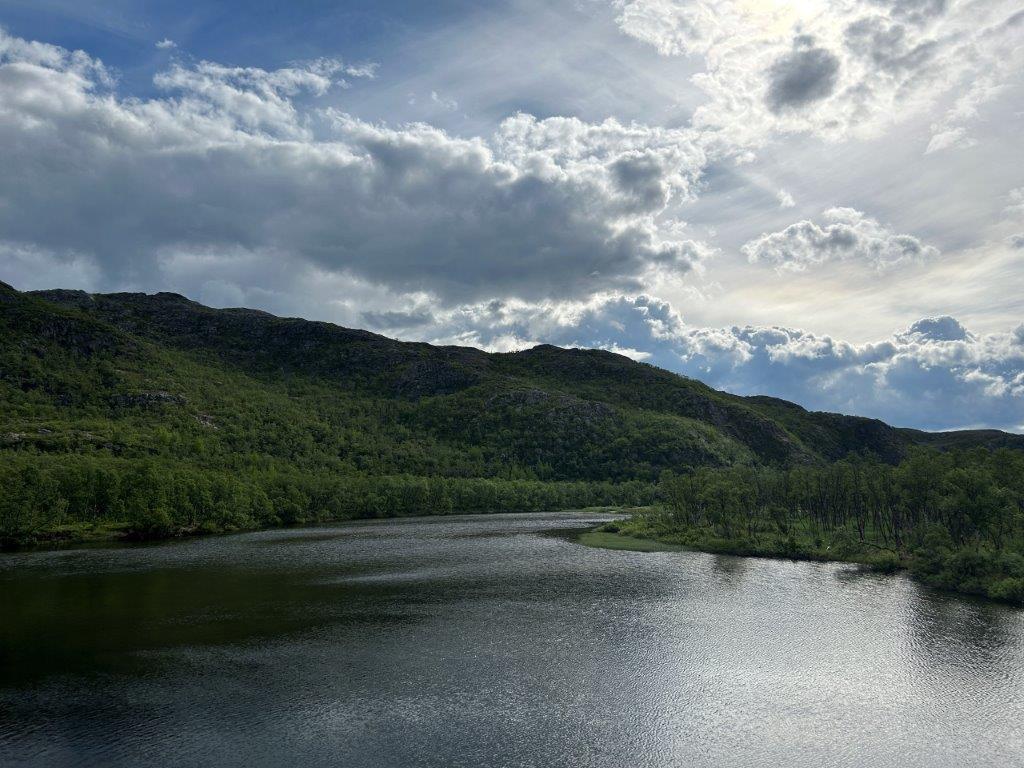
The most significant event in the modern history of Adamsfjordfossen was the construction of the Adamselv power plant. This hydroelectric facility was built in the 1970s to generate electricity for the region. The project involved damming the Adamselva river and diverting much of its water through tunnels to the power station. As a result, the volume of water flowing over the waterfall was significantly reduced. The flow is now regulated, and it is only during periods of heavy snowmelt or when the reservoir is full that the waterfall can be seen at its full power.
The Adamsfjord Nature Reserve
The area around the waterfall is part of the Adamsfjord Nature Reserve (Adamsfjord naturreservat). The reserve was established to protect the inner part of the Adamsfjord. The area is an important resting and feeding area for various species of birds, especially waterfowl. The protected status of the area helps to preserve the natural ecosystem of the fjord and its shoreline. This stands in contrast to the heavily regulated river system that feeds the waterfall.
Things to Do and See
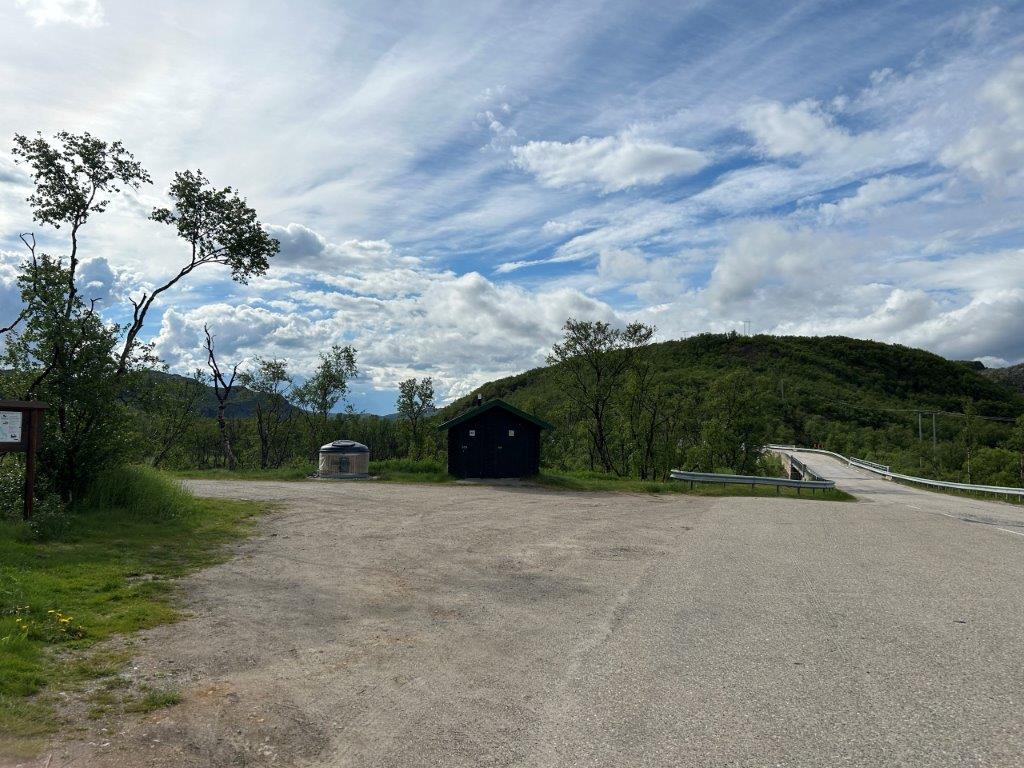
The primary point of interest for visitors is the waterfall itself and the designated viewing area. Adamsfjordfossen descends a total of 38 meters in two distinct steps over a cliff face before the river meets the fjord. Even with the reduced water flow, the scale of the cliffs and the geology of the gorge are notable features. The main viewing point is a public rest area (rasteplass) located directly on County Road 98, at the top of the waterfall. This rest area provides parking and safe access to viewpoints overlooking both the waterfall and the fjord. Interpretive signs at the site offer information about the area’s geology and history.
Recreational Activities Nearby
The area surrounding Adamsfjordfossen offers opportunities for outdoor recreation that are focused on its Arctic nature. The primary activities are birdwatching, fishing, and hiking in the expansive and sparsely populated landscape of the Finnmark region.
Birdwatching
The Adamsfjord Nature Reserve and the wider Laksefjorden area are important for birdlife. The mudflats and shallow waters of the inner fjord provide a key resting and feeding ground for migratory birds. Various species of ducks, waders, and other waterfowl can be observed here, particularly during the spring and autumn migration periods. The area is a destination for ornithologists and nature enthusiasts visiting the region.
Fishing
The Adamselva river and the Laksefjorden have historically been locations for fishing. The Laksefjorden, which means “Salmon Fjord,” is known for its salmon runs. While the regulation of the Adamselva river has affected fish populations, there are still opportunities for both freshwater and saltwater fishing in the wider area. A national fishing license and a local permit are typically required for fishing in the rivers.
Hiking
The landscape around Adamsfjordfossen consists of the Ifjordfjellet mountain plateau. This is a vast, open tundra environment that is characteristic of the Finnmark region. The area offers extensive terrain for hiking and trekking, although there are few marked trails. Hiking in this region provides an experience of the open, treeless landscape of the Arctic. The “right to roam” in Norway allows for access to most of the wilderness area for hiking.

How to Get to Adamsfjordfossen
Reaching Adamsfjordfossen requires travel to the remote Finnmark region of northern Norway. The waterfall is located directly on a main regional road, making it accessible by car. Public transport options are very limited.
The Arctic Road Trip: Driving
Driving is the most common and practical way to reach Adamsfjordfossen. The waterfall is located directly on Norwegian County Road 98, between the settlements of Kunes and Ifjord. This road is part of the main route connecting the eastern and western parts of Finnmark. The drive across the Ifjordfjellet mountain pass can be subject to closures during severe winter weather. A car provides the necessary flexibility for exploring this remote region.
Arriving by Air: Nearby Gateways
The two closest airports to Adamsfjordfossen are Lakselv Airport (LKL), approximately 75 kilometers to the west, and Mehamn Airport (MEH), a smaller regional airport to the northeast. Lakselv Airport is the larger of the two, with connections to Tromsø and Oslo. From either of these airports, a rental car is required to complete the journey to the waterfall, as there are no direct bus connections.
Connecting by Coach
Regional bus services in this part of Finnmark are very limited. The regional public transport company, Snelandia, operates routes that connect the main towns. A bus service may run along County Road 98 between towns like Lakselv and Ifjord, but these services are typically infrequent, often running only once a day or a few times a week. It is essential to check schedules carefully in advance.
On Track: The Absence of Rail
There is no train service in this part of Norway. The national rail network terminates in Bodø, which is over 1,000 kilometers to the south. Therefore, it is not possible to reach Adamsfjordfossen by train. All travel in the Finnmark region must be done by road or air.
The Arctic Sea Route: Arriving by Ferry
There is no direct ferry access to Adamsfjordfossen. The Hurtigruten coastal steamer stops at several coastal towns on the Finnmark coast, such as Kjøllefjord and Mehamn. From these ports, it is possible to drive south on the road network to reach County Road 98 and the waterfall. This multi-modal approach allows one to combine a coastal voyage with an overland trip.
Driving Distances
The driving distance from 10 regional cities, according to Google Maps:
- Kirkenes, Norway – 253 kilometers (3 h 50 min)
- Tromsø, Norway – 475 kilometers (6 h 40 min)
- Rovaniemi, Finland – 476 kilometers (6 h 00 min)
- Luleå, Sweden – 726 kilometers (9 h 10 min)
- Narvik, Norway – 792 kilometers (10 h 40 min)
- Helsinki, Finland – 1255 kilometers (15 h 20 min)
- Trondheim, Norway – 1564 kilometers (20 h 10 min)
- Stockholm, Sweden – 1643 kilometers (19 h 30 min)
- Oslo, Norway – 1900 kilometers (23 h 20 min)
- Copenhagen, Denmark – 2248 kilometers (26 h 00 min)
Looking to Explore more of Norway and Europe?