
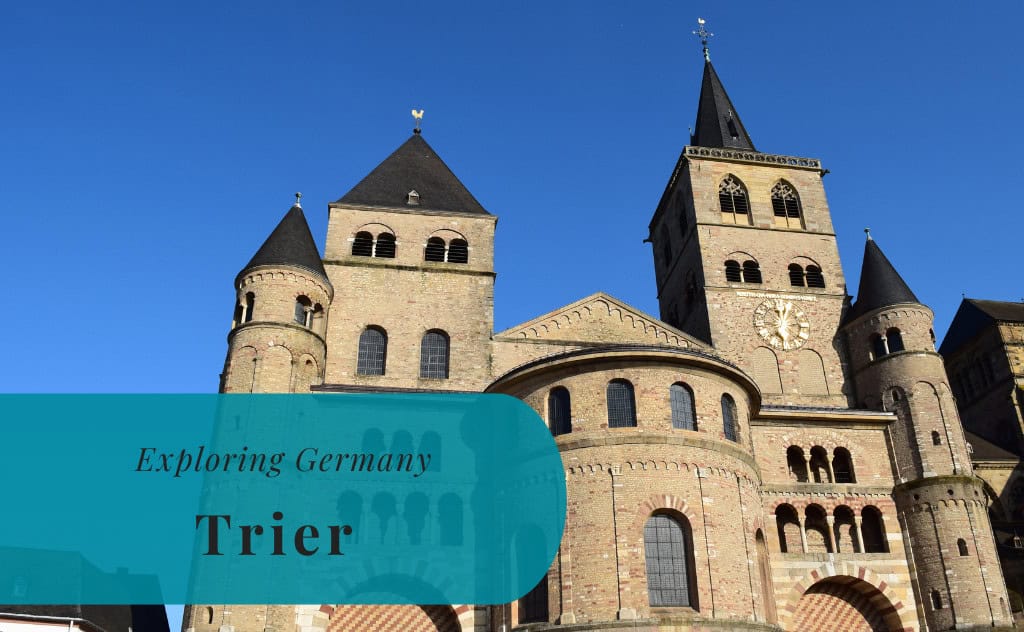
Trier, Rhineland-Palatinate | Exploring Germany
Trier, known as Germany’s oldest city, is located in the state of Rhineland-Palatinate. The city is situated in the Moselle Valley on the banks of the Moselle River, surrounded by low mountain ranges that are extensively used for viticulture. With a population of approximately 112,000 residents, Trier serves as a key cultural and economic center for its region. It is positioned near the borders of Luxembourg, France, and Belgium.
The city’s character is defined by its extensive Roman heritage. Trier contains nine UNESCO World Heritage Sites, which include some of the best-preserved Roman structures in northern Europe. This classical past is blended with its later history as the seat of a powerful Archbishop-Elector. Today, the city is also a university town and a center for the Moselle wine trade, creating an environment where ancient monuments coexist with a functional, modern city.


A Short History of Trier
The history of Trier spans over two millennia, from its founding as a major Roman capital to its role as an influential electoral seat in the Holy Roman Empire. This long history is physically present in the city’s monumental architecture. The city’s strategic location on the Moselle River ensured its importance through different eras of European history. It faced periods of immense prosperity as well as conflict and destruction. Despite this, a significant portion of its ancient and medieval heritage has been preserved.
Augusta Treverorum – A Roman Capital
Trier’s history began in 16 BC when it was established as Augusta Treverorum by the Roman Emperor Augustus. The city grew rapidly, and by the late 3rd and 4th centuries AD, it had become one of the four imperial residences of the Western Roman Empire. It was often referred to as “the Second Rome.” Emperors, including Constantine the Great, resided here and commissioned monumental buildings such as the Aula Palatina and the Imperial Baths. During this period, Trier was the largest city north of the Alps.
An Electoral and Ecclesiastical Center
Following the decline of the Roman Empire and subsequent Germanic invasions, Trier maintained its importance as a major religious center. It became the seat of an Archbishop. The Archbishop of Trier later gained the status of one of the seven Electors of the Holy Roman Empire. This position gave the city’s ruler significant political power in the election of the Holy Roman Emperor for centuries. The Trier Cathedral, built upon a 4th-century Roman foundation, is a testament to this long period of ecclesiastical rule.
Modern Conflicts and Preservation
The city’s status as an electoral archbishopric ended during the Napoleonic era, and it was later incorporated into Prussia in 1815. In the 20th century, Trier suffered extensive damage during World War II from Allied bombing raids. After the war, a major effort was undertaken to reconstruct and preserve its ancient and medieval heritage. These successful restoration efforts, combined with the unparalleled collection of Roman structures, led to the inscription of its monuments on the UNESCO World Heritage list in 1986.




Things to Do and See
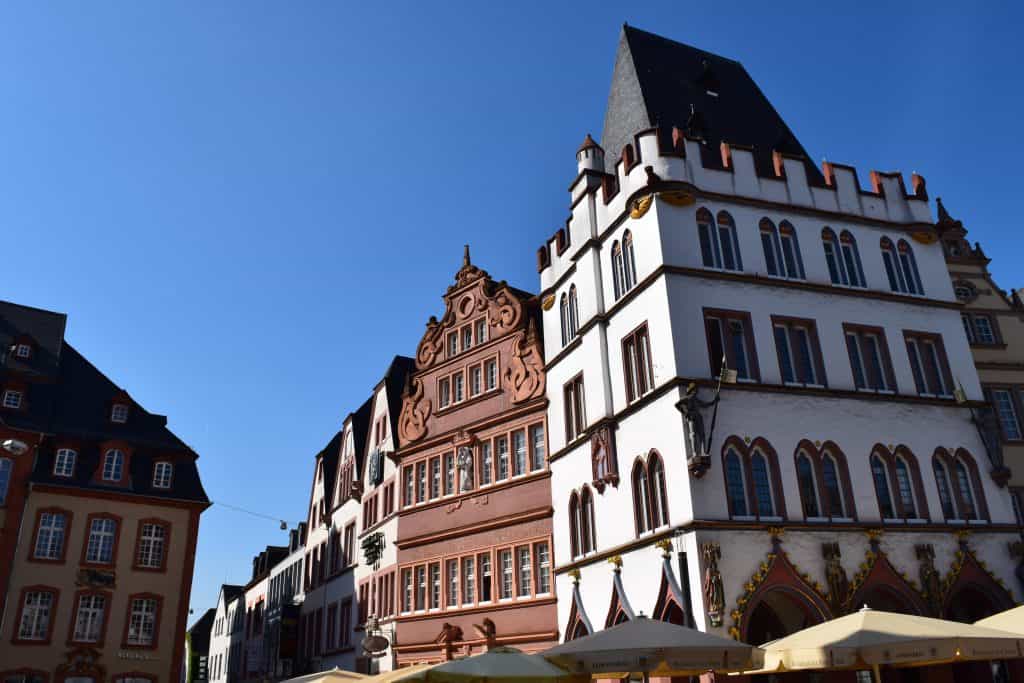
Trier offers a range of attractions that showcase its Roman heritage and centuries of architectural evolution. Visitors can explore Germany’s best-preserved Roman gate, the former throne room of a Roman emperor, and the country’s oldest church. The city’s historic core contains these and other major monuments, most of which are within walking distance of each other.
Porta Nigra
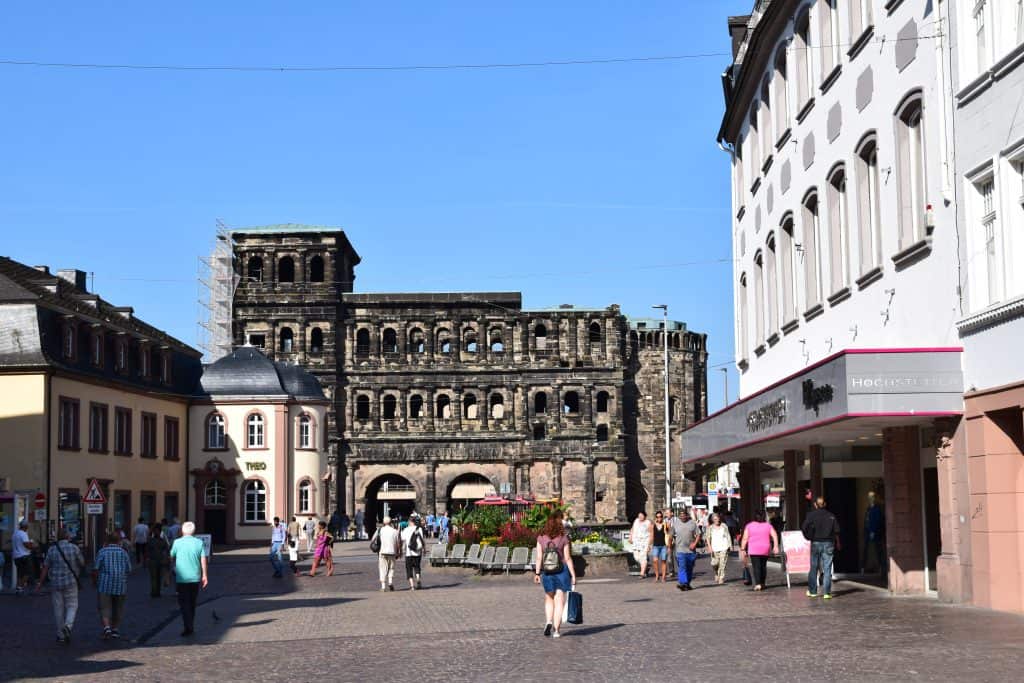
The Porta Nigra is Trier’s most recognized landmark and the best-preserved Roman city gate north of the Alps. Built around 170 AD from grey sandstone, it once served as the northern entrance to Augusta Treverorum. The gate stands 29.3 meters high and was constructed without mortar, with its stones held together by iron rods. In the Middle Ages, it was converted into a church, which helped ensure its survival. It is a UNESCO World Heritage Site.
Trier Cathedral
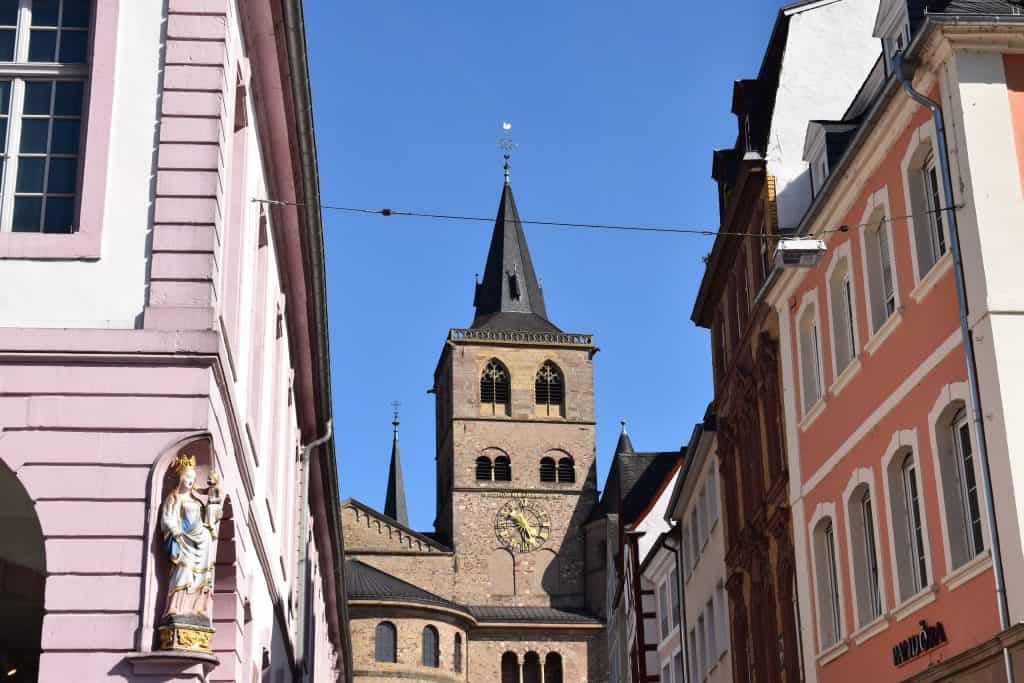
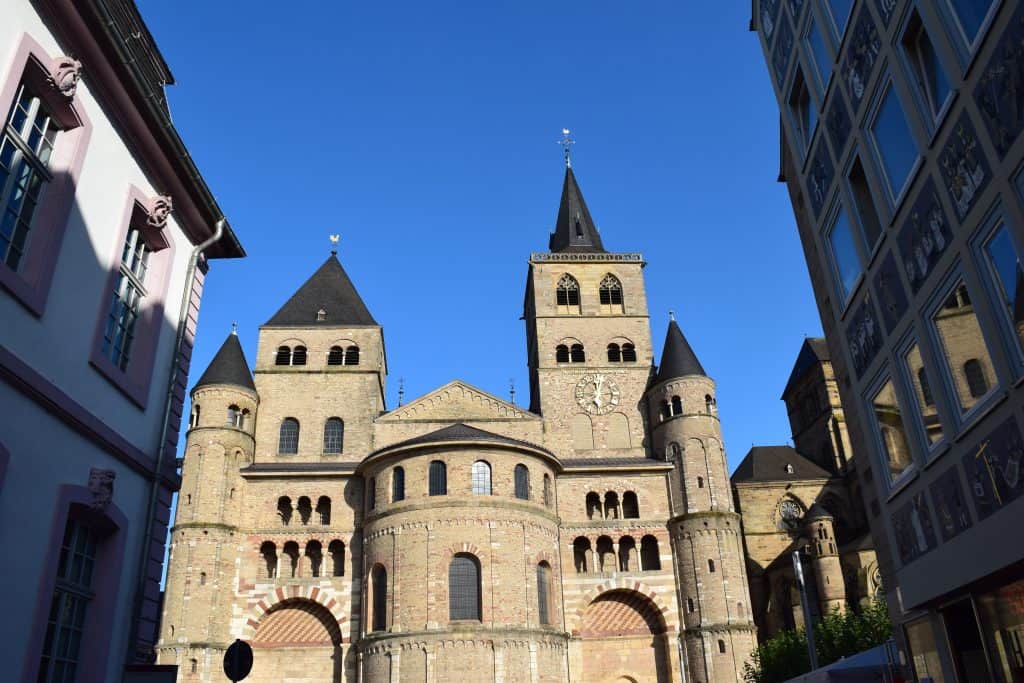
The Trier Cathedral (Hohe Domkirche St. Peter zu Trier) is the oldest church in Germany. Its core dates back to the 4th century under Emperor Constantine. As a UNESCO World Heritage Site, it displays a blend of Romanesque, Gothic, and Baroque architectural styles from centuries of additions. The cathedral houses the Holy Tunic, a relic believed to be the seamless robe worn by Jesus, though it is rarely displayed. The interior includes ancient crypts and other important relics.
Aula Palatina
The Aula Palatina, or Basilica of Constantine, is a large Roman basilica. Emperor Constantine built it in the early 4th century to serve as his imperial throne room. Its dimensions are immense, measuring 67 meters long, 27.5 meters wide, and 33 meters high. It features the largest surviving single-room Roman structure, and its original Roman brickwork is still visible. Today, it is a UNESCO World Heritage Site and serves as a Protestant church.
Imperial Baths
The Imperial Baths (Kaiserthermen) are the ruins of a large Roman bath complex. They were constructed in the 4th century and were intended to be among the largest in the Roman Empire. Although never fully completed for their original purpose, the structures later served as a fortress. Visitors can explore the extensive underground passages and the remains of the hot and cold bathing rooms. It is also a UNESCO World Heritage Site.
Karl Marx House
The Karl Marx House (Karl-Marx-Haus) is the house where the philosopher and economist Karl Marx was born on May 5, 1818. The Baroque building is now a museum dedicated to his life and work. It presents exhibitions on Marx’s personal history, his revolutionary ideas, and the global history of socialism and communism. The museum offers insights into 19th-century society and displays original documents and first editions of his works.
Roman Amphitheatre
The Roman Amphitheatre in Trier dates back to the 2nd century AD. It once hosted gladiatorial combats and public spectacles for an audience of up to 20,000 spectators. In later Roman times, it was integrated into the city’s defensive walls. Visitors can explore the arena floor, the animal cages located beneath it, and the underground passages. It offers a tangible connection to Roman public life and is a UNESCO World Heritage Site.
Römerbrücke
The Roman Bridge (Römerbrücke) is the oldest standing bridge in Germany. It crosses the Moselle River. Its stone pillars date back to the 2nd century AD. The bridge has withstood floods and wars for nearly 2,000 years and is still in use today by traffic and pedestrians. The original wooden bridge on this site was built in 17 BC. Its nine piers are a testament to Roman engineering and a UNESCO World Heritage Site.
Liebfrauenkirche
The Church of Our Lady (Liebfrauenkirche) is a significant early Gothic church. Built in the 13th century, starting around 1230, it is considered one of Germany’s earliest Gothic cathedrals. Its design, which was inspired by French cathedrals, is based on a Greek cross floor plan. It stands adjacent to Trier Cathedral. The church’s unique floor plan and early Gothic style make it an important architectural monument and a UNESCO World Heritage Site.
Rheinisches Landesmuseum Trier
The Rheinisches Landesmuseum Trier is one of Germany’s most important archaeological museums. It houses vast collections spanning prehistory, Roman times, and the early Middle Ages. Highlights include the largest mosaic collection in Germany and the Neumagen Wine Ship, a famous Roman funerary monument depicting a wine-trading vessel. The museum also contains a priceless hoard of Roman gold coins, which was discovered in Trier in 1993.
Sports in Trier
Trier has an active sports culture with strong traditions in football, handball, and basketball. The city’s clubs have a history of competing at high levels in the German league systems. The surrounding Moselle Valley also provides a setting for recreational sports like cycling and running.
Football
Football holds a significant place in Trier’s community. The city’s primary football club has a long history and commands a loyal local following. Matches are social events that unite generations of fans. The club’s performance often draws significant local attention, and it is a key part of the city’s sporting identity.
SV Eintracht Trier 05
The city’s most prominent football club is SV Eintracht Trier 05. Founded in 1905, the team plays its home matches at the Moselstadion, which has a capacity of over 10,000. Eintracht Trier currently competes in the Regionalliga Südwest, the fourth tier of German football. The club’s history includes multiple German Amateur Championship titles and a notable run to the semi-finals of the DFB-Pokal (German Cup) in 1998.
Handball
Handball holds a notable presence in Trier, particularly as a host city for major international events. The sport is active at various levels within the city, contributing to its diverse sporting scene. The local arena provides a modern venue for top-level competition.
2025 IHF Women’s Handball World Championship
Trier is one of the host cities for the 2025 IHF Women’s Handball World Championship. International matches will be held at the SWT-Arena Trier, a modern indoor venue. This highlights Trier’s capacity to host significant international sporting events. Local handball clubs also compete at regional levels, fostering participation in the sport.
Basketball
Basketball also has a strong following in Trier. The city is home to a professional basketball team with a history of competing in Germany’s top league. The team has a dedicated fanbase that creates a supportive atmosphere at home games. The club is a central institution for the basketball community in the region.
Gladiators Trier
The city’s professional basketball team is Gladiators Trier. The club competes in the ProA, which is the second tier of professional basketball in Germany. They play their home games at the SWT-Arena Trier. The team continues the city’s long basketball tradition and aims to compete for promotion to the top-tier Basketball Bundesliga.
Cycling
Cycling is a popular recreational activity in Trier, largely due to its location in the scenic Moselle Valley. The region offers extensive and varied routes for all types of cyclists. The Mosel Cycle Path is one of Germany’s most popular long-distance routes, running directly through the city.
Getting Around in Trier
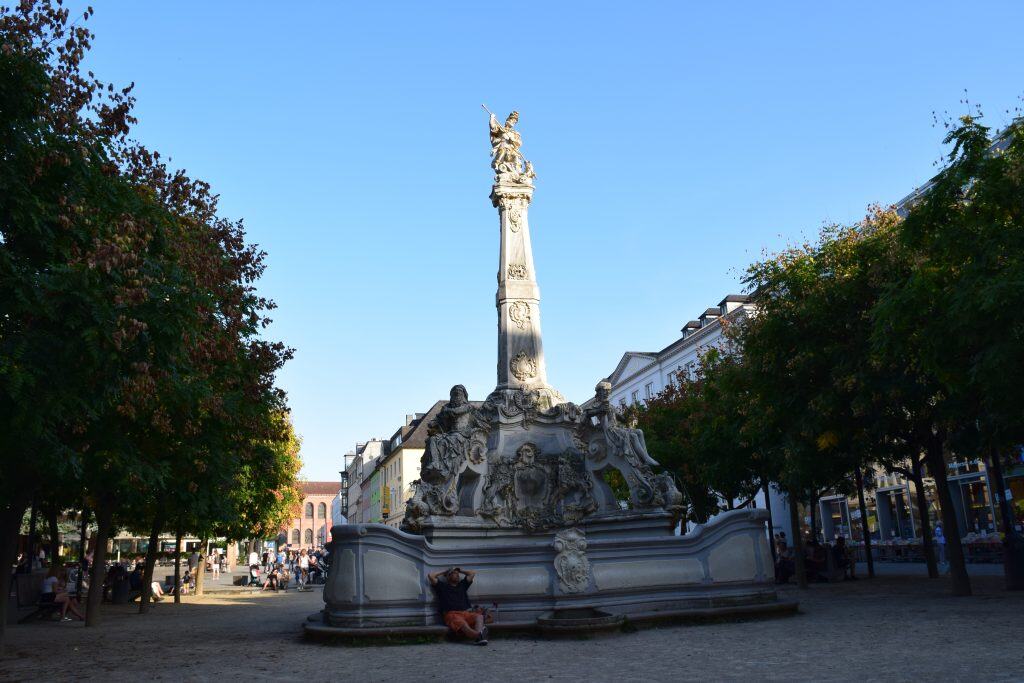
Navigating Trier is straightforward due to its compact city center. Most of the major Roman and medieval sights are located within a large pedestrian zone, making them easily accessible on foot. For destinations further afield, the city has an efficient public bus network.
On Foot: The Ancient Core
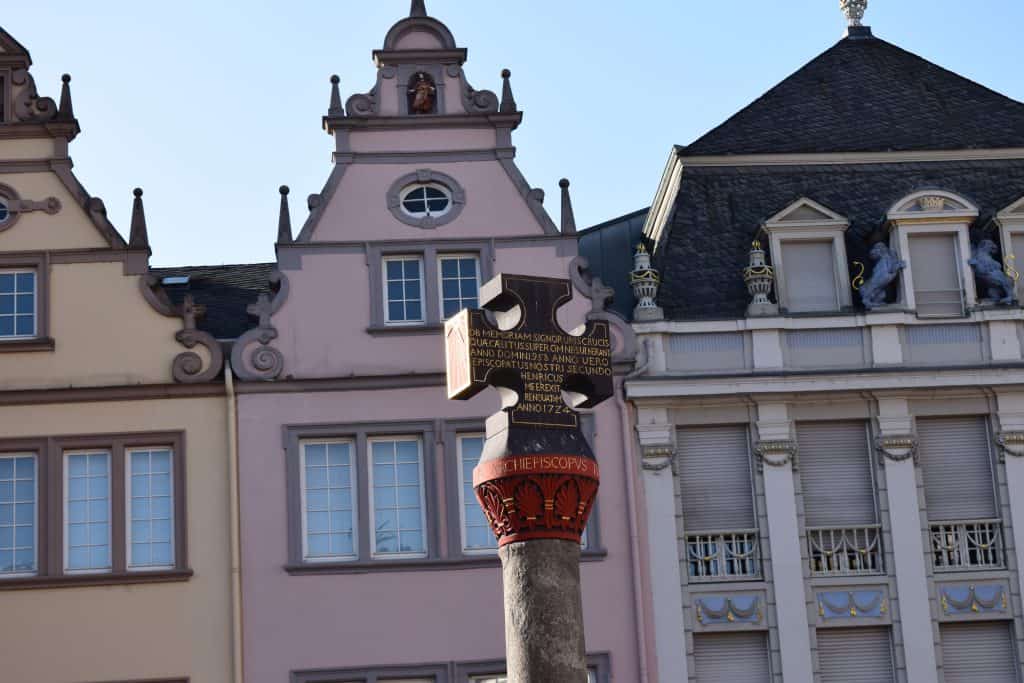
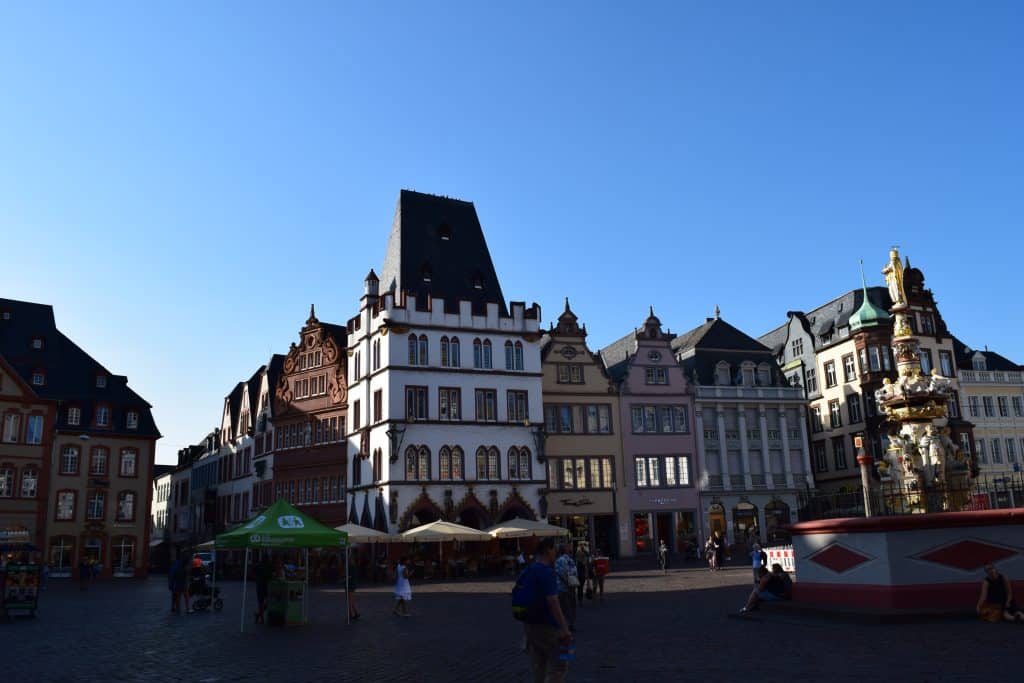
Walking is the best way to explore Trier’s historic core. The area stretching from the Porta Nigra in the north to the Imperial Baths in the south is highly walkable. The main market square (Hauptmarkt), the Cathedral, and the Karl Marx House are all within a short distance of each other. This allows visitors to see a large number of UNESCO World Heritage sites in a single day on foot.
Riding the Bus: The VRT Network
Trier’s public transport is operated by the Verkehrsverbund Region Trier (VRT). A comprehensive network of buses serves all parts of the city and its suburbs. The buses are a key mode of transport for connecting the train station with different districts and the university campus on the hills above the city. Tickets can be purchased at vending machines, from the driver, or via a mobile app.
How to Get to Trier
Reaching Trier is convenient by road and rail. The city is well-connected to Germany’s transport network and is located very close to Luxembourg, providing easy access from its international airport.
Arriving by Air: Nearby Gateways
Trier does not have its own major commercial airport. The closest international airport is Luxembourg Airport (LUX), located approximately 40 kilometers away. It offers connections to many European cities. Another option is Frankfurt-Hahn Airport (HHN), about 70 kilometers away, which serves low-cost carriers. For major intercontinental connections, Frankfurt Airport (FRA) is a primary hub, around 170 kilometers from Trier. From these airports, onward travel typically involves shuttle buses or trains.
The Open Road: Driving to the Moselle
Driving to Trier offers flexibility for exploring the Moselle Valley. The city is easily accessible via the German motorway network (Autobahn). The A1 motorway connects it to Cologne and Saarbrücken. The A64 links directly to the city of Luxembourg and its motorway network. The city is well-signposted from all major routes. Parking is available in numerous public garages around the city center.
Connecting by Coach
Long-distance bus services provide an economical way to reach Trier. The main bus stop area is located near Trier Hauptbahnhof (central train station). Companies like FlixBus and BlaBlaCar Bus operate routes that connect Trier with major cities across Germany and Europe. Direct connections are available from Frankfurt, Cologne, and Luxembourg, among others.
On Track: A Regional Rail Hub
Traveling to Trier by train is efficient. The Trier Hauptbahnhof is the city’s main railway station. It is well-connected to the German regional rail network. Regional Express (RE) trains provide frequent connections, with direct services from cities like Cologne, Koblenz, and Saarbrücken. The journey from Cologne takes approximately 2 hours and 30 minutes. Direct trains from Luxembourg City can reach Trier in about 50 minutes.
Driving Distances
The driving distance from 10 regional cities, according to Google Maps:
- Luxembourg City, Luxembourg – 50 kilometers (0 h 50 min)
- Saarbrücken, Germany – 98 kilometers (1 h 10 min)
- Cologne, Germany – 169 kilometers (2 h 10 min)
- Frankfurt, Germany – 196 kilometers (2 h 20 min)
- Stuttgart, Germany – 285 kilometers (3 h 20 min)
- Brussels, Belgium – 287 kilometers (3 h 20 min)
- Paris, France – 430 kilometers (4 h 40 min)
- Amsterdam, Netherlands – 443 kilometers (4 h 50 min)
- Munich, Germany – 507 kilometers (5 h 30 min)
- Hamburg, Germany – 609 kilometers (6 h 30 min)
Looking to Explore more of Germany and Europe?




En gång för länge sen var jag i Trier. Det var en lång tågresa från Kiruna dit, en hel klass var vi, med vår tysklärare. Porta Nigra har stannat i minnet och på näthinnan. Trevligt att få se dessa bilder därifrån.