
Stade, Lower Saxony | Exploring Germany
Stade is a historic Hanseatic city in the state of Lower Saxony, Germany. The city sits on the River Schwinge, a tributary of the Elbe River, about 4 kilometers from the main Elbe channel. As the capital of the Stade district, which has a population of approximately 210,000 residents, it is a key cultural and economic center. Stade is located within the Hamburg Metropolitan Region. The area to its east is known as the Altes Land, one of Northern Europe’s largest fruit-producing regions.
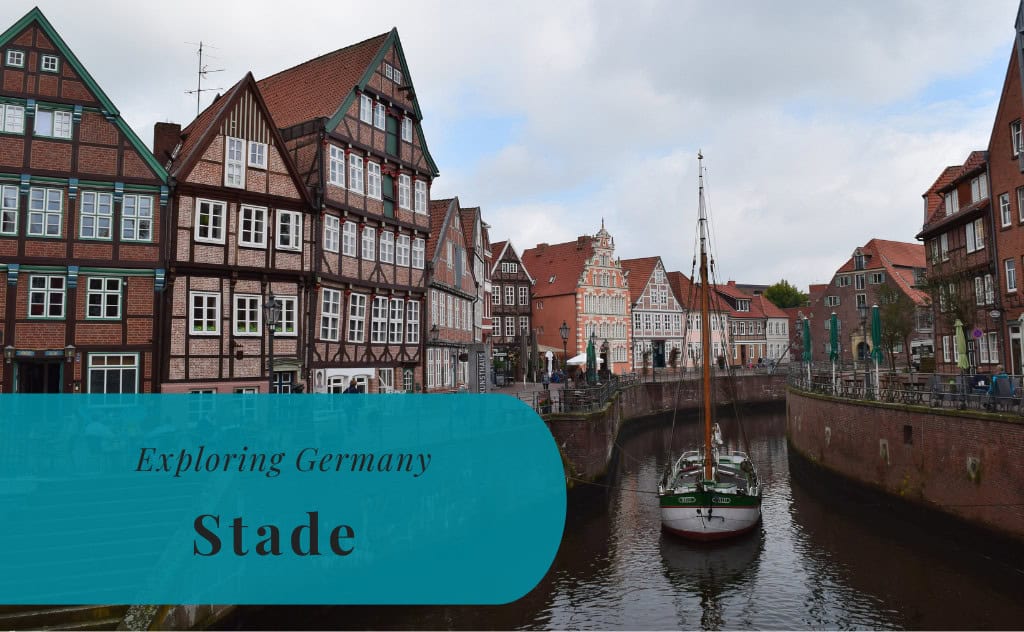
The character of Stade is defined by its well-preserved historic old town and its past as an important trading port. The Old Town Harbour (Alter Hansehafen) is the centerpiece of the city, surrounded by half-timbered houses and historic buildings. The city’s history includes a significant period under Swedish rule, which has left a lasting mark on its architecture. Today, Stade combines its function as a tourist destination with its role as a local center for industry and commerce.


A Short History of Stade
The history of Stade reflects its strategic importance as a port city on the lower Elbe River. Its development was driven by its role in the Hanseatic League, its time as a key fortress under Swedish rule, and its later industrial growth. The city has endured major historical events, including Viking raids and a great fire, which have shaped its urban landscape. This long history is visible today in the city’s preserved architecture.
Hanseatic Port and Early Prosperity
The history of Stade dates back to the late 8th century, with evidence of a market and jetty already present. The first written evidence of “Stethu” (Stade) comes from a chronicle describing a Viking attack in 994 AD. Around the year 1000, a pier was built, laying the foundation for its port. The city’s commercial importance grew, and it was granted staple rights in 1259, requiring passing merchants to offer their goods for sale. Stade became an early member of the Hanseatic League in 1267. By the 14th century, it flourished as a trading town, even surpassing Hamburg in regional importance for a period.
The Great Fire and Swedish Rule
The city’s fortunes shifted during the Thirty Years’ War. It was occupied first by Danish troops and then by Swedish forces. In 1659, a great town fire destroyed over two-thirds of Stade, including the Town Hall and both main churches. The city was rebuilt during the period of Swedish rule (1645-1712). During this time, Stade became the administrative center for the Swedish territories of Bremen-Verden and was developed into an important fortress. The Schwedenspeicher (Swedish Warehouse), a large Baroque supply house, is a prominent reminder of this era.
Prussian Era and Modern Development
After various occupations, including a brief return to Danish rule, Stade became part of the Kingdom of Hanover and was later incorporated into Prussia in 1866. The 19th and 20th centuries brought significant industrial development to the city, including chemical and aerospace industries. The historic Old Town Harbour ceased to be navigable for larger ships and was separated from tidal waters in 1968. In the late 20th century, the city focused on preserving its historic core, which has become a major tourist attraction.




Things to Do and See
Stade offers a range of attractions that showcase its Hanseatic history, its unique architecture, and its location on the water. Visitors can explore the historic Old Town Harbour, the Schwedenspeicher Museum, and the city’s two main historic churches. The Old Town Hall is another key landmark. These sights are all located within a compact and walkable historic center.
Alter Hansehafen
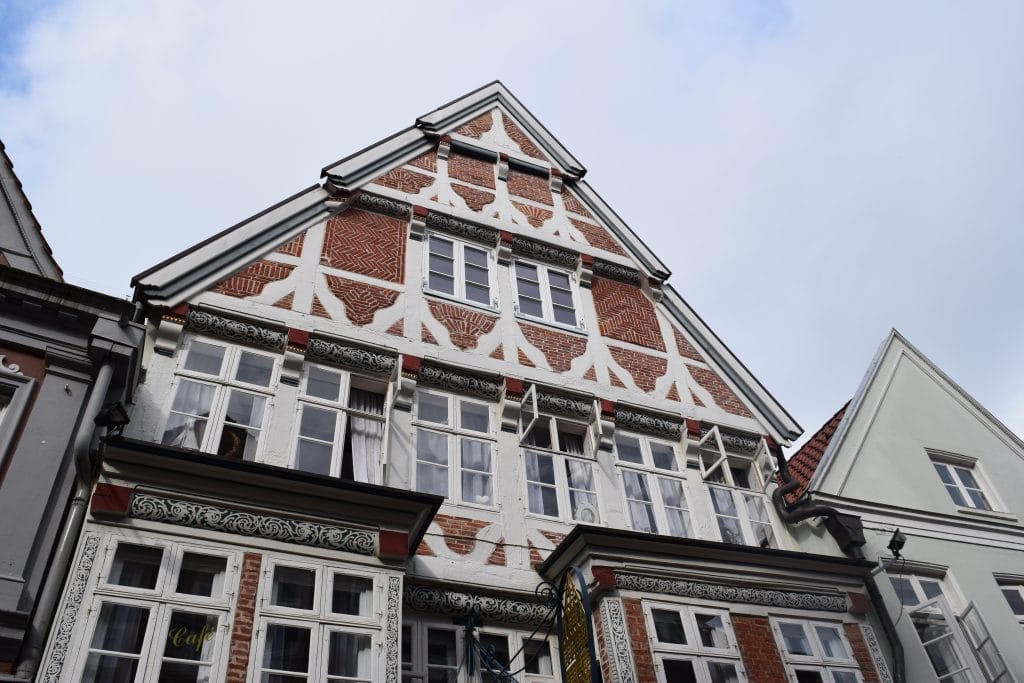
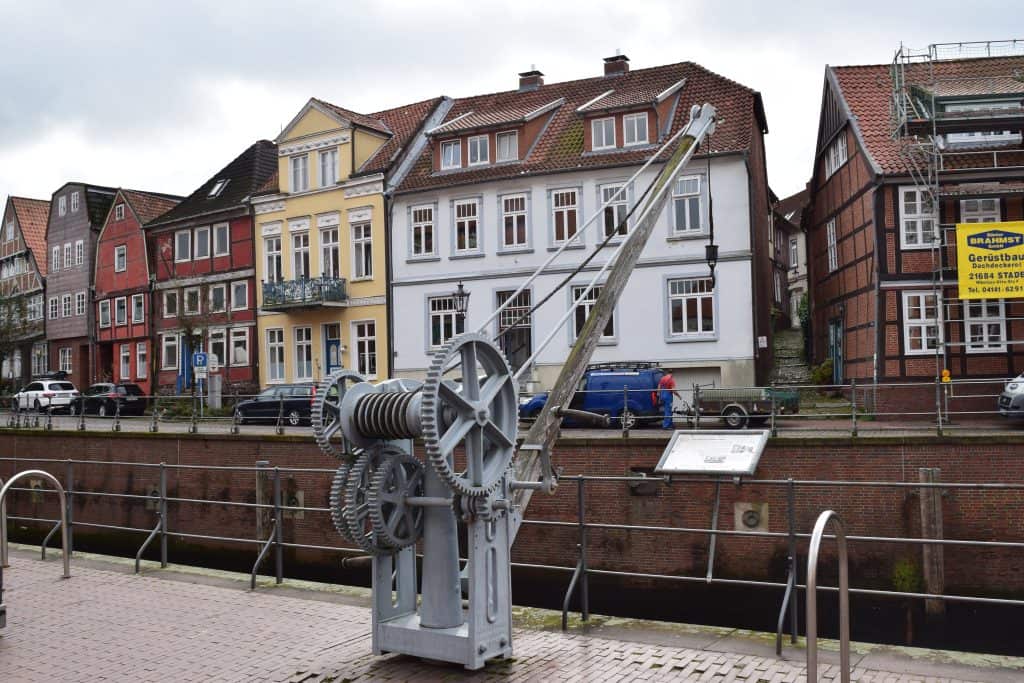
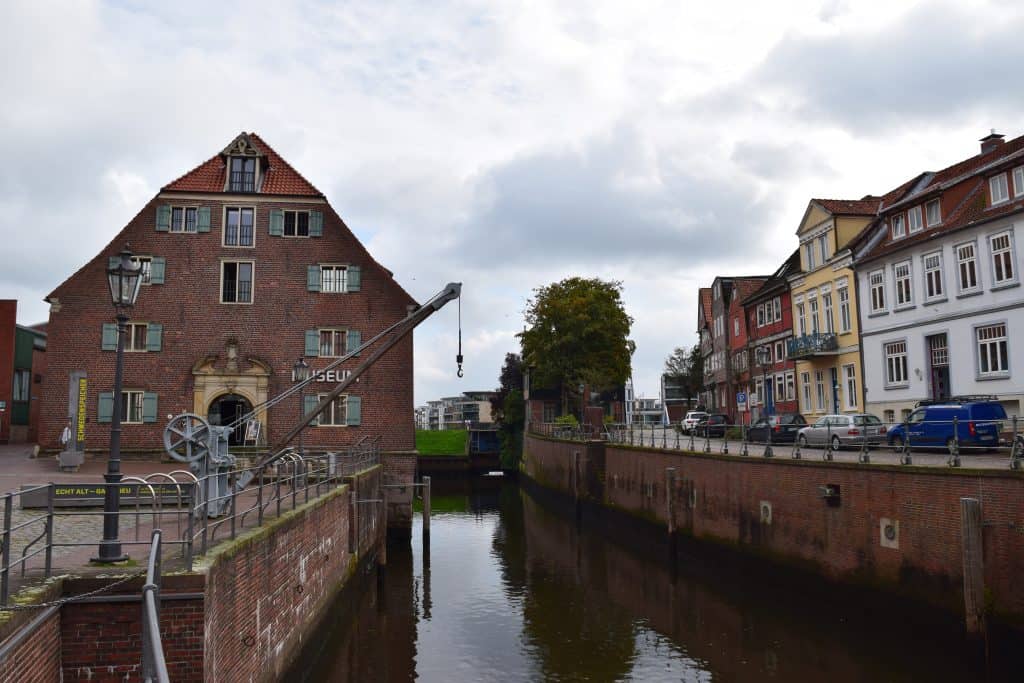
The Old Town Harbour (Alter Hansehafen) is the historic heart of Stade’s Old Town. Located on the River Schwinge, it was the center of the city’s trade for centuries. Since 1968, it has been separated from tidal waters by a weir and now functions as a picturesque inland basin. The harbor is framed by historic half-timbered houses, many dating back to the 17th century. A replica of an old wooden crane, rebuilt in 1977, stands on the southwest side. The Fischmarkt (Fish Market Square) is located at one end, surrounded by cafes and restaurants.
Schwedenspeicher Museum
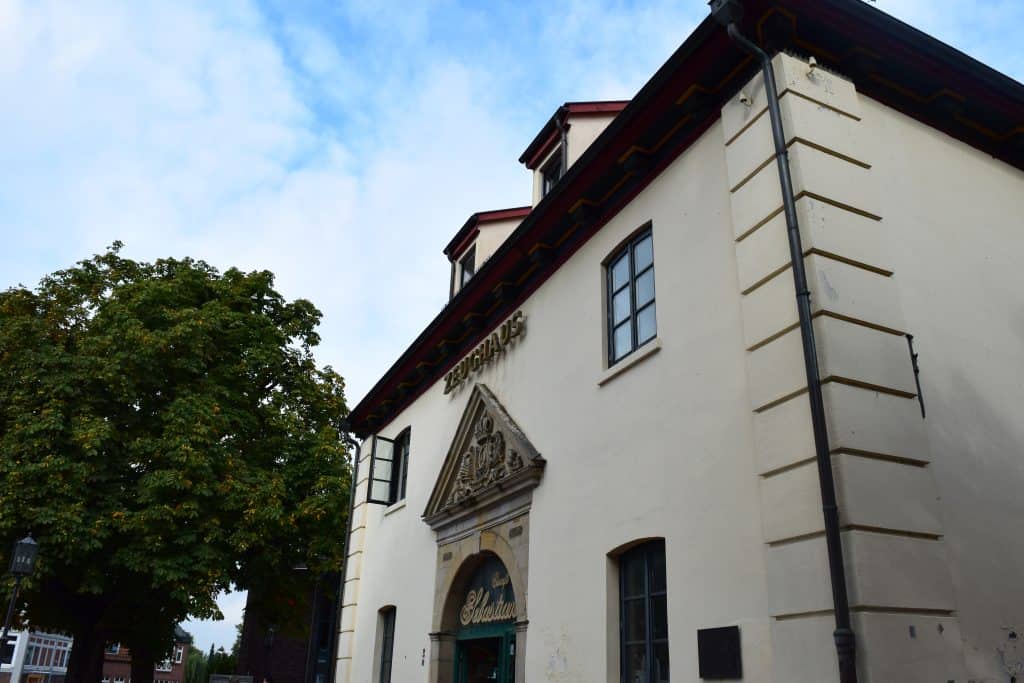
The Schwedenspeicher Museum is housed in a large Baroque brick building by the Old Town Harbour. It was built between 1692 and 1705 during the Swedish rule of Stade and served as a supply warehouse for the Swedish garrison. The building is an important example of secular Baroque architecture. Since 1977, it has functioned as a regional museum. Its permanent exhibition covers the archaeology and history of the Elbe-Weser region and Stade itself. Highlights include finds from the Stade harbor basin, which reflect 1,000 years of city history.
St. Cosmae et Damiani Church
The Church of Saints Cosmas and Damian (St. Cosmae et Damiani), known locally as St. Cosmae, is a prominent Lutheran church. Its origins date to the early 12th century. The current Gothic hall church saw major additions in the 15th, 16th, and 17th centuries, particularly after the great fire of 1659. The church features a Baroque altar, crafted by Christian Precht. It is also home to a historically significant Baroque organ. Built by master organ builders Berendt Huß and Arp Schnitger (1668-1675), it is considered one of the finest 17th-century organs in the world. Visitors can climb its 62-meter spire for views.
St. Wilhadi Church
The St. Wilhadi Church (St. Wilhadi) is the oldest church in Stade, first mentioned in the 11th century. The current Gothic hall church dates from the first half of the 14th century. Its west tower from the 13th century is known as the “leaning tower of Stade” due to its slight tilt. The interior was largely restored after the 1659 fire and features a Baroque décor and an impressive ribbed ceiling. It houses an organ by Erasmus Bielfeldt from the 1730s.
Old Town Hall (Altes Rathaus)
The Old Town Hall (Altes Rathaus) of Stade is an example of Baroque architecture located on the Fish Market Square. It was built in the 17th century after the great fire of 1659 destroyed the previous Gothic town hall. Its facade and historic interior make it a key landmark in the Old Town. The building continues to serve some administrative functions. It is a central point in the city’s historic landscape, located between the Old Town Harbour and the St. Cosmae church.
Sports in Stade
The sporting life in Stade is focused on its large community sports club, which is particularly known for its successful handball team. The city’s location on the rivers and near the Elbe also provides opportunities for water sports. Football and other team sports are also popular at the local level.
Handball
Handball holds a strong and successful presence in Stade. The city’s main sports club has a handball team that has a history of competing at the highest levels of the German league system. The sport has a dedicated local following. Home games are major events that draw large crowds to the main sports hall in the city.
VfL Stade Handball
The handball section of the local sports club, VfL Stade, is the most prominent sports team in the city. The team has a history of competing in the Handball-Bundesliga, the top professional league in Germany. While they currently compete in the lower leagues, they have a strong regional following. They play their home games at the Vincent-Lübeck-Sporthalle.
Football
Football is a popular sport in Stade, with a local club that plays an important role in the community. The club provides a platform for local players and has a focus on youth development. The team competes in the regional leagues of Lower Saxony.
VfL Stade Football
The football section of VfL Stade also represents the city. The club was founded in 1850, making it one of the older sports clubs in the region. The team competes in the lower tiers of the German football league system, such as the Landesliga Lüneburg. They play their home games at the Stadion an der Ottenbecker Straße.



Getting Around in Stade
Navigating Stade is straightforward due to its compact and highly walkable historic center. For travel to the surrounding areas, a local bus network and the Hamburg S-Bahn provide public transport options.
On Foot: The Historic Old Town
Walking is the best way to explore Stade’s historic Altstadt. The entire area around the Old Town Harbour is a pedestrian-friendly zone. All the main sights, including the Schwedenspeicher Museum and the city’s two main churches, are located within a short walking distance of each other. This allows visitors to see the half-timbered houses and cobblestone streets at a relaxed pace.
Local Buses and S-Bahn
Stade’s public transport is integrated into the Hamburg transport network (HVV). A local bus network, operated by KVG Stade, serves all parts of the city and its suburbs. The backbone of the public transport system is the Hamburg S-Bahn. Line S5 terminates in Stade and provides a direct, frequent connection to the Hamburg city center. This makes it easy to travel between the two cities.
How to Get to Stade
Reaching Stade is convenient due to its location within the Hamburg Metropolitan Region. The city is well-connected by Germany’s road and rail networks, with Hamburg’s international airport serving as the primary air gateway.
Arriving by Air: Hamburg Airport
Stade does not have its own airport. The closest major international airport is Hamburg Airport (HAM), located approximately 50 kilometers away. Another option is Bremen Airport (BRE), about 100 kilometers away. From Hamburg Airport, you can take the S1 S-Bahn train to Hamburg Hauptbahnhof (main station). From there, you can connect to either a regional train or the S5 S-Bahn line, which runs directly to Stade.
The Open Road: Driving the Autobahn
Driving to Stade offers flexibility for exploring the surrounding Altes Land fruit-growing region. The city is easily accessible via major highways. The A26 motorway leads directly to Stade. From Hamburg, the drive is about 60 kilometers and typically takes around one hour. The B73 federal road also connects Stade to Hamburg. The A1 and A7 motorways provide connections to the wider German Autobahn network.
Connecting by Coach
Long-distance bus services provide an economical way to reach the region. The main hub for these services is the ZOB (Central Bus Station) in Hamburg. Companies like FlixBus operate routes connecting Hamburg with major cities across Germany and Europe. From Hamburg, travelers would then need to transfer to a regional train or the S-Bahn to complete the journey to Stade.
On Track: A Mainline Rail and S-Bahn Hub
Traveling to Stade by train is efficient. The Stade station (Bahnhof Stade) is the city’s main railway station. It is well-connected to the regional rail network. Regional Express (RE) trains provide an hourly service to Hamburg Hauptbahnhof, taking approximately 45 minutes. The Hamburg S-Bahn (S5 line) also terminates at Stade, offering frequent connections to central Hamburg. These services are operated by Deutsche Bahn (DB).
The Elbe Route: Arriving by Ferry
While Stade itself is not a major ferry port, it is easily accessible from nearby ports on the Elbe River and the North Sea. The major Port of Hamburg has some cruise ship traffic. More relevant for car travel are the ferry connections in the region. Ferries cross the Elbe River at Wischhafen, providing a connection to the state of Schleswig-Holstein. The port of Cuxhaven, further west, also has some ferry connections. From any of these points, the journey to Stade must be completed by road.
Driving Distances
The driving distance from 6 major German cities, according to Google Maps:
- Hamburg, Germany – 61 kilometers (1 h 10 min)
- Bremen, Germany – 100 kilometers (1 h 30 min)
- Berlin, Germany – 342 kilometers (3 h 40 min)
- Copenhagen, Denmark – 389 kilometers (4 h 50 min, includes ferry)
- Cologne, Germany – 410 kilometers (4 h 20 min)
- Amsterdam, Netherlands – 456 kilometers (4 h 40 min)
- Frankfurt, Germany – 517 kilometers (5 h 20 min)
- Brussels, Belgium – 575 kilometers (6 h 00 min)
- Stuttgart, Germany – 688 kilometers (7 h 00 min)
- Munich, Germany – 823 kilometers (8 h 10 min)
Looking to Explore more of Germany and Europe?