
Castel Gandolfo, Lazio | Exploring Italy
Castel Gandolfo is a town in the Lazio region of Italy, located in the Castelli Romani hills. The town is situated on the edge of the volcanic crater that holds Lake Albano. It is located approximately 25 kilometers southeast of Rome. With a population of around 8,600 residents, it is known for its position overlooking the lake and for its long history as a papal retreat.
The town’s character is defined by its connection to the Papacy. For centuries, it served as the summer residence for the Pope. The Pontifical Villas of Castel Gandolfo, which include the Papal Palace and extensive gardens, are an extraterritorial property of the Holy See. This complex is larger than Vatican City itself. Since 2014, much of this complex has been opened to the public as a museum, which has become the town’s primary attraction.
Our Visit to Castel Gandolfo
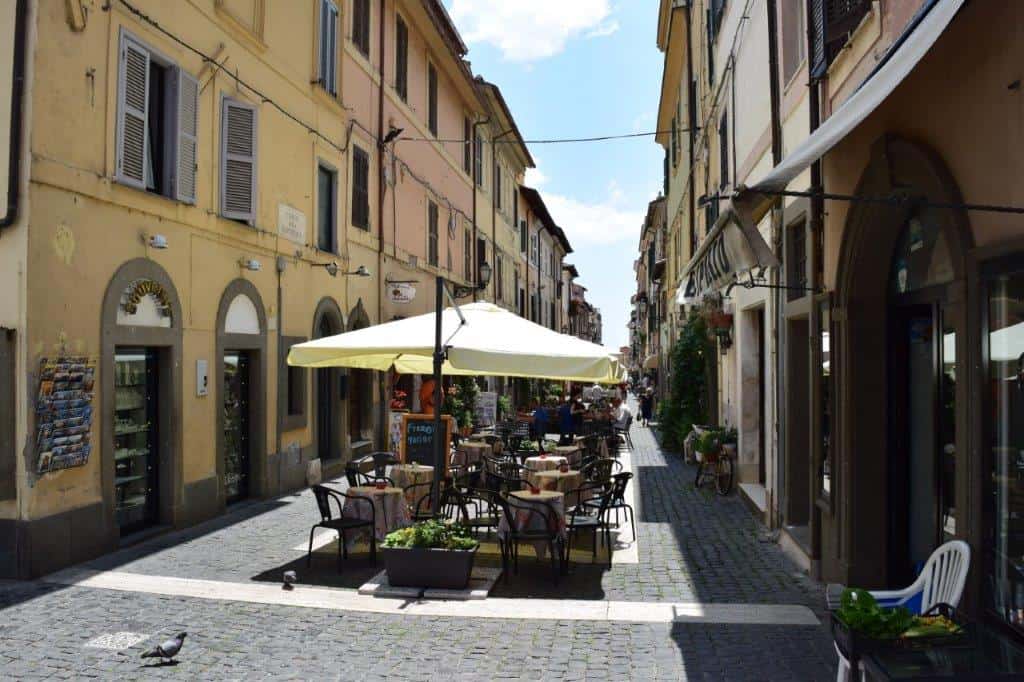
We visited Castel Gandolfo in 2018 while visiting Frascati. We headed out on a day trip that also included Albano Laziale, strolling around the two towns while pushing around on Little A in a stroller.


A Short History
The history of Castel Gandolfo is ancient, with its location believed to be the site of the legendary Alba Longa, the mother city of Rome. Its development was shaped by its use as a site for luxurious Roman villas, a medieval fortress, and most importantly, as the designated summer residence for the Popes for over 400 years. This long association with the Papal States and later the Holy See has given the town its unique historical identity.
Ancient Alba Longa and Roman Villas
According to tradition, the area of Castel Gandolfo is the site of Alba Longa, the legendary city founded by Ascanius, son of Aeneas. While the exact location of Alba Longa has not been confirmed, archaeological evidence shows significant Iron Age settlements in the area. During the Roman era, the Alban Hills became a popular location for wealthy Romans to build luxurious country villas to escape the heat of the city. The Emperor Domitian constructed a large villa on the site, and parts of its structure are still visible within the grounds of the Pontifical Villas today.
The Gandolfi Castle and Papal Acquisition
The town’s clearer history begins in the 12th century when the Gandolfi family, a Genoese noble family, built a castle on the site. This castle gave the town its name, “Castel Gandolfo.” The castle and its lands later passed to the Savelli family. A key chapter in the town’s history began in 1596, when the Apostolic Camera, the financial administration of the Papal States, acquired the property due to the debts of the Savelli family. In 1604, Pope Clement VIII officially incorporated Castel Gandolfo into the temporal domain of the Holy See.
The Papal Summer Residence
Pope Urban VIII was the first pope to use the site as a regular summer home, arriving for the first time in the early 17th century. He commissioned the architect Carlo Maderno to convert the old castle into a papal palace. Later popes continued this tradition, expanding and improving the Pontifical Villas over the centuries. The town remained a papal territory even after the unification of Italy in 1870. The Lateran Treaty of 1929 between Italy and the Holy See confirmed the Pontifical Villas’ special extraterritorial status. Pope Francis chose not to use it as a regular summer home and opened much of the complex to the public in 2014.


Things to Do and See
Castel Gandolfo’s sights are centered on the Pontifical Villas and the historic town square. The main attractions provide a look into the history of the Papacy, Roman antiquity, and the natural beauty of the volcanic lake.
Palazzo Apostolico
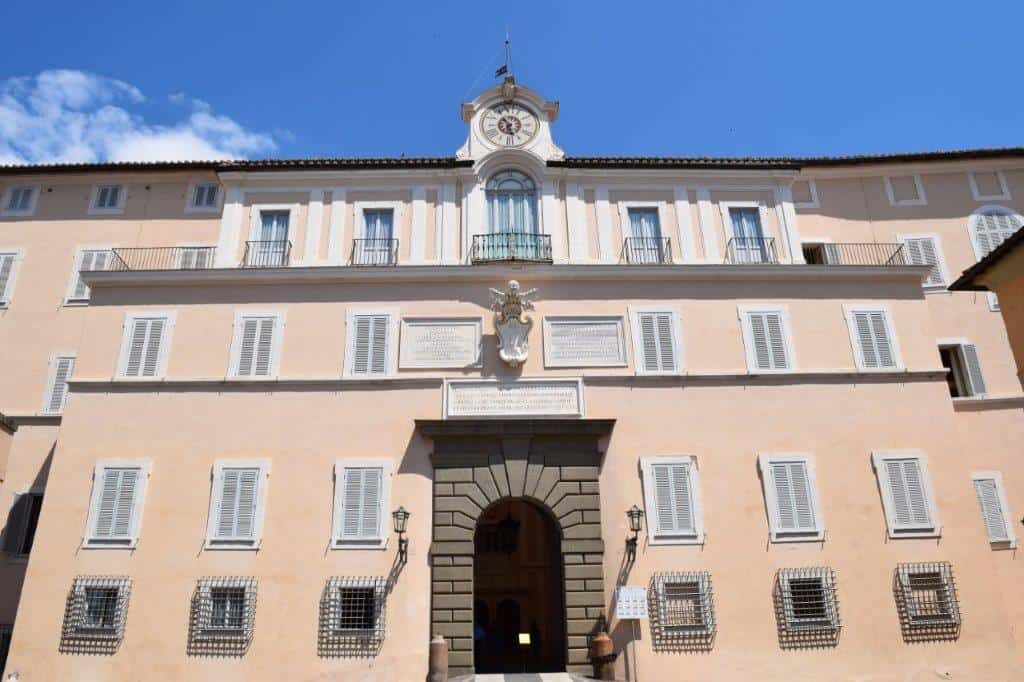
The Pontifical Palace of Castel Gandolfo (Palazzo Apostolico) is the town’s main feature. The 17th-century palace was designed primarily by Carlo Maderno for Pope Urban VIII. It served as the Popes’ traditional summer retreat for over 400 years. Since 2016, much of the palace has been open as a museum. Visitors can see the private papal apartments, including the Pope’s bedroom, chapel, library, and study. The rooms showcase the daily lives of past popes and also house historical items and art.
Giardini di Villa Barberini
The Barberini Gardens (Giardini di Villa Barberini) are part of the Pontifical Villas. The gardens are a large complex that mixes formal Italian garden design with major archaeological ruins. Visitors can walk along avenues of cypress and holm oak trees and see ornate fountains. A key feature is the extensive ruins of Emperor Domitian’s Alban Villa, which include a cryptoporticus and a small amphitheater. The gardens offer expansive views of Lake Albano and the surrounding countryside. Guided tours are available.
Church of San Tommaso da Villanova
The Church of San Tommaso da Villanova is located in Castel Gandolfo’s main square, Piazza della Libertà. The church was designed by the famous Baroque artist Gian Lorenzo Bernini and was commissioned by Pope Alexander VII Chigi. Built between 1658 and 1661, it is a key example of Baroque architecture. The church has a Greek cross floor plan and a distinctive dome. It features stucco work by Antonio Raggi, a student of Bernini, and a painting of the Crucifixion by Pietro da Cortona.
Piazza della Libertà
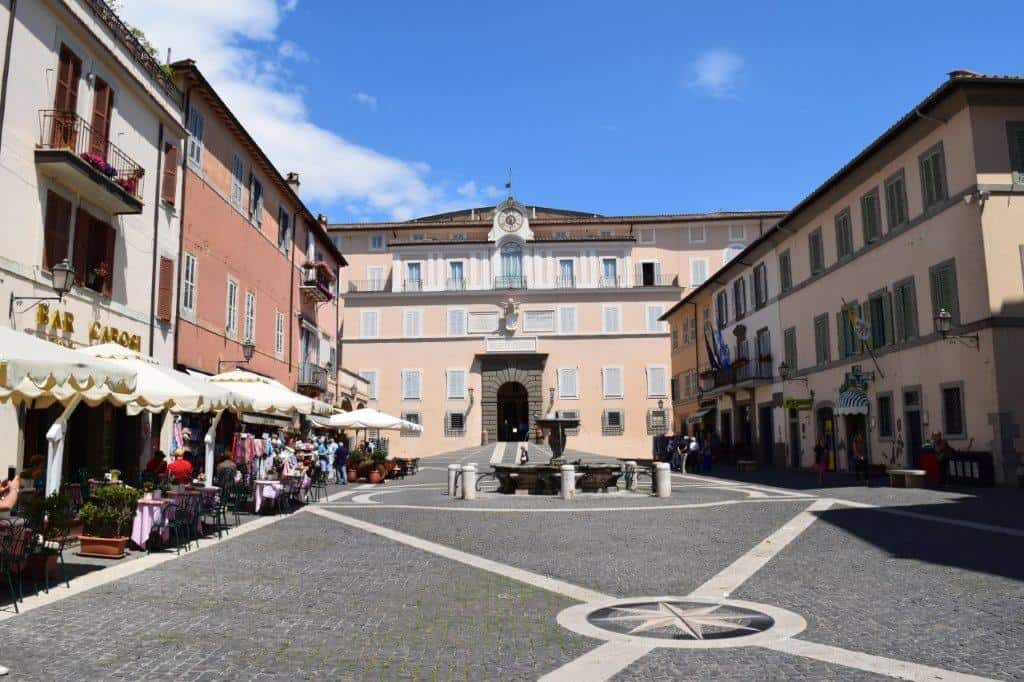
Piazza della Libertà is Castel Gandolfo’s main square and the heart of the town. The square is where both the entrance to the Pontifical Palace and the facade of the Church of San Tommaso da Villanova are located. The square itself is a lively public space, with several cafes and restaurants offering outdoor seating. A fountain designed by Bernini is a central feature. The square provides views over the surrounding landscape.
Lake Albano
Lake Albano is a volcanic crater lake that lies directly below the town of Castel Gandolfo. Its deep blue waters are ringed by the wooded slopes of the crater, creating a scenic natural environment. The lake’s circumference is about 10 kilometers, and it is up to 170 meters deep, making it the deepest volcanic lake in Italy. The “Sentiero dell’Acqua” (Water Path) is a popular walking and cycling route near the lake. The lake was the site of the canoeing and rowing events for the 1960 Summer Olympics, which were held in Rome.
How to Get to Castel Gandolfo
Reaching Castel Gandolfo is straightforward from Rome. The town is well-connected by regional train and road networks. Its proximity to the capital makes it a popular day trip destination.
The Open Road: Driving from Rome
Driving to Castel Gandolfo offers flexibility for exploring the Castelli Romani region. The main road from Rome is the SS7 Via Appia Nuova. Drivers should follow signs for Albano Laziale and then for Castel Gandolfo. The drive from central Rome is approximately 25 kilometers and takes around 45 minutes to an hour, depending on traffic. Parking in the small historic center can be limited, especially on weekends.
Arriving by Air: Rome’s Airports
For international visitors, the closest airport is Rome Ciampino Airport (CIA), which is located only about 10 kilometers away. From Ciampino, a short taxi ride is the most direct option. Rome Fiumicino Airport (FCO), Italy’s main international hub, is further away. From FCO, travelers would typically take a train to Roma Termini station and then connect to the regional train line to Castel Gandolfo.
Connecting by Coach: The COTRAL Network
Buses are a practical and economical way to get to Castel Gandolfo from Rome and other nearby towns. The regional bus network, COTRAL, operates services from the Anagnina metro station in Rome. This station is on Line A of the Rome Metro and is a major bus hub. From Anagnina, buses run frequently to Castel Gandolfo and other towns in the Castelli Romani.
On Track: A Regional Rail Link
Traveling by train is a highly recommended and efficient way to arrive. Castel Gandolfo has its own train station on the FL4 regional train line. This line connects directly to Roma Termini, Rome’s main train station. The journey from Roma Termini to Castel Gandolfo takes approximately 40 minutes. The train station is located below the main town, on the shores of Lake Albano. There is a steep uphill walk to reach the town center, or local buses are sometimes available.
A Mediterranean Ferry Approach
There is no direct ferry access to the inland town of Castel Gandolfo. International travelers arriving by ferry would likely do so at the Port of Civitavecchia, which is the main port for Rome. From Civitavecchia, a regional train connects to stations in Rome, such as Roma San Pietro or Roma Termini. From there, a transfer to the FL4 train line is required to complete the journey to Castel Gandolfo.
Driving Distances
The driving distance from 10 regional cities, according to Google Maps:
- Rome, Italy – 24 kilometers (0 h 50 min)
- Naples, Italy – 208 kilometers (2 h 20 min)
- Florence, Italy – 296 kilometers (3 h 20 min)
- Venice, Italy – 550 kilometers (5 h 50 min)
- Genoa, Italy – 524 kilometers (5 h 40 min)
- Milan, Italy – 600 kilometers (6 h 10 min)
- Geneva, Switzerland – 903 kilometers (9 h 30 min)
- Munich, Germany – 939 kilometers (9 h 40 min)
- Vienna, Austria – 1,215 kilometers (12 h 20 min)
- Paris, France – 1,457 kilometers (14 h 30 min)
Looking to Explore more of Italy and Europe?