Saarburg, Rhineland-Palatinate | Exploring Germany
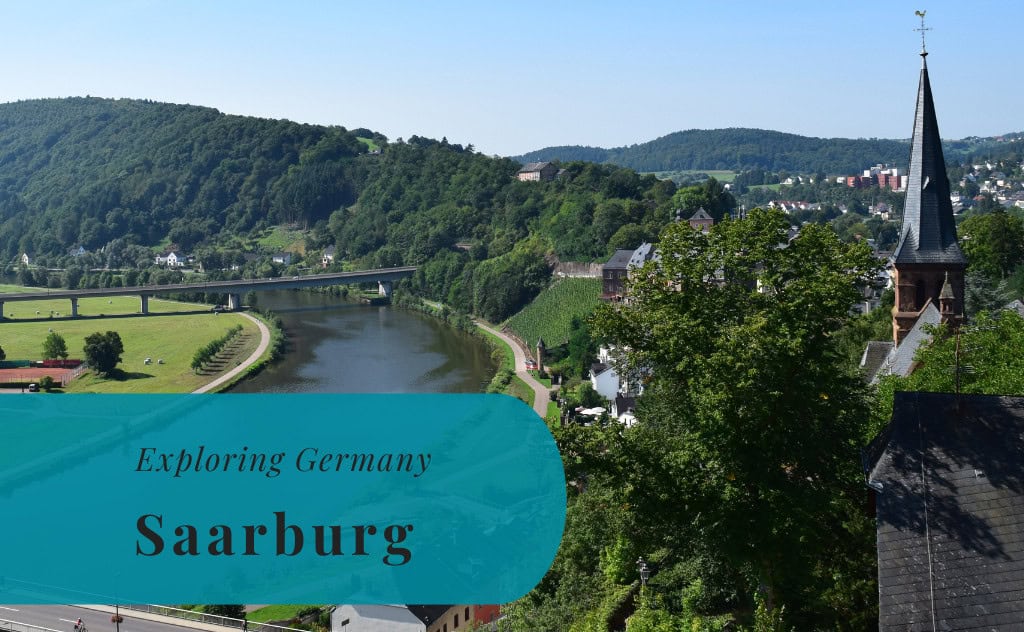
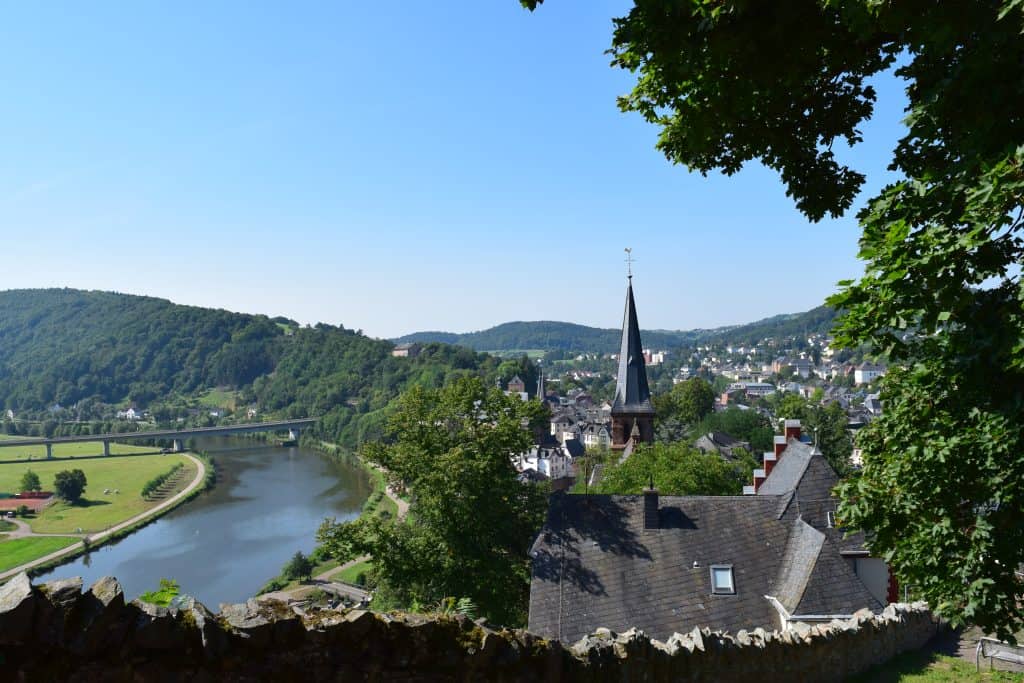
Saarburg, a picturesque town in Germany’s Rhineland-Palatinate, offers a blend of medieval charm and natural beauty. It sits nestled in the Saar-Hunsrück Nature Park, at the confluence of the Saar River and the smaller Leukbach stream. As of December 2022, Saarburg has a population of 7,600 residents. It is the seat of the Verbandsgemeinde (collective municipality) Saarburg-Kell. Saarburg is famous for its stunning waterfall, which plunges 20 meters right in the town center. The town’s location near the Luxembourg border and its proximity to Trier (about 25 km away) and Saarbrücken (about 80 km away) make it an ideal base for exploring the Saar-Lor-Lux region.


A Short History of Saarburg
Saarburg’s history began with the construction of its now-ruined castle. Count Siegfried of Luxembourg built this proud fortress in 964 AD atop the Schlossberg. From the early 12th century, the castle became a crucial fortification for the Archbishops of Trier. It dominated the Saar valley. Saarburg received its town charter in 1291.
The Leukbach stream, which now forms the town’s famous waterfall, was redirected in the 11th or 12th century. This provided water for mills and fire protection. The town became known for its bell foundry, Glockengießerei Mabilion, which has operated since the 1770s. It is the only one in Germany still producing bronze bells. After centuries of a tumultuous history, including multiple destructions, the castle fell into ruin by the 18th century. The town acquired the ruins in 1860, transforming them into a popular viewpoint.


Things to Do and See
Saarburg offers a wealth of diverse attractions, combining natural wonders with historical landmarks. Visitors can explore the ruins of Saarburg Castle, offering panoramic views. The town’s unique 20-meter high waterfall, cascading through the old town, is a central spectacle. The charming Buttermarkt square and historic churches add to its appeal. Unique attractions like a bird of prey park and a bell foundry museum provide additional insights into Saarburg’s character.
Saarburg Castle
The Saarburg Castle, though in ruins, is the town’s most prominent landmark. Built by Count Siegfried of Luxembourg in 964, it is one of the oldest hill castles in Western Germany. Perched high above the town, its remnants provide a picturesque backdrop. Visitors can ascend over 100 steps to a viewing platform in the curtain tower. This offers magnificent panoramic views of the Saar valley and surrounding vineyards. The town of Saarburg acquired the ruins in 1860 and has since maintained them. The castle complex is freely accessible.
Saarburg Waterfall
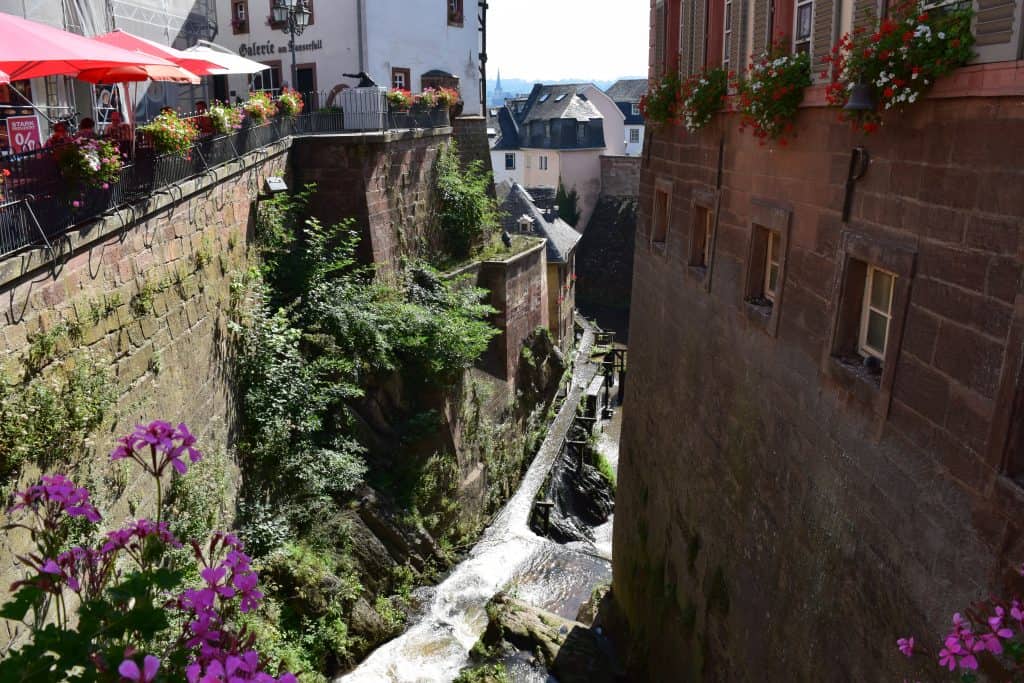
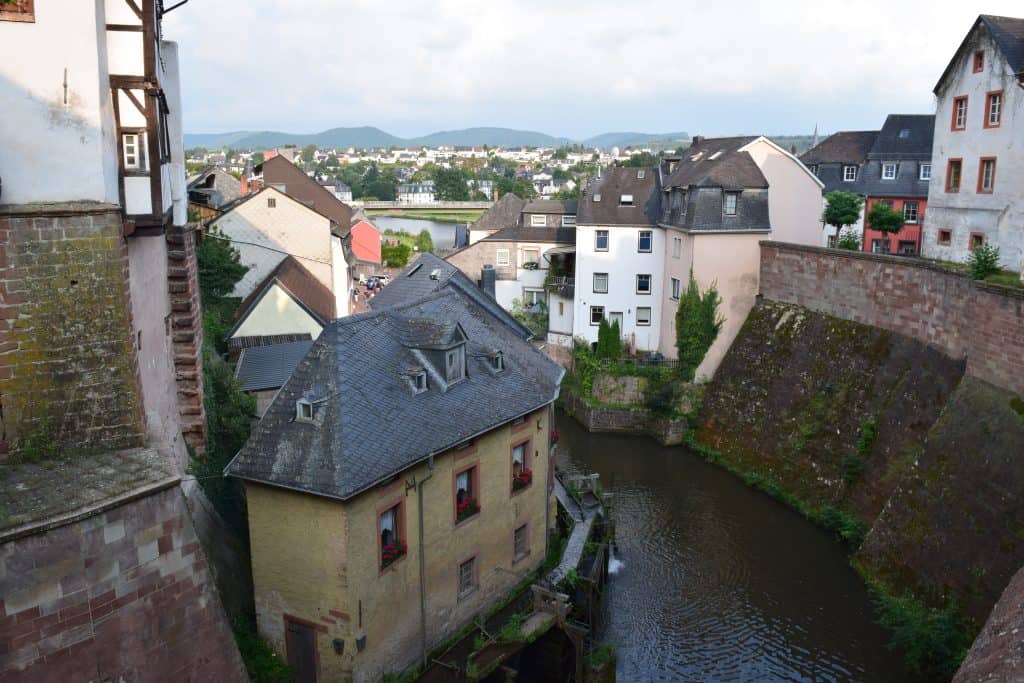
Saarburg’s most unique natural spectacle is its 20-meter high waterfall, located right in the heart of the old town. The Leukbach stream plunges dramatically over rocky cascades between half-timbered houses and Baroque buildings. This impressive sight is not entirely natural; the Leukbach was intentionally redirected through the town center in the 11th or 12th century. The waterfall powered local mills, like the Hackenberger Mill. The surrounding Buttermarkt square, with its charming alleys, is often called “Saarburg’s Little Venice.”
Buttermarkt
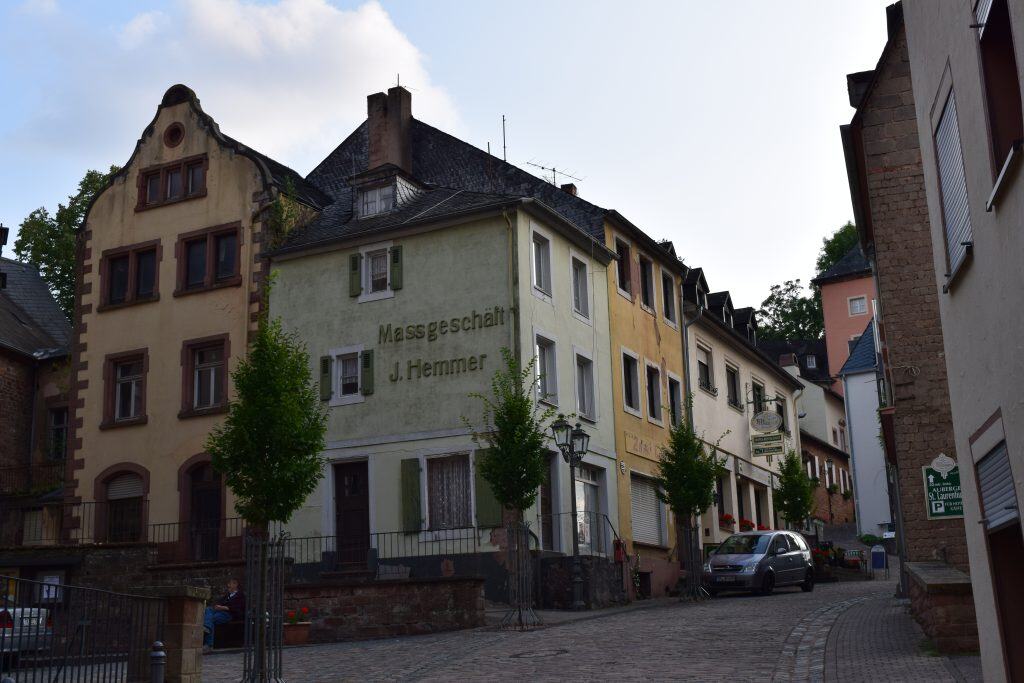
The Buttermarkt is Saarburg’s old market square and the vibrant center of the old town. For centuries, it hosted the weekly farmers’ market, where locals sold their produce. Today, this picturesque square is home to a fountain, a bandstand, and numerous cafes and restaurants. It is nestled around the famous waterfall. The Buttermarkt is a popular spot for leisurely strolls, inviting visitors to enjoy the historic atmosphere and the sounds of the rushing waterfall.
St. Laurentius Church (Pfarrkirche Sankt Laurentius)
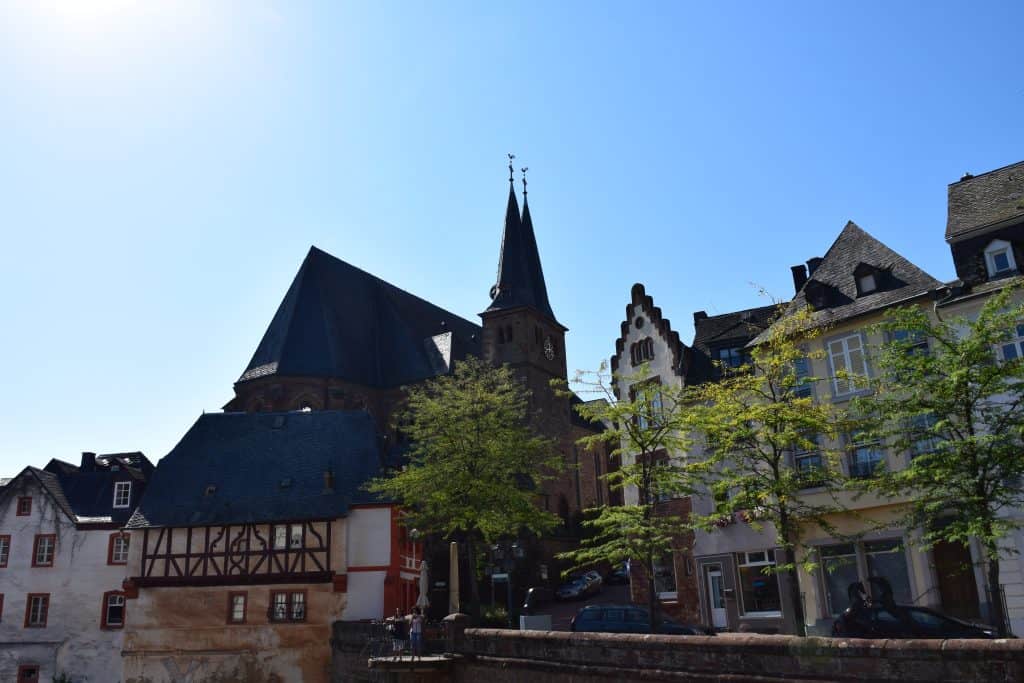
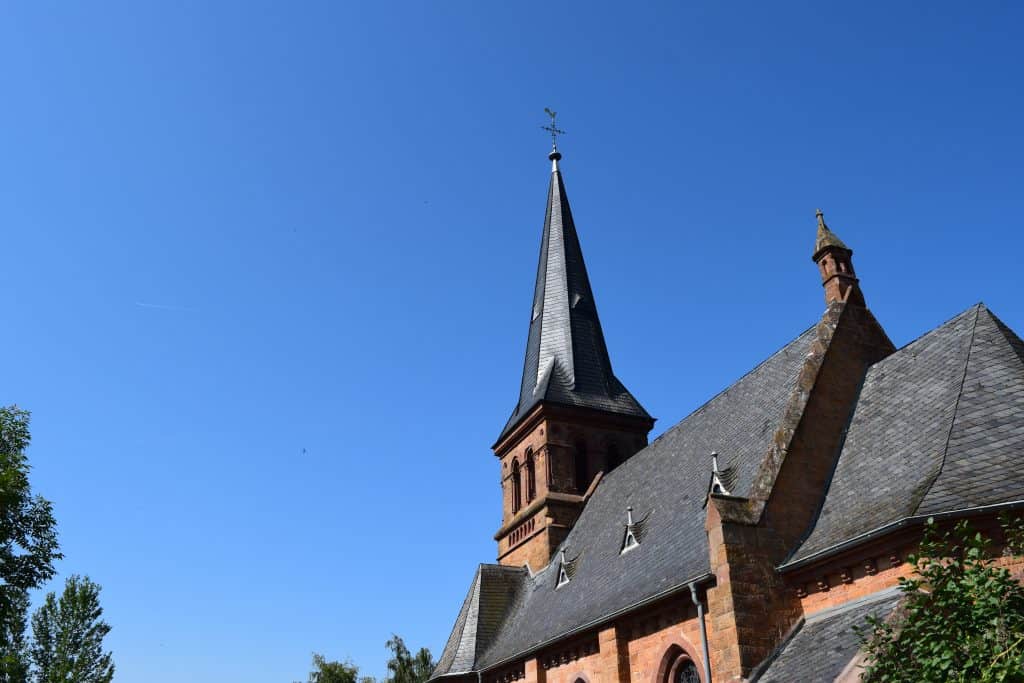
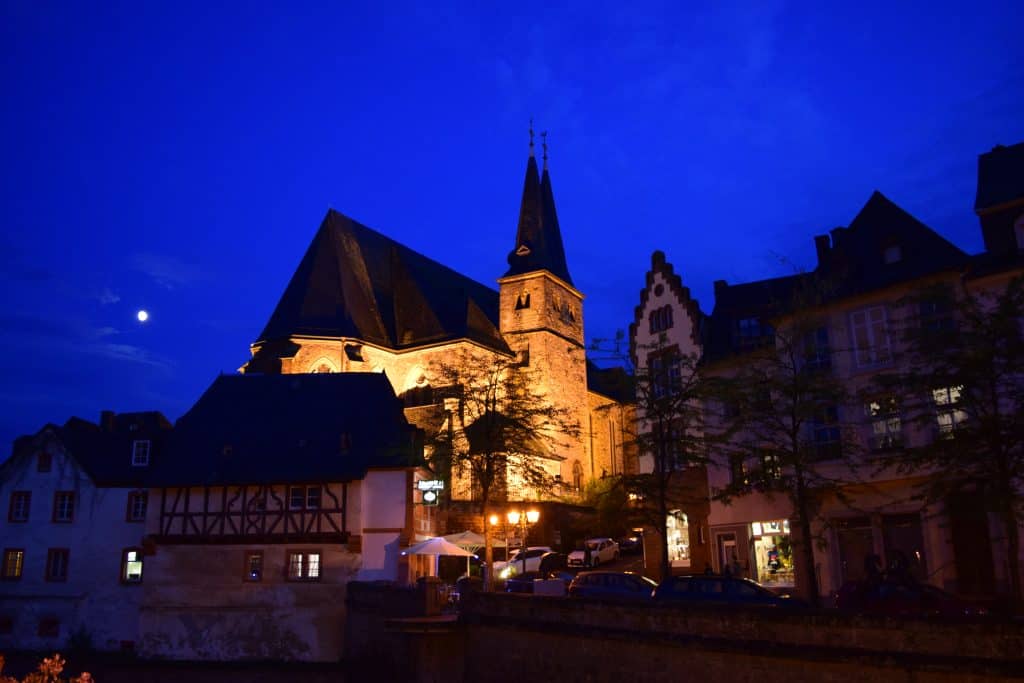
The St. Laurentius Church is the main Catholic parish church in Saarburg. Its history dates back to the 13th century, when a small cross chapel stood here. The current Neo-Gothic three-nave church was built in 1854. Although heavily damaged in 1944 during World War II, it was rebuilt post-war, preserving parts of its Neo-Gothic style. Inside, visitors can admire the “Grape Madonna” (around 1500), a stone baptismal font from 1575, and stained-glass windows from 1855.
Greifvogelpark
The Greifvogelpark Saarburg offers an exciting experience with birds of prey. Located just outside the town, this park features daily flight demonstrations. Visitors can observe falcons, eagles, and buzzards showcasing their hunting methods in free flight. The park also houses other animals, including raccoons, pygmy pigs, and meerkats. It provides educational insights into the lives of these impressive birds. Some demonstrations even allow visitors to hold smaller birds on a gloved hand.
Glockengießerei Mabilion (Mabilon Bell Foundry Museum)
The Glockengießerei Mabilion is a unique museum. It is the only museum in Germany dedicated entirely to bell founding. This historic bell foundry operated from the 1770s until 2002. The museum offers insights into the intricate process of creating bronze bells. Visitors can learn about traditional craftsmanship and the history of bell founding. It also hosts cultural events and “bell hunt” tours, appealing to all ages.



How to Get to Saarburg
Reaching Saarburg, a town in Germany’s Rhineland-Palatinate, is quite straightforward. Known for its impressive waterfall and medieval castle, Saarburg offers a blend of history and natural beauty. It sits nestled in the Saar-Hunsrück Nature Park. Whether you prefer flying, driving, or public transport, getting to this charming destination is accessible.
By Plane
Saarburg does not have its own airport. However, several international airports are conveniently nearby. Luxembourg Airport (LUX) is the closest, approximately 37 kilometers away. Saarbrücken Airport (SCN) is another regional option, about 42 kilometers distant. Frankfurt-Hahn Airport (HHN), primarily for low-cost carriers, is about 81 kilometers away. For wider international connections, Frankfurt Airport (FRA) is a major hub, around 143 kilometers from Saarburg. From these airports, onward travel typically involves a combination of train, bus, or car rental to reach Saarburg, often via Trier.
By Car
Driving to Saarburg offers excellent flexibility, ideal for exploring the surrounding Saar-Hunsrück Nature Park and the picturesque Saar River loop. Germany boasts an extensive motorway network. Saarburg is easily accessible via major highways. From Trier, the drive is a short 24 kilometers, taking about 25 minutes. From Luxembourg City, it’s roughly 38 kilometers, taking around 30 minutes. And from Saarbrücken, the journey is about 82 kilometers, taking just over an hour. Parking facilities are available in the town.
By Bus
Bus services connect Saarburg with nearby towns and cities. The main bus stop is typically Saarburg, Heckingplatz or near the train station. Direct long-distance bus services to Saarburg are limited. However, regular regional buses, operated by companies like Mobiliteit (Luxembourg’s public transport), connect Saarburg directly to Luxembourg City (taking around 50 minutes). From larger German cities, you would typically take a long-distance bus to Trier. From Trier, local bus services provide connections to Saarburg. These regional services run frequently.
By Train
Saarburg has its own railway station (Saarburg (Bz Trier) Bahnhof). It is conveniently located near the town center. Regional trains (RE, RB) provide frequent connections. From Trier Hauptbahnhof, direct trains to Saarburg take approximately 20 minutes and run hourly. Trains from Saarbrücken Hauptbahnhof also offer direct services to Saarburg, with a journey time of around 46 minutes. Luxembourg also has direct train connections to Trier, making Saarburg easily accessible from there. Deutsche Bahn (DB) operates these services, providing a comfortable and efficient way to reach the town.
Driving Distances
The driving distance from 6 major German cities, according to Google Maps:
- Berlin – 738 kilometers (8 h 30 min)
- Munich – 500 kilometers (5 h 40 min)
- Stuttgart – 278 kilometers (3 h 30 min)
- Frankfurt – 207 kilometers (2 h 40 min)
- Cologne – 188 kilometers (2 h 30 min)
- Hamburg – 606 kilometers (7 h 10 min)
Looking to Explore more of Germany and Europe?