
Münstermaifeld, Rhineland-Palatinate | Exploring Germany
Münstermaifeld is a historic town in the Mayen-Koblenz district, located in the state of Rhineland-Palatinate, Germany. The town is situated in the heart of the Maifeld, a large, fertile plateau located between the Moselle River to the south and the Eifel mountains to the northwest. With a population of approximately 3,500 residents, Münstermaifeld is known for its well-preserved medieval town center. The city of Koblenz is located about 25 kilometers to the east.
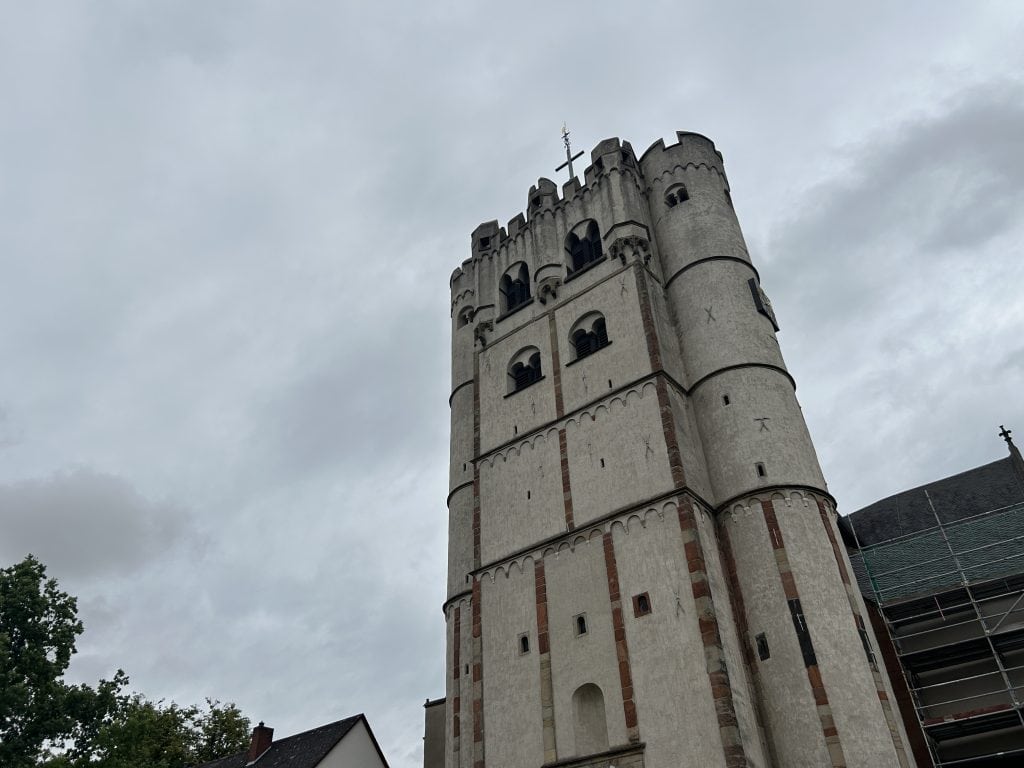
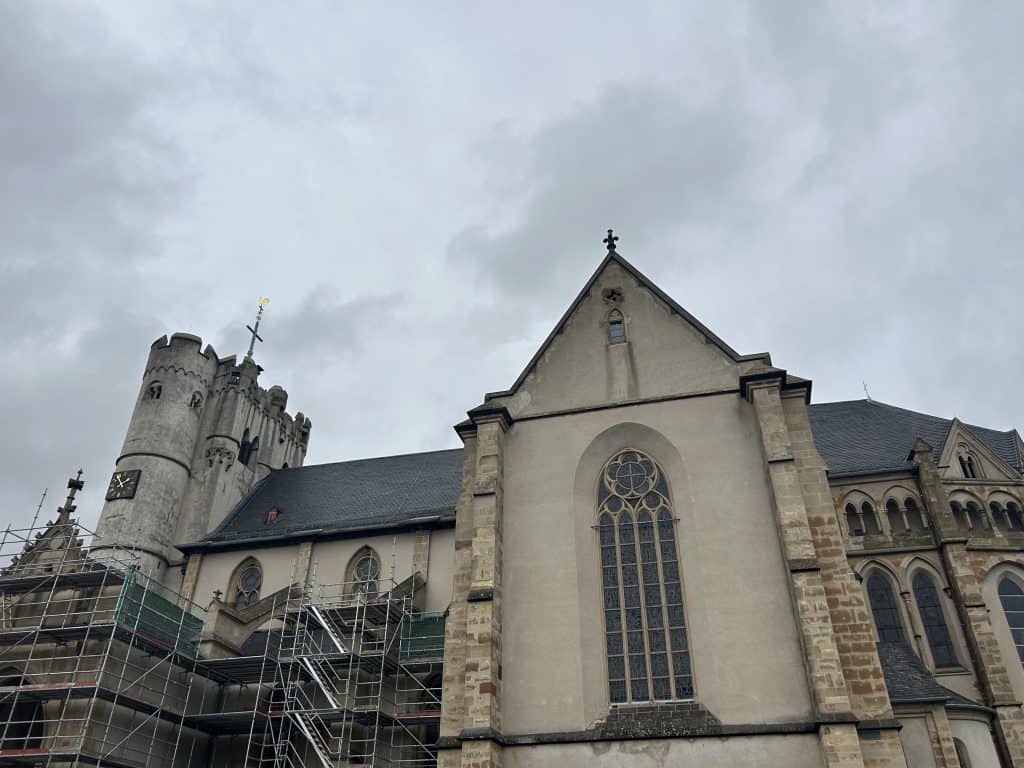
The character of Münstermaifeld is defined by its impressive collegiate church, which dominates the town’s skyline and has given it the nickname “The Jewel of the Maifeld.” The town retains much of its historic layout, with narrow streets and buildings that reflect its long history as a religious and administrative center. It is an agricultural town that serves as a hub for the surrounding villages of the Maifeld region. Its location also makes it a starting point for exploring the nearby Moselle Valley and Eifel mountains.
A Short History of Münstermaifeld
The history of Münstermaifeld is that of a major religious and administrative center that has retained its historic character for over a millennium. Its development was driven by the establishment of a powerful collegiate church chapter, which controlled the town and the surrounding region for centuries. The town’s story is one of ecclesiastical power, medieval fortification, and the preservation of its architectural heritage. This has left a lasting mark on the town’s layout and its most significant buildings.
Early Origins and Religious Center
The history of settlement in the Maifeld region is ancient, but the town of Münstermaifeld grew around its religious institution. The Collegiate Church of St. Martin and St. Severus has its origins in the Merovingian period. A church was founded here in the 7th century. By the 10th century, the church was elevated to a collegiate chapter by the Archbishop of Trier. This meant it was run by a community of canons and became a major religious and cultural center for the entire region. The town developed around this powerful institution.
A Town of the Electorate of Trier
Throughout the Middle Ages, Münstermaifeld was an important town within the Electorate of Trier. Its strategic importance on the Maifeld plateau led to its fortification in the 13th century. A defensive wall with several towers was built around the town, and parts of this wall are still visible today. The town served as the primary administrative and economic center for the Maifeld region. The imposing Westwerk of the collegiate church, with its two towers, also served a defensive function for the town.
Modern Conflicts and Preservation
The town’s long period as an ecclesiastical center came to an end during the Napoleonic era. In 1794, the town was occupied by French revolutionary troops. The collegiate chapter was dissolved in 1802. Following the Napoleonic Wars, the region was incorporated into the Kingdom of Prussia. The town then became a smaller, more rural administrative center. It largely avoided the heavy industrialization of other German regions, which helped to preserve its historic character. In the 20th century, the town focused on preserving its unique architectural heritage, which has made it a destination for visitors today.

Things to Do and See
The sights in Münstermaifeld are concentrated in its historic core. The primary attractions are its large collegiate church and the surrounding historic buildings. The town offers a look into the architecture and urban layout of a small medieval German town.
Collegiate Church of St. Martin and St. Severus
The Collegiate Church of St. Martin and St. Severus is the primary landmark of Münstermaifeld. It is one of the most important churches in the region. Its architecture is a blend of Romanesque and Gothic styles. A key feature is its massive Westwerk, a monumental western facade with two towers that dates to the 11th and 12th centuries. The interior of the church contains numerous important works of art, including a famous Gothic altarpiece, a large carved crucifix, and medieval frescoes.
The Historic Old Town
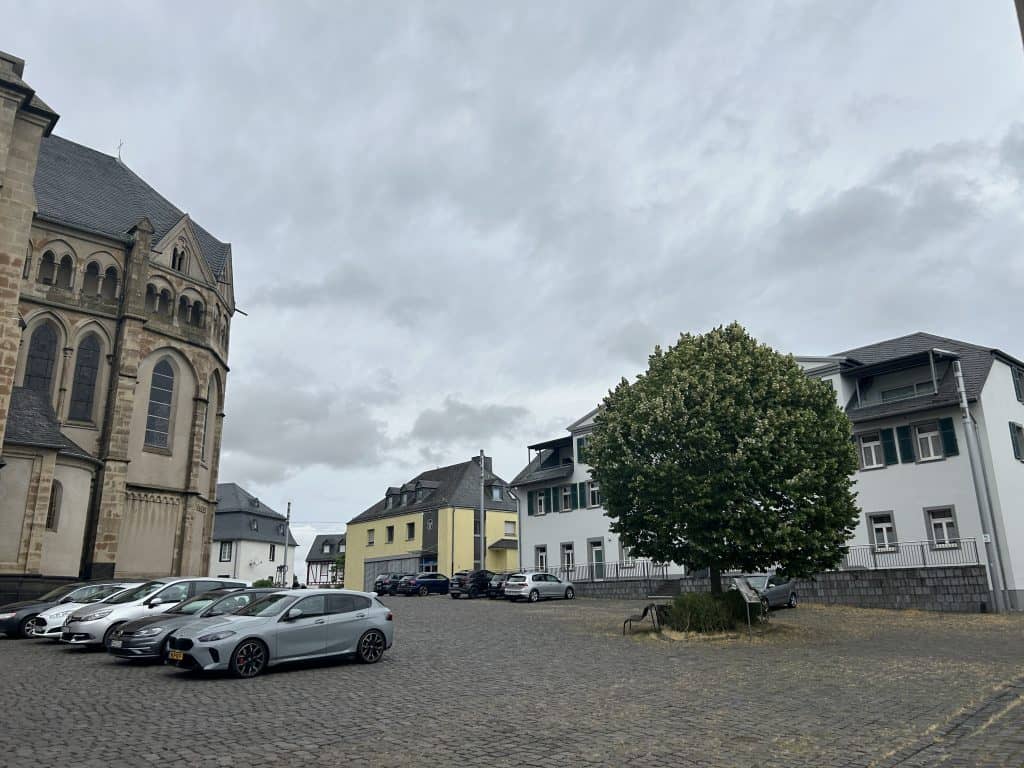
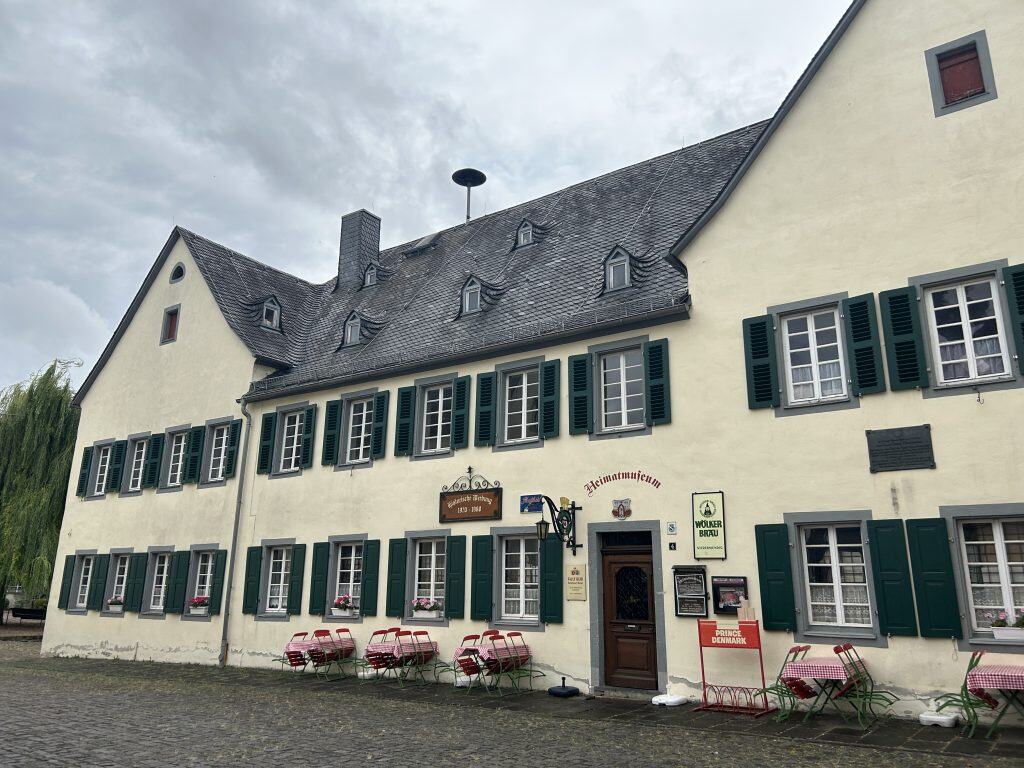
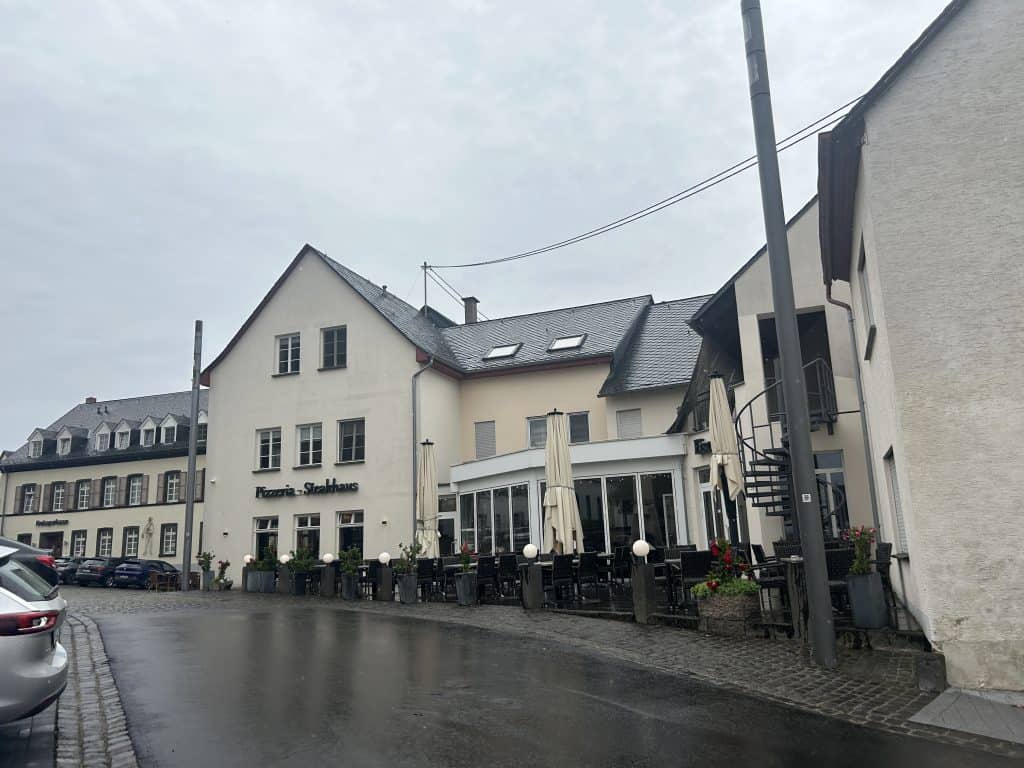
The Historic Old Town (Altstadt) of Münstermaifeld retains much of its medieval character. The town is characterized by its narrow, winding streets and its historic houses. Many of the buildings date from the 16th to the 18th centuries. A walk through the town reveals its past as a fortified settlement. Remnants of the medieval town wall and several of its defensive towers are still visible. The main square is surrounded by historic buildings, including the former town hall.
The Old Provosty
The Old Provosty (Alte Propstei) is a historic administrative building located next to the collegiate church. This building served as the seat of the provost, the head of the church’s collegiate chapter. The current building dates to the 18th century and is a fine example of Baroque architecture. It stands as a testament to the power and wealth of the religious institution that governed the town for centuries. Today, it is used for cultural events.
Maifeld Archaeological Museum
The Maifeld Archaeological Museum (Archäologisches Museum Maifeld) is located in a historic building in the town center. The museum is dedicated to the history of the Maifeld region, from the Stone Age to the Roman period. Its collection includes numerous archaeological finds from the area. This includes pottery, tools, and other artifacts that provide insight into the early history of settlement in this fertile region.
Burg Eltz (nearby)
The world-famous Eltz Castle (Burg Eltz) is located in the valley of the Elzbach river, a short drive from Münstermaifeld. It is one of Germany’s most iconic medieval castles. The castle has remained in the possession of the same family for over 850 years and has never been destroyed. Its unique collection of towers and turrets makes it a key example of a medieval German castle. Its proximity makes Münstermaifeld a convenient base for visiting this major landmark.

Getting Around in Münstermaifeld
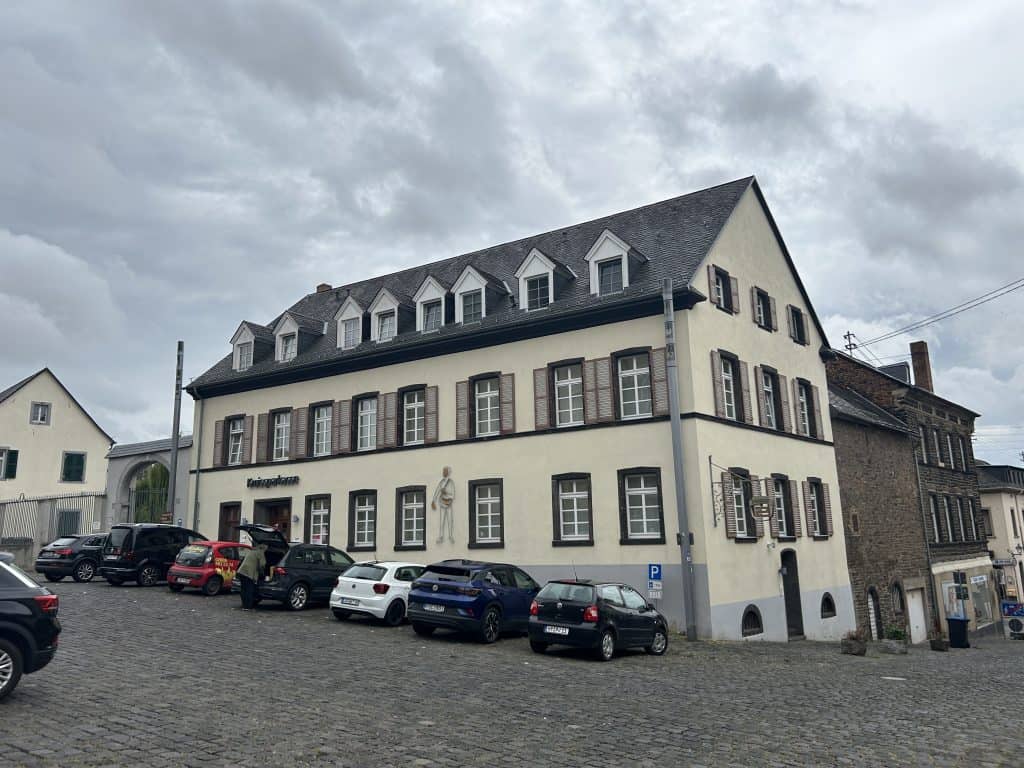
Navigating the town of Münstermaifeld is best done on foot. The historic town center is very compact and its narrow streets are not designed for heavy traffic.
On Foot: The Historic Town
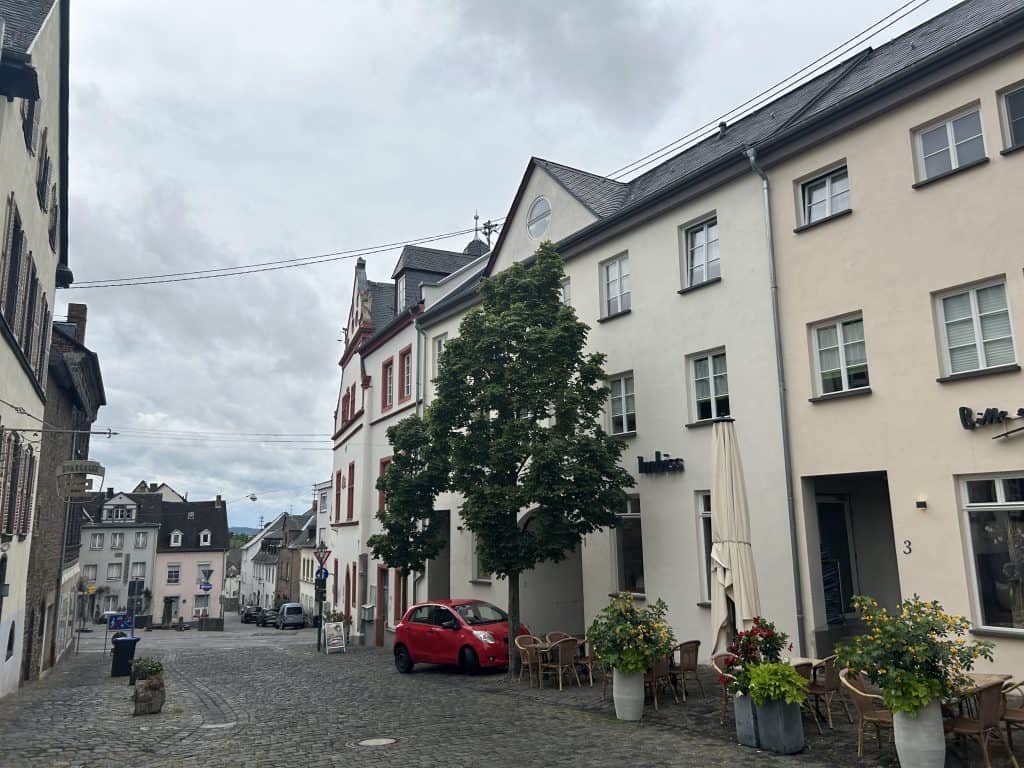
Walking is the only way to properly explore the historic core of Münstermaifeld. The Collegiate Church, the main square, and the surrounding historic streets are all located within a small, walkable area. This allows visitors to see the architecture and appreciate the medieval layout of the town at a relaxed pace. Comfortable shoes are recommended for the cobblestone streets.
Local Buses
Public transport in the region is operated by the Verkehrsverbund Rhein-Mosel (VRM). A network of regional buses connects Münstermaifeld with the surrounding villages and with larger nearby towns like Mayen and Polch. These buses are the primary mode of public transport for traveling within the Maifeld region. The services may be infrequent, especially on weekends, so it is advisable to check schedules in advance.

How to Get to Münstermaifeld
Reaching Münstermaifeld requires travel to the region between the Moselle River and the city of Koblenz. The town is accessible by road, with connections to the German motorway network. The closest train stations are located in the Moselle valley below the town.
The Open Road: Driving to the Maifeld
Driving is the most flexible option for reaching Münstermaifeld. The town is located near the A48 motorway, which connects the cities of Trier and Koblenz. The A61 motorway also passes nearby. From the motorway, a network of well-maintained local roads leads into the Maifeld region and to the town. A car is also very useful for exploring the surrounding area, including the nearby castles.
Arriving by Air: Nearby Gateways
Münstermaifeld does not have its own airport. The closest airport with some international connections is Frankfurt-Hahn Airport (HHN), which is primarily served by low-cost carriers and is located about 50 kilometers away. The closest major international airports are Cologne Bonn Airport (CGN), approximately 90 kilometers away, and Frankfurt Airport (FRA), about 130 kilometers away. From any of these airports, a rental car is the most practical option for completing the journey.
Connecting by Coach
There are no direct long-distance bus services to the small town of Münstermaifeld. Travel by coach would typically involve taking a service from a company like FlixBus to the main bus station in the nearby city of Koblenz. From Koblenz, travelers would then need to transfer to a regional bus service to complete the journey to Münstermaifeld.
On Track: A Journey by Rail and Bus
Münstermaifeld does not have its own train station. The closest train stations are located in the Moselle River valley. The stations at Hatzenport and Kobern-Gondorf are on the Mosel line (Moselstrecke), which connects Koblenz and Trier. From these stations, a connecting bus service or a taxi is required to travel up the hill to Münstermaifeld. The main regional and long-distance train hub is in Koblenz.
Driving Distances
The driving distance from 10 regional cities, according to Google Maps:
- Koblenz, Germany – 28 kilometers (0 h 30 min)
- Cologne, Germany – 93 kilometers (1 h 10 min)
- Trier, Germany – 102 kilometers (1 h 10 min)
- Frankfurt, Germany – 136 kilometers (1 h 40 min)
- Luxembourg City, Luxembourg – 137 kilometers (1 h 50 min)
- Brussels, Belgium – 287 kilometers (3 h 20 min)
- Strasbourg, France – 309 kilometers (3 h 30 min)
- Stuttgart, Germany – 322 kilometers (3 h 30 min)
- Amsterdam, Netherlands – 356 kilometers (4 h 00 min)
- Paris, France – 518 kilometers (5 h 30 min)
Looking to Explore more of Germany and Europe?