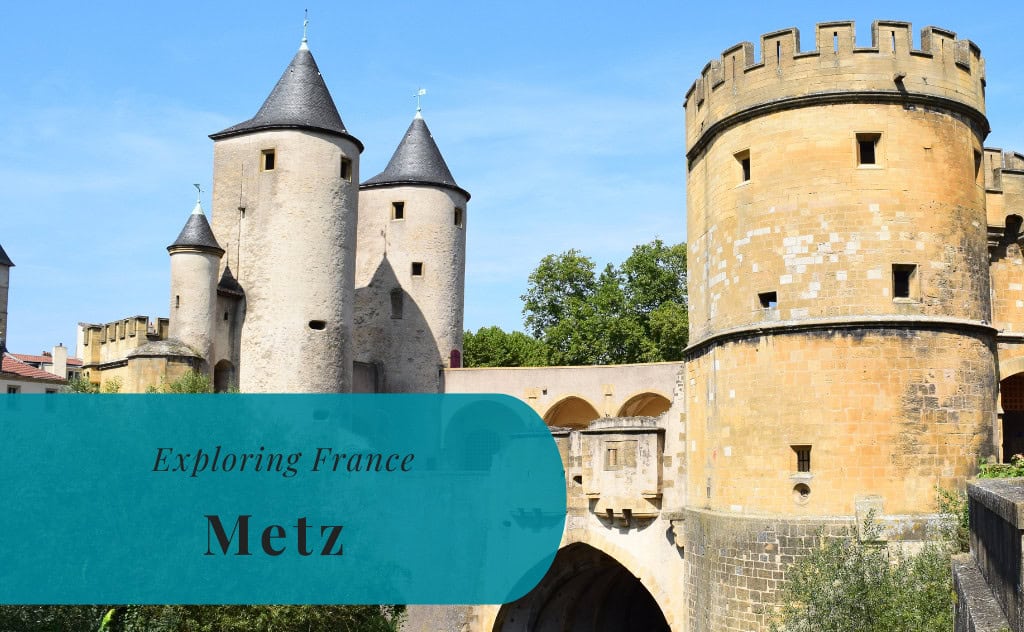
Metz, Lorraine | Exploring France
Metz is a city in northeastern France and the prefecture of the Moselle department in the Grand Est region. The city sits at the confluence of the Moselle and Seille rivers, a location that has been strategically important throughout its history. With a population of approximately 121,000 residents, Metz serves as a key urban center in the region. It is also a central part of the SaarLorLux region, a cross-border area encompassing Saarland in Germany, Lorraine in France, and the country of Luxembourg. Nearby French cities include Nancy and Strasbourg.
The character of Metz is defined by its extensive history, which spans over 3,000 years. Its architecture is a unique blend of French and German influences, a direct result of its location on a cultural and political frontier. The city is known for its use of the local yellow Jaumont limestone, which gives many of its historic buildings a distinctive appearance. It is also known as a “Ville Jardin” (Garden City) due to its numerous green spaces and waterside parks. Today, Metz combines its role as a historical and cultural destination with its function as a modern administrative and commercial center.
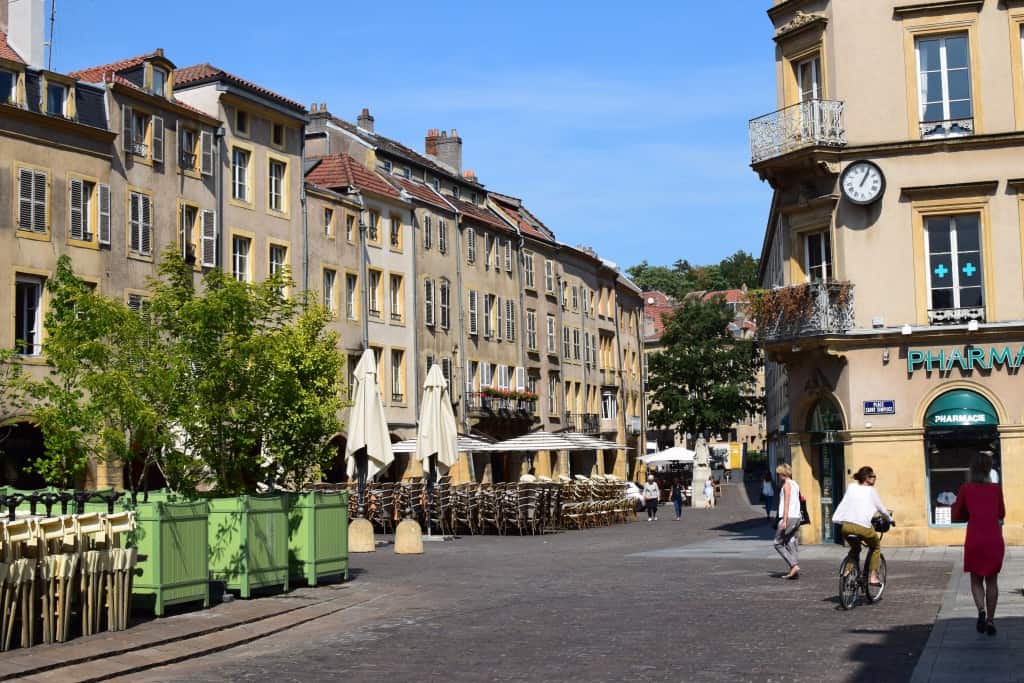
A Short History of Metz
The history of Metz is that of an ancient city that has been a political, military, and religious center for various powers. Its story begins as a major settlement of a Gallic tribe before becoming an important Gallo-Roman city. It later grew into a semi-independent republic within the Holy Roman Empire, before becoming a key French fortress. This long and often turbulent past, marked by shifting allegiances between French and German influence, has left an indelible mark on the city’s identity and its architecture.
Roman Origins and a Royal Residence
The history of Metz began as a Celtic oppidum, or fortified settlement. It was the capital of the Remi tribe, a Gallic people who allied with the Romans. Under Roman rule, it became the important city of Divodurum Mediomatricorum, thriving with a population that may have reached 40,000. Its strategic location made it a key administrative and commercial center in the province of Gallia Belgica. The city featured a large amphitheater, aqueducts, and thermal baths, evidence of its prosperity during this period. In the 5th century, it passed to Frankish rule and during the Merovingian era, Metz frequently served as a royal residence and is sometimes considered the cradle of the Carolingian dynasty.
A Free Imperial City
Following the Treaty of Verdun in 843 AD, which divided the Carolingian Empire, Metz became the capital of the Kingdom of Lotharingia. It later developed into a semi-independent free imperial city within the Holy Roman Empire. During this period, the city was governed by its powerful bishops and its wealthy merchant class. It was a thriving commercial center, known for its trade and crafts. The construction of its magnificent Gothic cathedral began during this era, symbolizing the city’s wealth and religious importance.
French Fortress and German Annexations
In 1552, King Henry II of France seized Metz, along with Toul and Verdun, creating the province of the “Three Bishoprics.” These were formally ceded to France in the Treaty of Westphalia in 1648. Metz then became a key fortified town on France’s eastern border. The famous military engineer Vauban strengthened its fortifications. The city endured periods of German annexation, first after the Franco-Prussian War (1871-1918) and again during World War II (1940-1944). During the first annexation, the Germans built a new “Imperial Quarter” with grand stone buildings. This history has left a unique architectural blend of French and German styles.

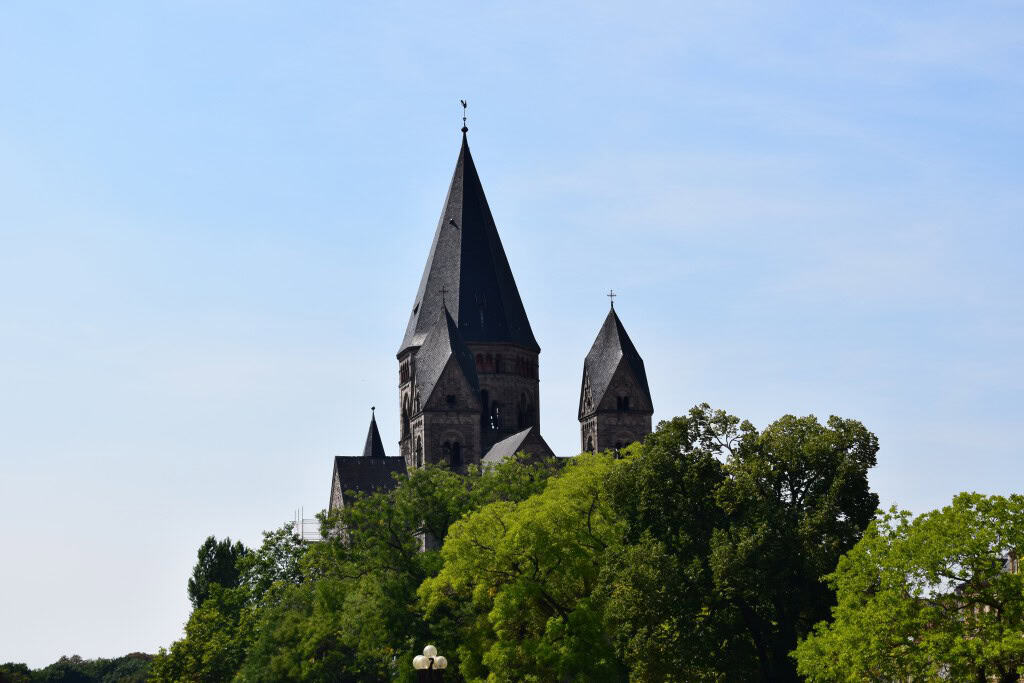

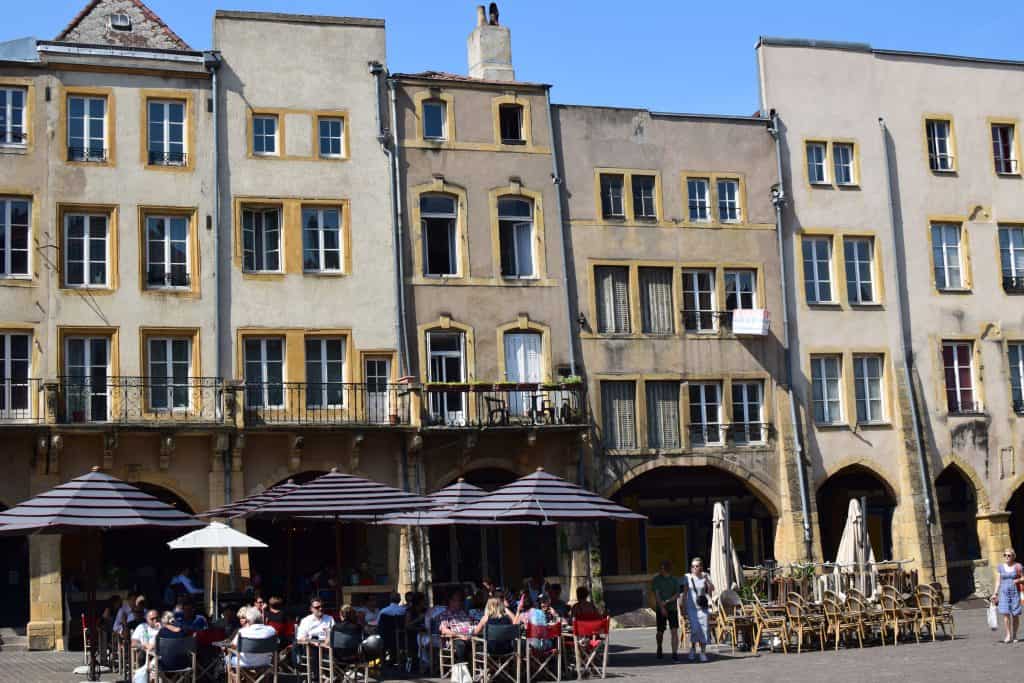
Things to Do and See
Metz offers a range of attractions that showcase its layered history and architectural splendor. Visitors can explore the Metz Cathedral, a key example of Gothic architecture, and the modern art at the Centre Pompidou-Metz. Ancient fortifications like the Porte des Allemands provide historical insights, while museums and elegant squares invite discovery. These sights provide a rich journey through the different cultures that have shaped the city.
Cathédrale Saint-Étienne de Metz
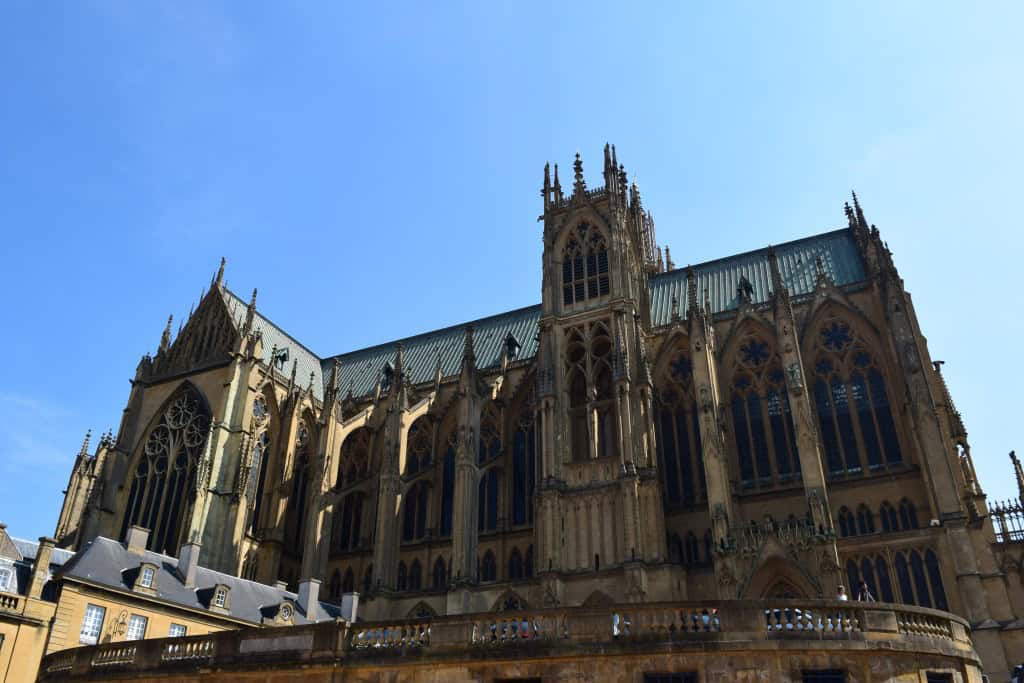
The Metz Cathedral (Cathédrale Saint-Étienne de Metz) is a major example of Gothic architecture. Construction began around 1220 and continued for three centuries. Built from the local yellow Jaumont stone, it has a nave that rises over 41 meters, making it one of the tallest in France. The cathedral is famous for its vast expanse of stained glass windows, covering approximately 6,500 square meters. This is the largest area of stained glass in any single cathedral in the world. These windows span from the 13th century to the 20th century, with modern works by the artist Marc Chagall. This has earned the cathedral the nickname “God’s Lantern.”
Centre Pompidou-Metz
The Centre Pompidou-Metz is a museum of modern and contemporary art. It is a branch of the famous Centre Pompidou in Paris. The building is known for its innovative architecture, which was designed by Shigeru Ban and Jean de Gastines. It features a distinctive hexagonal roof made of a timber lattice that is covered by a translucent membrane. Its central spire reaches 77 meters. The museum houses three large exhibition galleries and hosts temporary exhibitions of modern and contemporary art drawn from the collection of the French National Museum of Modern Art.
Porte des Allemands
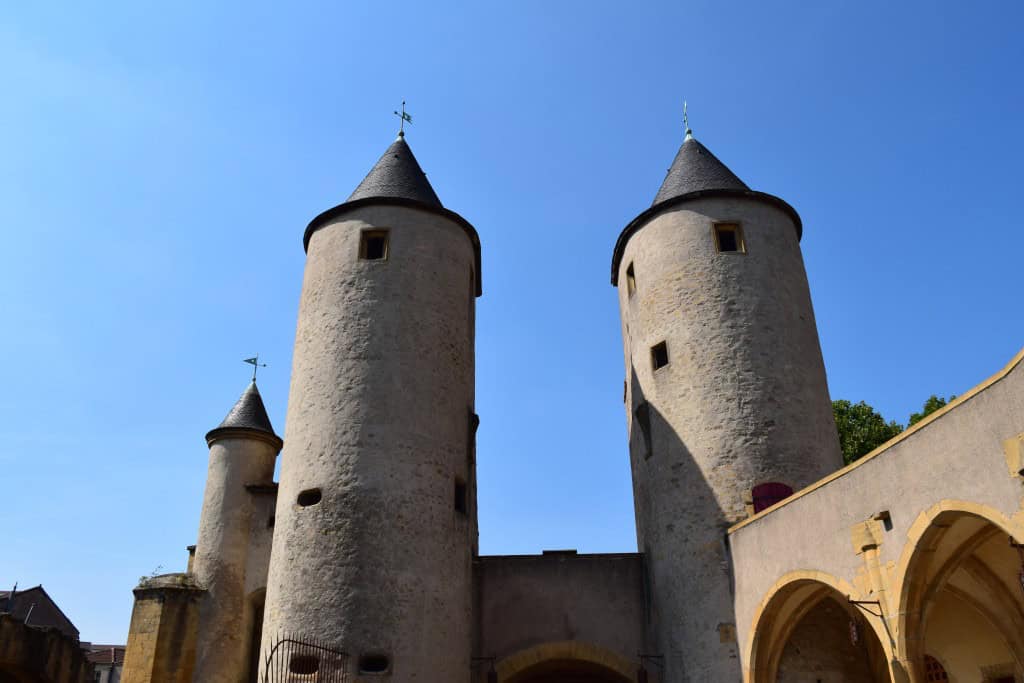
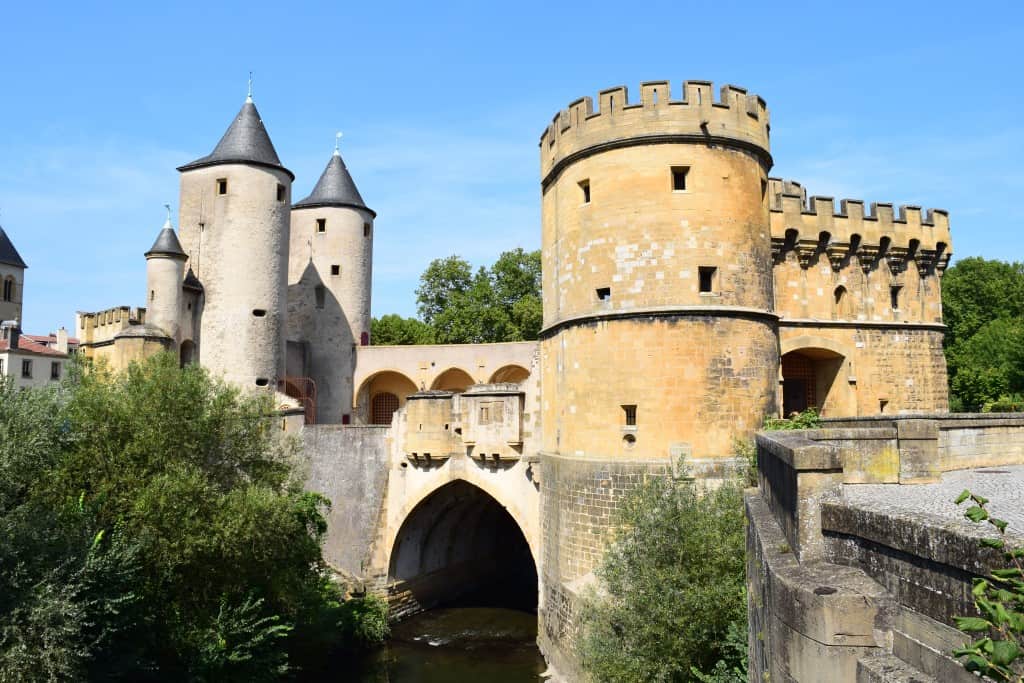
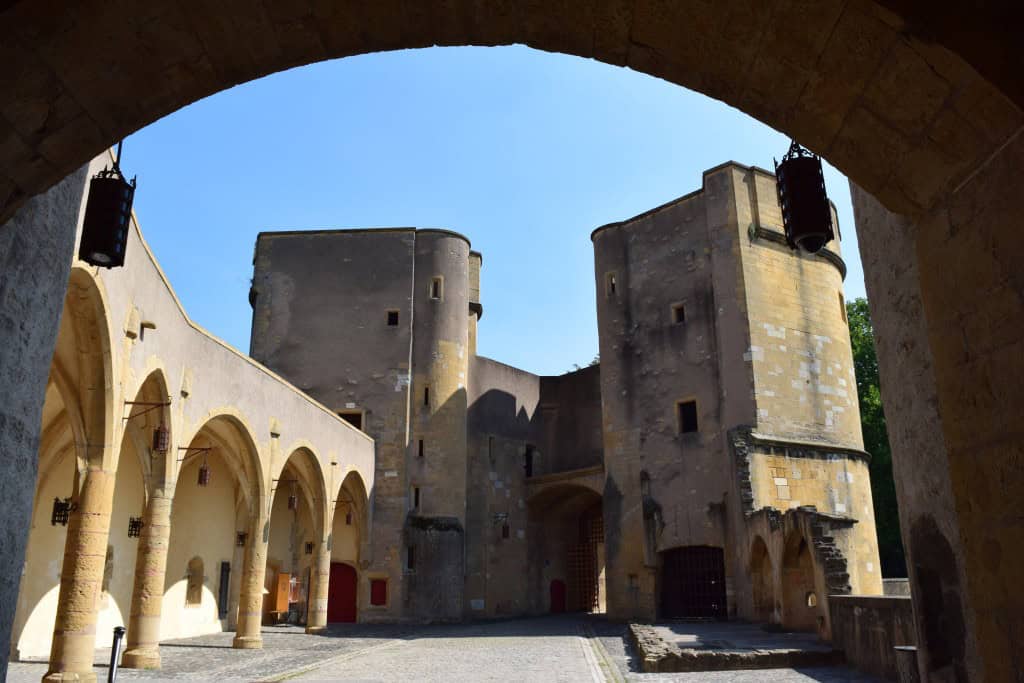
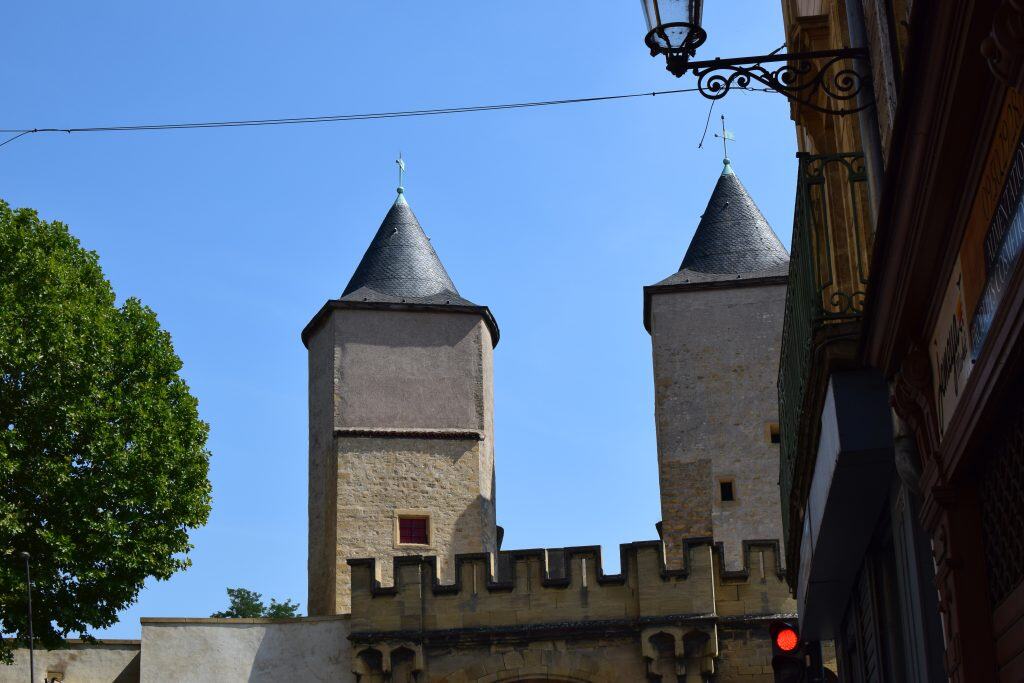
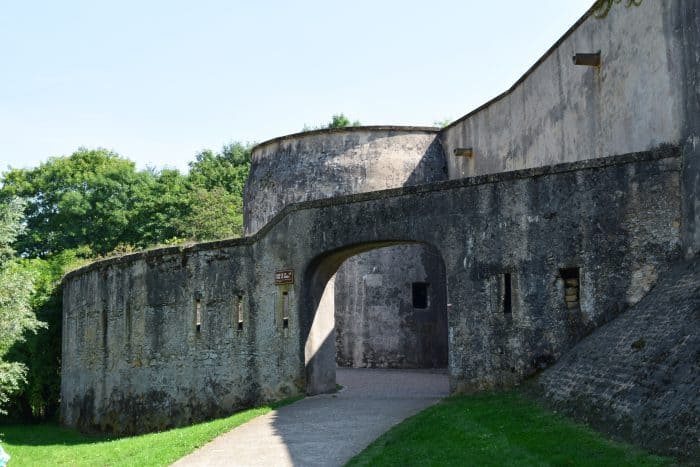
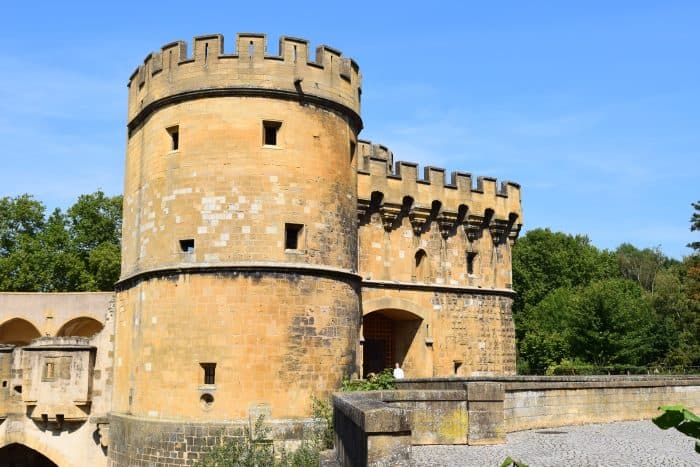
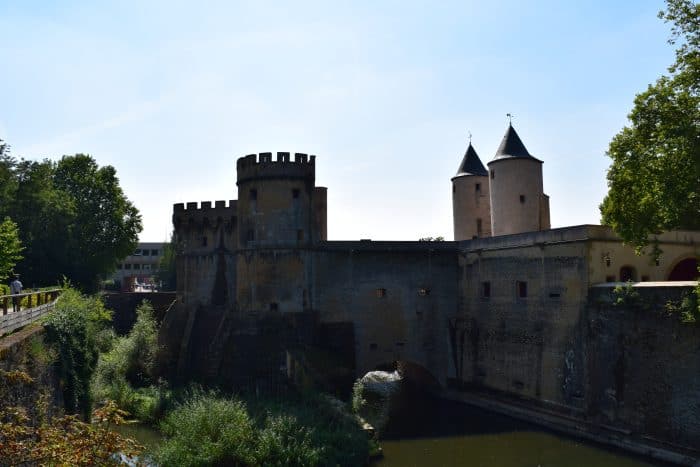
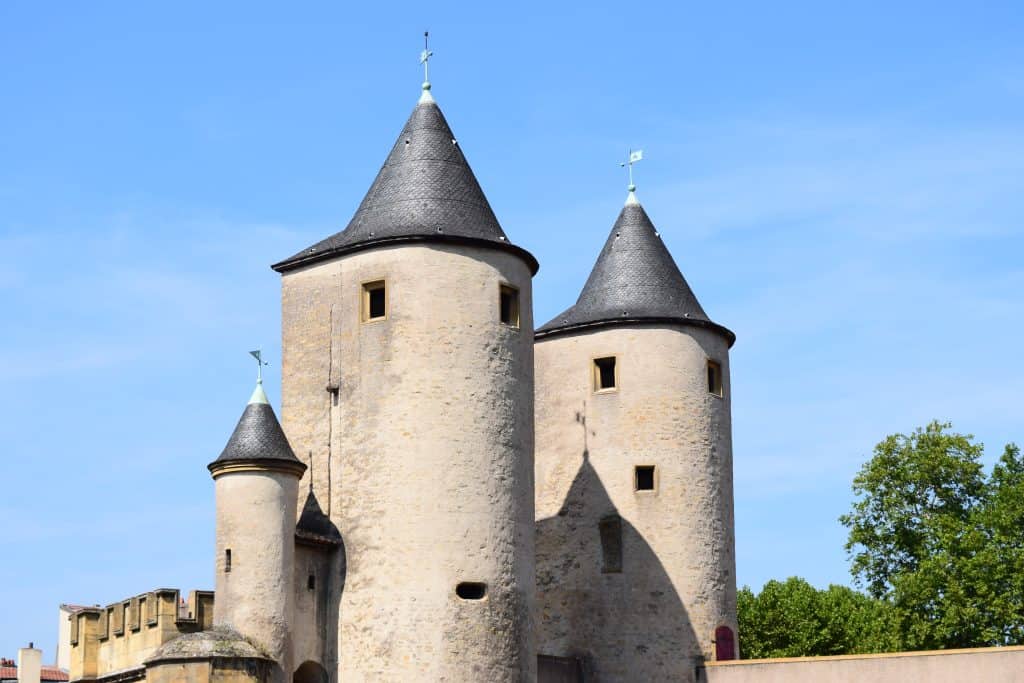
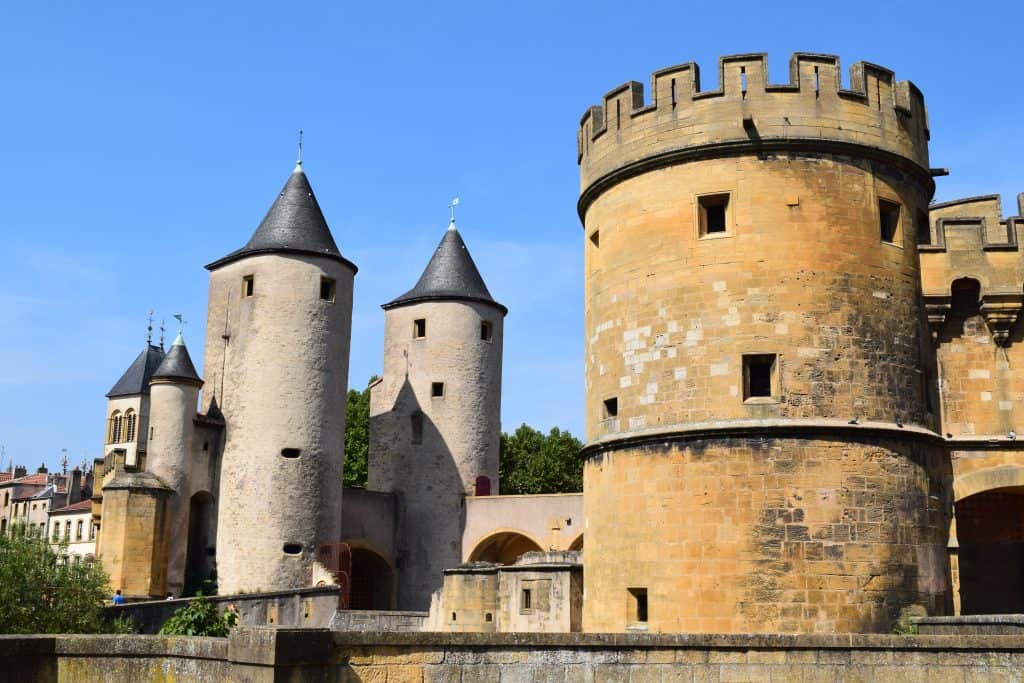
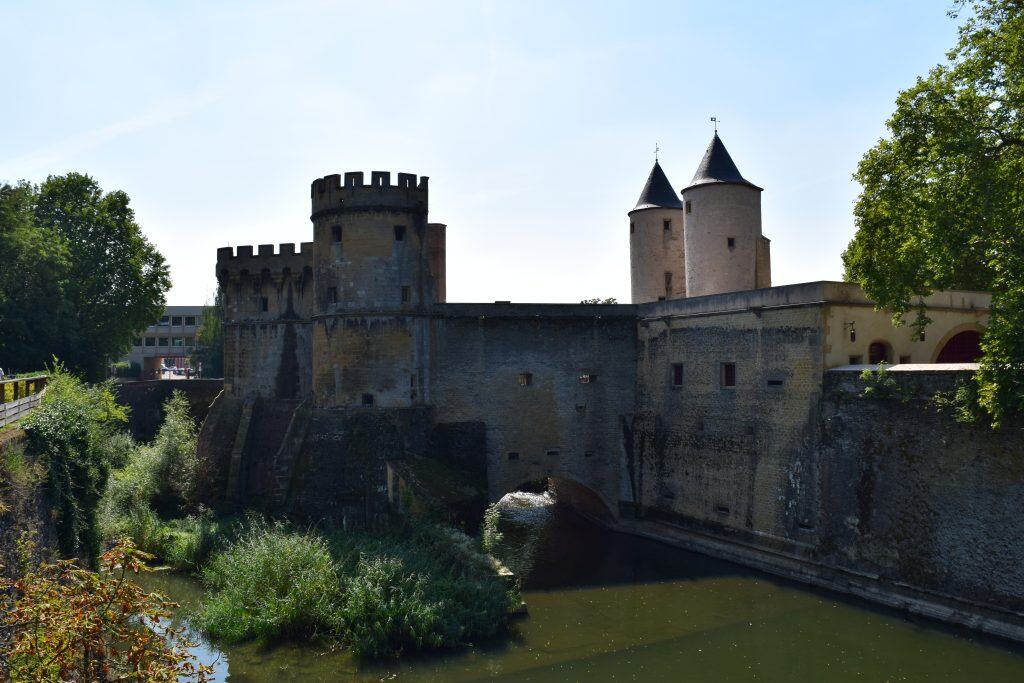
The Porte des Allemands (Germans’ Gate) is a well-preserved medieval fortified gate. Dating from the 13th to 15th centuries, it served as a bridge castle over the Seille River. The gate features imposing crenellated towers and served as a formidable defensive structure. It was partly damaged during World War II but has been restored. The Porte des Allemands offers a tangible link to Metz’s history as a fortified city. Visitors can explore its towers and learn about its military past.
Musée de la Cour d’Or
The Musée de la Cour d’Or (Museum of the Golden Court) offers an immersive journey through Metz’s history and archaeology. The museum is located on the site of ancient Roman thermal baths, and the remains of these baths form part of the museum’s exhibition. The museum displays extensive collections of Gallo-Roman antiquities. It also features Merovingian funerary art and medieval religious artifacts. The museum provides deep insights into the city’s continuous habitation from antiquity to the present day.
Basilica of Saint-Pierre-aux-Nonnains
The Basilica of Saint-Pierre-aux-Nonnains is considered one of the oldest churches in France. Its origins trace back to the 4th century. It began as a Roman basilica, likely part of a thermal complex. The building was later converted into a Benedictine abbey church in the 7th century. Its long history is visible in its architecture, which blends Roman, Merovingian, and medieval elements. After centuries of military use, it has been restored and now serves as a cultural venue for concerts and exhibitions.
Place de la Comédie
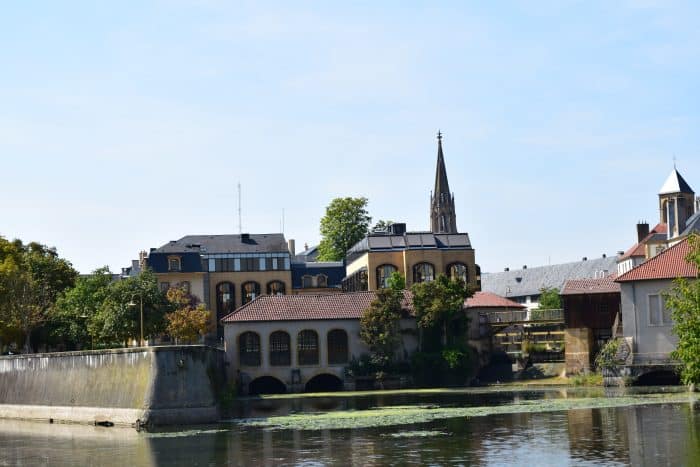
The Place de la Comédie is an 18th-century square that features classical architecture. The square is home to the Opéra-Théâtre de Metz, which dates from 1752. This makes it the oldest continuously active opera house in France. The square’s design reflects the Enlightenment era’s focus on public spaces and culture. It sits on an island in the Moselle River. It is a key part of the city’s architectural ensemble from the 18th century.

Sports in Metz
The sporting life in Metz is focused on its main professional football and handball clubs, both of which have a history of competing at the highest levels in France. The city has a strong presence in several other sports like athletics and rugby. The city’s facilities allow it to host national and international events. The surrounding natural landscapes also provide many opportunities for outdoor recreation.
Football
Football holds a significant place in Metz’s community. The city’s primary football club commands local loyalty. Matches are social events, uniting generations of fans and fostering a strong sense of belonging. The club’s performance often draws significant local attention. The team represents the city in the top tiers of French football.
FC Metz
Football Club de Metz, commonly known as FC Metz, is the city’s most prominent football club. Founded in 1932, they play their home matches at Stade Saint-Symphorien, which has a capacity of over 28,000. FC Metz has a rich history, including winning the Coupe de France twice (in 1984 and 1988) and the Coupe de la Ligue twice. They have spent numerous seasons in France’s top league, Ligue 1, and are a regular presence in the top two divisions. The club is a central point for local sports identity.
Handball
Handball holds a notable position within Metz’s sports community. The city is home to one of the most successful women’s handball clubs in France. The club showcases high-level talent and has a proud history of achievements. This dynamic sport resonates with local fans, providing exciting matches. The team’s success has made Metz a stronghold for French handball.
Metz Handball
The professional women’s handball club Metz Handball is one of the most successful in France. Founded in 1967, the club competes in the French Women’s First Division and regularly participates in the EHF Champions League, Europe’s premier club competition. They have won a record number of French Championship titles. Their home arena is Les Arènes de Metz, a modern indoor sports complex.
Athletics and Running
Athletics has a strong presence in Metz. The city has a major athletics club that brings together athletes from across the metropolitan area. The city also has modern indoor facilities that allow for year-round training and competitions, including national and international meetings.
A2M (Athlétisme Metz Métropole)
The main athletics club is Athlétisme Metz Métropole (A2M). This club is one of the most important in the Grand Est region. It provides training and competition opportunities for hundreds of athletes across all disciplines, from sprinting and jumping to long-distance running. The club is based at the Halle d’athlétisme de Metz, an indoor athletics arena.
Marathon de Metz Métropole
The Marathon de Metz Métropole is the city’s main annual running event. It typically takes place in October. The event attracts thousands of participants for the full marathon, half marathon, and other associated races. The course runs through the city center, passing by many of the main landmarks, including the Metz Cathedral. It also runs along the banks of the Moselle River. The event is a key part of the regional running calendar.
Rugby
Rugby has a dedicated following in Metz. The local club is an important part of the community sports scene. It provides a platform for local players and fosters the development of the sport in the Lorraine region. The club has teams for various age groups, from youth sections to a senior team.
Rugby Club de Metz Moselle
The local rugby club is the Rugby Club de Metz Moselle. The club was founded in 1961. The senior team competes in the Fédérale leagues, which are the national amateur divisions of French rugby. They play their home games at the Stade de la Grange-aux-Bois. The club is a key institution for the development of rugby in the city.


Getting Around in Metz
Navigating Metz is straightforward. The city center is compact and very walkable. For travel to the surrounding areas, a modern bus network provides efficient public transport.
On Foot: The Historic Core
Walking is the best way to explore the central part of Metz. The area around the Metz Cathedral, the main shopping streets, and the riverbanks are all part of a large pedestrian-friendly zone. Key sights like the Place d’Armes and the Place de la Comédie are within a short walking distance of each other. Comfortable shoes are recommended for exploring the historic cobblestone streets.
Local Buses
The public transport in Metz is operated by Le Met’. A comprehensive network of buses serves all parts of the city and its suburbs. The network also includes two high-frequency Mettis bus rapid transit lines. These operate on dedicated lanes, making them a fast and efficient way to travel across the city. Tickets can be purchased at vending machines or via a mobile app.
How to Get to Metz
Reaching Metz is convenient by road and rail. The city’s location in the Grand Est region of northeastern France, near the borders with Germany and Luxembourg, makes it a key transport hub. It is well-connected to the French and European transport networks.
Arriving by Air: Nearby Gateways
Metz is served by Metz-Nancy-Lorraine Airport (ETZ), located approximately 25 kilometers south of the city. ETZ offers some regional and seasonal flights. For wider international connections, Luxembourg Airport (LUX) is a major hub, located about 70 kilometers to the north. Saarbrücken Airport (SCN) in Germany and Paris Charles de Gaulle Airport (CDG) are also viable alternatives, with onward train or bus services to Metz.
The Open Road: Driving the Motorways
Driving to Metz offers flexibility for exploring the Grand Est region. The city is located at a key junction of the French motorway network (autoroute). The A4 motorway connects it directly with Paris and Strasbourg. The A31 motorway is a major north-south route that links Metz to Luxembourg in the north and to Dijon and Lyon in the south.
Connecting by Coach
Long-distance bus services provide an economical way to reach Metz. The main bus station is located near the central train station. Companies like FlixBus and BlaBlaCar Bus operate frequent routes. These connect Metz with major cities across France and neighboring countries. Direct connections are available from Paris, Luxembourg, and Frankfurt, among others.
On Track: A High-Speed Rail Hub
Traveling to Metz by train is highly efficient. The Gare de Metz-Ville is the city’s main railway station and is an architectural landmark itself, built during the period of German annexation. High-speed TGV trains connect Metz directly to Paris Est station in approximately 1 hour and 25 minutes. Other TGV services connect Metz to cities like Lyon and Marseille. Regional TER trains offer frequent connections to Nancy, Thionville, and Luxembourg.
The River Route: Arriving by Boat
For those traveling on the rivers, Metz’s location on the Moselle River makes it accessible by private boat or river cruise. The city has a marina, the Port de Plaisance, which can accommodate recreational boats. The Moselle is a navigable waterway that connects to the Rhine river system, allowing for long-distance travel through the inland waterways of Europe.
Driving Distances
The driving distance from 6 major French cities, according to Google Maps:
- Luxembourg City, Luxembourg – 65 kilometers (1 h 00 min)
- Saarbrücken, Germany – 75 kilometers (1 h 00 min)
- Strasbourg, France – 163 kilometers (2 h 00 min)
- Namur, Belgium – 216 kilometers (2 h 10 min)
- Frankfurt, Germany – 242 kilometers (2 h 50 min)
- Cologne, Germany – 294 kilometers (3 h 20 min)
- Brussels, Belgium – 304 kilometers (3 h 20 min)
- Basel, Switzerland – 312 kilometers (3 h 20 min)
- Paris, France – 332 kilometers (3 h 40 min)
- Amsterdam, Netherlands – 495 kilometers (5 h 20 min)
Looking to Explore more of France and Europe?