Marche-en-Famenne, Wallonia | Exploring Belgium
Marche-en-Famenne is a town and municipality in the province of Luxembourg, located in the Wallonia region of Belgium. The town is situated in the heart of the Famenne region, a natural area that lies between the Condroz to the north and the Ardennes to the south. With a population of approximately 17,800 residents, Marche-en-Famenne serves as the unofficial capital of the Famenne region. It is a key administrative, commercial, and cultural hub for the surrounding area. The town is located about 25 kilometers north of La Roche-en-Ardenne and about 45 kilometers southeast of the provincial capital, Namur.
The character of Marche-en-Famenne is defined by its well-preserved historic center and its modern role as a dynamic regional center. The old town features a mix of historic stone buildings, a medieval church, and several public squares that create a pleasant urban environment. This historic core is surrounded by modern residential and commercial areas that have expanded in recent decades. The town is also known for its focus on public art, with numerous sculptures integrated into its streets and squares. This combination of a historical market town atmosphere and a modern, active community gives the city its specific identity.


A Short History of Marche-en-Famenne
The history of Marche-en-Famenne is that of a strategic market town that has been a center for administration and commerce for centuries. Its location at a crossroads in the Famenne region has made it a site of important historical events, including the signing of a key treaty in the 16th century. The town’s story is one of a small medieval settlement that grew into a fortified town, endured conflicts, and later developed into the modern regional capital it is today. This long history is reflected in the town’s preserved architecture and its cultural institutions, which tell the story of this important Wallonian community.
Medieval Origins
The history of settlement in the Marche area dates back to the Roman period, as it was located near a major Roman road. The modern town, however, began to develop in the early Middle Ages, growing around a small chapel dedicated to Saint Remaclus. Its location at the intersection of several regional roads helped it to grow as a market center for the surrounding agricultural area. It was part of the County of La Roche and was fortified with a defensive wall and towers in the 13th century. This made it a key stronghold in the region and an important administrative center.
A Place of Treaties and Conflicts
A pivotal moment in the town’s history occurred in 1577, during the period of the Eighty Years’ War. The Perpetual Edict of 1577 was signed in Marche-en-Famenne by Don Juan of Austria, the governor of the Spanish Netherlands. This treaty was an attempt to bring peace to the Netherlands by agreeing to the removal of Spanish troops from the territory. Like many towns in the Ardennes region, Marche was involved in numerous conflicts over the centuries due to its strategic location. Its fortifications were besieged on several occasions, and it passed between the hands of different rulers.
Modern Era
In the 19th and 20th centuries, Marche-en-Famenne solidified its role as the primary administrative and commercial center for the Famenne region. The town’s infrastructure was modernized, and it grew beyond its old defensive walls. During World War II, the town was located near the front lines of the Battle of the Bulge. It was the site of a major defensive stand by British forces that helped to halt the final German advance in December 1944. In the modern era, the town has focused on developing its cultural offerings and its role as a service hub for the surrounding area.


Things to Do and See
The sights in Marche-en-Famenne are concentrated in its historic town center. The main points of interest include its medieval church, its main museum, and the preserved streets of the old town. The surrounding natural areas also provide key attractions for visitors. These sights collectively offer a look into the history, culture, and natural environment of the Famenne region.
Saint-Remacle Church
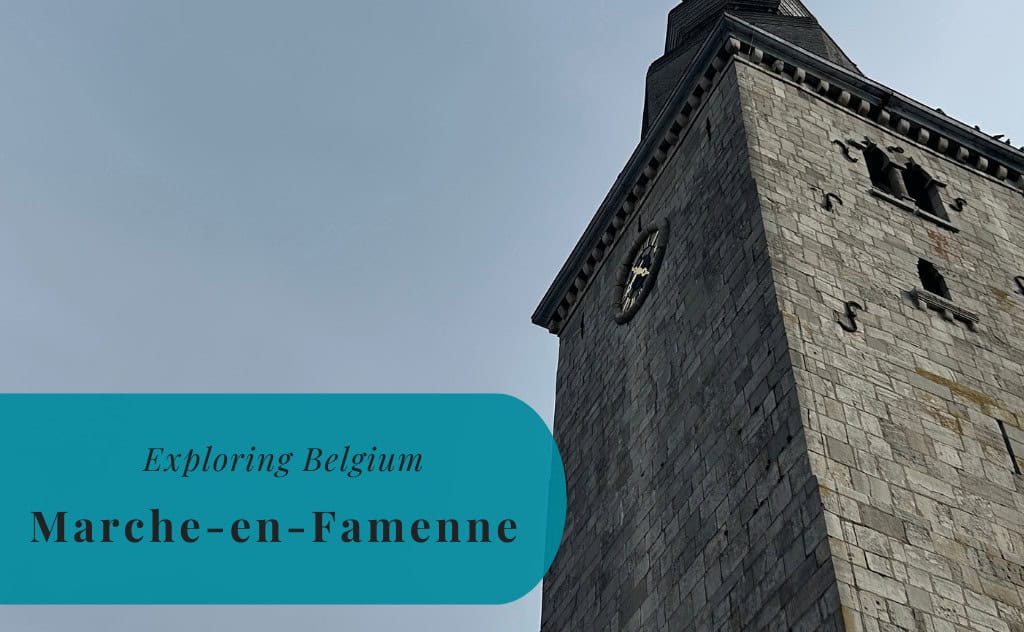
The Saint-Remacle Church (Église Saint-Remacle) is the main historic church in Marche-en-Famenne. The church is a large, Gothic-style building located in the heart of the old town. Its oldest parts, including the impressive Romanesque tower, date back to the 13th century. The main nave and choir were built in the 15th century in the Brabantine Gothic style. The church is a key landmark in the town and stands on the site of an even earlier chapel. It houses several important works of art, including a historic shrine and notable stained glass windows.
The Old Town
The Old Town (Vieille Ville) of Marche-en-Famenne is the historic heart of the city. The area is characterized by its narrow, winding streets and its historic stone buildings. A walk through the old town reveals its past as a fortified medieval settlement. The Porte Basse, a remnant of the old town’s defensive gates, is a key historical landmark that provides access to the central area. The central public squares, with their numerous cafes and restaurants, are the hub of social life in the town. Many of the buildings have been carefully restored.
Famenne Art Museum (FAM)
The Famenne Art Museum (FAM) is the main museum in the town. It is housed in a historic 18th-century building in the old town, known as the Maison Jadot. The museum is dedicated to the art and history of the Famenne region. The collection includes archaeological finds from the prehistoric and Gallo-Roman periods discovered in the local area. It also features a collection of art by the 18th-century sculptor Jean-Adrien de Marenne and contemporary artists from the region. The museum provides a comprehensive overview of the cultural heritage of the area.
Parc Van der Straten
The Parc Van der Straten is the main public park in Marche-en-Famenne. The park is located in the center of the town, providing a green space for relaxation and recreation. The park features well-maintained walking paths, a pond with fountains, and a playground for children. It is a popular spot for local residents and families to gather, especially during the warmer months. The park is named after a former mayor of the town and is a key part of the city’s public green spaces.
Fond des Vaulx
The Fond des Vaulx is a natural valley and a protected nature site located just on the outskirts of the town. The valley is known for its limestone cliffs, caves, and sinkholes, which are characteristic of the Calestienne geological region. It is a site of significant geological and biological interest. A marked hiking trail of about 4 kilometers runs through the valley, allowing visitors to explore its unique landscape. One of the caves in the valley is known as the “Trou du Renard” (Fox’s Hole), which is a local point of interest.


Sports in Marche-en-Famenne
The sporting life in Marche-en-Famenne is focused on its local community clubs. Football and basketball are popular team sports, with clubs that are a key part of the community. The surrounding Ardennes region also provides extensive opportunities for outdoor sports like hiking and cycling. The town has modern sports facilities that serve both the local clubs and the wider community. These clubs play an important role in the social life of the town.
Football
Football is a popular sport in the town, with a local club that has a long history. The club provides a platform for local players of all ages, from youth teams to a senior team. The team competes in the regional leagues of Belgian football. Home games are local events that draw supporters from the town and the surrounding area.
Royale Entente sportive marchoise
The town’s main football club is the Royale Entente sportive marchoise. The club has a long history, founded in the early 20th century. The senior team competes in the provincial amateur leagues of Luxembourg province. They play their home games at a local sports ground in the town. The club is a key institution for community sports, with a significant number of youth teams.
Basketball
Basketball also has a presence in Marche-en-Famenne, with a local club that is active in the regional leagues. The club provides opportunities for youth and adult players to participate in the sport. It contributes to the diverse sporting landscape of the town. The sport has a dedicated following in the region.
BC Marche
The main basketball club is BC Marche. The club has teams for various age categories, from young children to senior men’s and women’s teams. They compete in the provincial leagues of Wallonia. They play their home games at the town’s main sports hall, the Centre Sportif et Culturel. The club is a key part of the local sports scene and promotes the development of the sport.


Getting Around in Marche-en-Famenne
Navigating the town of Marche-en-Famenne is straightforward, as its center is compact and well-suited for pedestrians. The town serves as a regional transport hub, but for visitors exploring the immediate center, most sights are easily accessible. For travel to the surrounding areas, a network of regional buses is the primary mode of public transport, connecting the town with its suburbs and nearby villages. The town’s layout, with a clear central core and surrounding ring roads, helps to manage traffic. The presence of a major nearby train station also makes regional travel without a car a viable option for visitors.
On Foot: The Town Center
Walking is the best way to explore the central part of Marche-en-Famenne. The Old Town, the main squares, and the key sights like the Saint-Remacle Church and the Famenne Art Museum are all within a short walking distance of each other. The town has a well-developed network of pedestrian-friendly streets. This allows visitors to see the architecture and access local shops and cafes at a relaxed pace. Comfortable shoes are recommended for exploring the historic areas of the town.
Local Buses
The public transport in the region is operated by TEC (Transport en Commun). A network of regional buses connects Marche-en-Famenne with the surrounding villages and with larger nearby cities like Namur and Liège. The main bus station is located near the town center and is a key hub for these services. The buses are the primary mode of public transport for traveling within the region. This network is particularly important for connecting the town with the main railway station in Marloie.
On Two Wheels: Cycling
The Famenne region is a popular destination for recreational cycling. The landscape of rolling hills and forests provides a scenic setting for the sport. A network of signposted cycle routes, known as the RAVeL network, passes through the area. These paths often follow the routes of former railway lines, making them relatively flat and suitable for family cycling. The local roads also provide more challenging routes for road cyclists. Bike rentals are available in the town for visitors.
How to Get to Marche-en-Famenne
Reaching Marche-en-Famenne requires travel to the Ardennes region of southeastern Belgium. The town is well-connected by the regional road network. The closest major train station is located in the nearby village of Marloie, which is a key hub on the main north-south railway line. This combination of road and rail access makes the town a convenient destination. For international travelers, the journey typically involves flying into a major Belgian airport and then continuing the journey by road or rail.
The Open Road: Driving through the Ardennes
Driving is the most common and practical way to reach Marche-en-Famenne. The town is located directly on the N4, which is a major national road connecting Brussels and Namur with Luxembourg. The E25 motorway (A26) also passes nearby, providing a fast link to Liège and Luxembourg City. A car is highly recommended for exploring the wider Ardennes region and its many small villages and natural attractions. Parking is available in public car parks in the town.
Arriving by Air: Nearby Gateways
The two closest major international airports are Brussels Airport (BRU) and Brussels South Charleroi Airport (CRL). Both airports are located approximately a one-hour to 1.5-hour drive from Marche-en-Famenne. Another nearby option is Liège Airport (LGG), which primarily handles cargo but has some passenger flights. From any of these airports, a rental car is the most practical option. It is also possible to take a train from Brussels Airport to Marloie.
On Track: A Journey by Rail and Bus
Marche-en-Famenne does not have its own train station. The closest major train station is located in the nearby village of Marloie, approximately 5 kilometers away. The Marloie station is a key hub on the main railway line that connects Brussels and Luxembourg City. Frequent InterCity trains operated by SNCB stop here. From the Marloie station, a frequent connecting bus service, operated by TEC, or a taxi is required to complete the short journey to Marche-en-Famenne.
Connecting by Coach
There are limited direct long-distance international bus services to Marche-en-Famenne itself. Travel by coach would typically involve taking a service from a company like FlixBus to a larger nearby city, such as Liège or Namur. From these cities, travelers would then need to transfer to the Belgian national railway network to reach the Marloie station, followed by a local bus or taxi to reach the town. This can be an economical option but requires more planning.
Driving Distances
The driving distance from 10 regional cities, according to Google Maps:
- Namur, Belgium – 51 kilometers (0 h 50 min)
- Liège, Belgium – 53 kilometers (0 h 50 min)
- Maastricht, Netherlands – 82 kilometers (1 h 10 min)
- Luxembourg City, Luxembourg – 111 kilometers (1 h 20 min)
- Brussels, Belgium – 116 kilometers (1 h 30 min)
- Antwerp, Belgium – 154 kilometers (1 h 50 min)
- Cologne, Germany – 164 kilometers (2 h 00 min)
- Lille, France – 216 kilometers (2 h 30 min)
- Amsterdam, Netherlands – 291 kilometers (3 h 30 min)
- Paris, France – 372 kilometers (4 h 10 min)
Looking to Explore more of Belgium and Europe?