Manínska Tiesňava | Exploring Slovakia
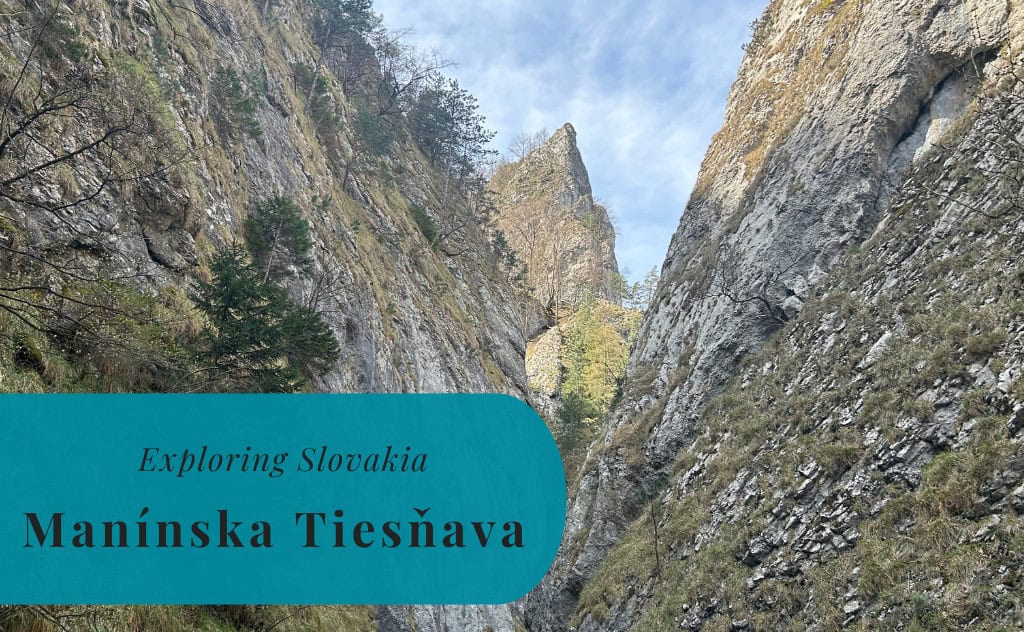
Manínska Tiesňava, or the Manín Gorge, is a national nature reserve, and it is the narrowest canyon in Slovakia. It is located in the Súľov Mountains, just a few kilometers from the town of Považská Bystrica. This stunning limestone canyon was carved by the Manínsky potok stream, and it cuts through the mountain ridge that separates the peaks of Veľký Manín and Malý Manín. The gorge is a place of great tourist interest. It is known for its unique geological formations and its wild and rare flora and fauna.
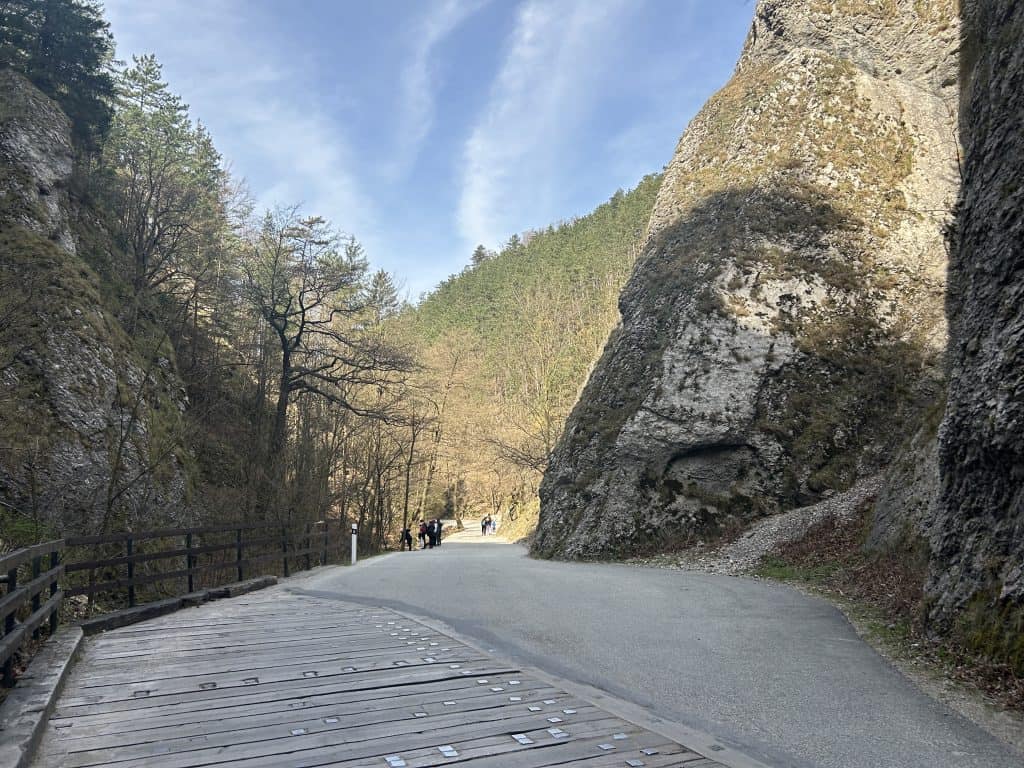
The gorge is a dramatic and picturesque landscape. Its steep rock walls rise up to 400 meters above the stream below. A narrow asphalt road runs through the entire length of the canyon. In its narrowest parts, there is barely enough space for a bus to pass. The area is a key part of the Strážov Mountains Protected Landscape Area. It offers visitors a chance to experience the power of nature. A visit allows you to explore one of Slovakia’s most unique and beautiful natural wonders.

History of Manínska Tiesňava
The history of Manínska Tiesňava is primarily a geological one. It is a story of how a small stream managed to carve its way through a massive limestone mountain over millions of years. In more recent human history, the gorge presented a significant obstacle to travel. The construction of a road through the narrowest parts of the canyon in the 20th century was a major undertaking. Today, the area is a protected nature reserve. Its history is now focused on conservation and its role as a beloved recreational area.
Geological Formation
In ancient times, the area of the current Manín Gorge was covered by a sea. The limestone that forms the mountains is filled with fossils from this period. The peaks of Veľký Manín and Malý Manín once formed a single, continuous mountain ridge. Over millions of years, the small Manín Stream first cut through the softer rock layers. When it reached the hard limestone, it continued to carve its way down. This created the narrow and deep canyon we see today. The swirling water and rocks also created unique formations called “giant’s kettles” on the canyon walls.
The Construction of the Road
For centuries, the narrowest part of the gorge was impassable for carts. Local farmers had to unload their goods, and then they had to take their carts apart. They carried everything through the narrow passage and reassembled their carts on the other side. This all changed in 1933, for a road was blasted through the narrowest section of the canyon. The construction of the road was controversial. Conservationists wanted to preserve the gorge in its original state, but a compromise was eventually reached.
A Protected Natural Area
The unique natural beauty of the Manín Gorge was recognized as being of national importance. The area was declared a National Nature Reserve in 1967. This designation ensures that its unique geological formations and its rich biodiversity are protected for future generations. An educational trail now runs through the gorge. It has informational panels that explain its geology, flora, and fauna. The area is also associated with the writer Peter Jilemnický, and a popular annual hiking event is held in his honor.

Sights in Manínska Tiesňava
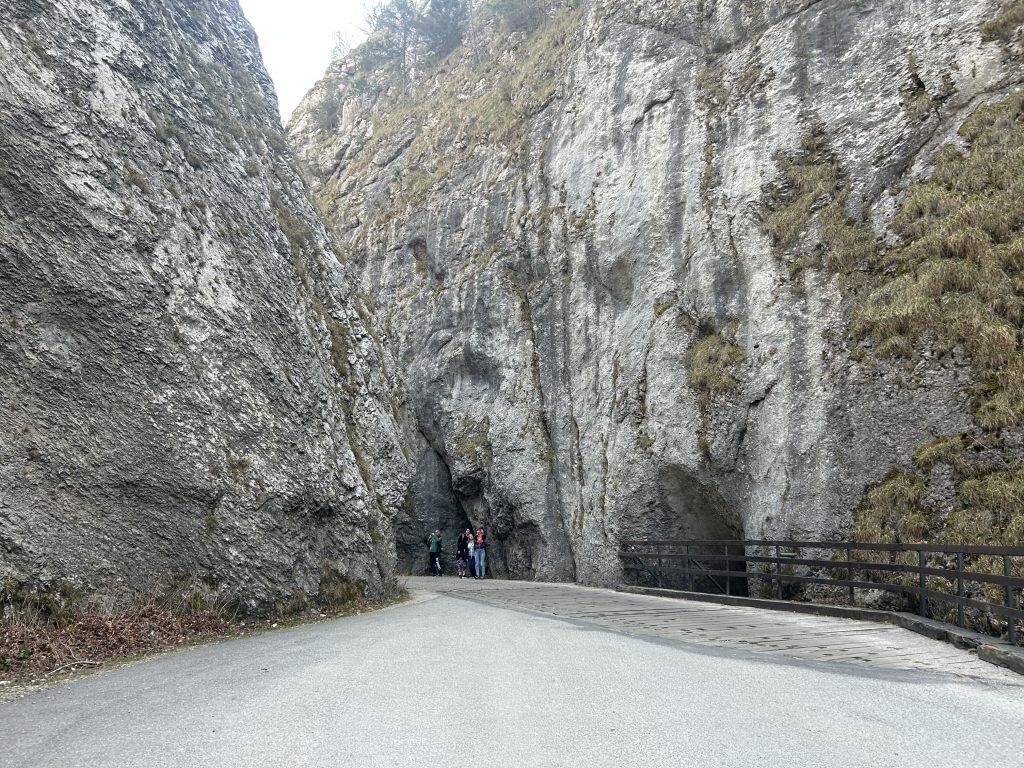
The sights in and around Manínska Tiesňava are centered on its spectacular natural beauty and its unique geological features. The main attraction is the gorge itself, which is composed of two smaller gorges separated by a small basin. A walk or a drive through the narrowest canyon in Slovakia is a memorable experience. The area is filled with bizarre rock formations, high cliffs, and the beautiful Manín Stream. For those seeking more adventure, the nearby Kostolecká Gorge offers another impressive natural landscape with the largest rock overhang in the Carpathian Mountains.
The Narrowest Canyon
The main sight is, of course, the gorge itself. Manínska Tiesňava is just under a kilometer long, and in some places, it is only 15 meters wide. The narrowest point is just 3.7 meters wide, and this makes it the narrowest gorge in Slovakia through which a road has been built. The steep rock walls rise up to 400 meters, and they create a dramatic and enclosed atmosphere. A walk through the gorge allows you to fully appreciate its scale and beauty. There are several spots along the road where you can stop and take photos.
Rock Formations and Cliffs
The gorge is famous for its bizarre and dramatic rock formations. The limestone has been eroded by water into a variety of shapes. These include towers, needles, and overhangs. The cliffs are a major destination for rock climbers. They feature numerous marked climbing routes of varying difficulty levels. The constant presence of these massive rock walls on either side of the narrow road is the defining feature of the landscape. The observant visitor can spot unique formations that have been given local names over the years.
Kostolecká Tiesňava (Kostolecká Gorge)
Just beyond the main Manín Gorge is the Kostolecká Tiesňava. This is another beautiful gorge that is also a national nature reserve. It is most famous for being home to the largest rock overhang in the Carpathian Mountains. This massive overhang creates a unique and impressive natural shelter. The area also features a large scree cone. This is a pile of rock debris at the base of a cliff. The educational trail that starts in the Manín Gorge continues through this area. This makes it easy to visit both gorges in a single trip.
Súľov Rocks
The Súľov Rocks are a stunning and unique rock formation. They are located in the Súľov Mountains, a short drive from the Manín Gorge. This national nature reserve is famous for its dramatic limestone pillars, towers, and gates. These have been shaped by erosion over millions of years. The area is a paradise for hikers, and it has a network of marked trails that lead through the rock city. A highlight is the ruins of the medieval Súľov Castle, which is built directly into the rock formations.
Považský Hrad (Považský Castle)
The ruins of Považský Hrad are another key historical sight in the region. The castle stands on a steep cliff, and it rises dramatically above the Váh River. It is located near the town of Považská Bystrica. The ruins of the medieval fortress create an impressive silhouette against the sky. From the castle grounds, there are impressive views of the river valley and the surrounding mountains. Exploring the ruins provides a direct connection to the region’s medieval past. It is a popular destination for a short hike.

Getting Around at Manínska Tiesňava
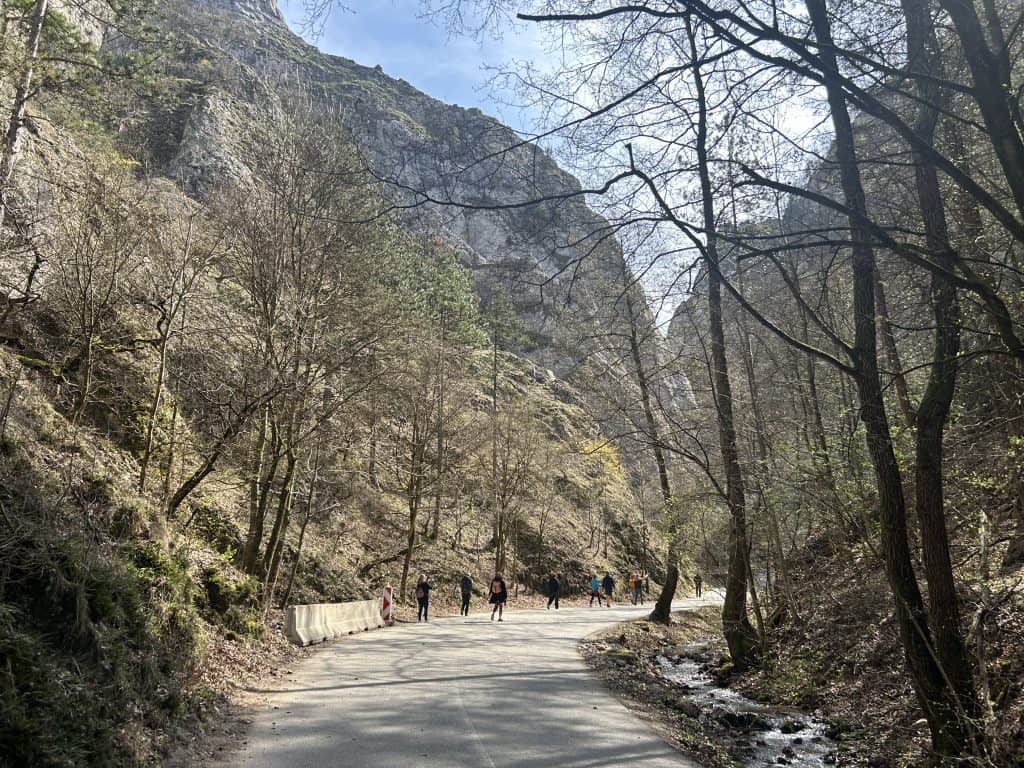
The Manínska Tiesňava is best explored on foot to fully appreciate its scale and beauty. A narrow asphalt road runs through the entire gorge, which is also accessible by car, although it can be a tight squeeze. The nearby town of Považská Bystrica is the main hub for transportation in the area. It is served by a local bus system that can take you to the village of Považská Teplá at the entrance to the gorge. For exploring the wider region, a car is the most convenient option.
Exploring by Foot
Walking is the best way to experience the natural beauty of the Manín Gorge. The main asphalt road that runs through the gorge is a popular route for a walk. There is also a marked educational trail that follows the gorge. It has informational panels that explain the geology and nature of the area. The walk through the gorge is relatively flat and easy, so it is suitable for all ages. Walking allows you to stop and admire the towering cliffs and the beautiful Manín Stream at your own pace.
Using Local Buses
The public transport system in Považská Bystrica consists of a network of local city buses. A key route for visitors is the bus that runs to the village of Považská Teplá. This is the main gateway to the Manín Gorge. This makes it possible to reach the gorge using public transport. The bus journey from the main train and bus stations in Považská Bystrica to Považská Teplá is short. From the bus stop in the village, it is just a short walk to the entrance of the gorge.
Navigating by Car
A car provides the most flexibility for exploring the Manín Gorge and the wider region. The nearby town of Považská Bystrica is located directly on the main D1 motorway. A car makes it simple to take day trips to other major attractions in the area, such as the Súľov Rocks or the nearby city of Žilina. It is possible to drive through the Manín Gorge on the narrow asphalt road, which is a unique experience. There are several small parking areas located along the road where you can stop.
How to Get to Manínska Tiesňava?
The Manínska Tiesňava is located in northwestern Slovakia, in the Trenčín Region. The gorge is situated just outside the village of Považská Teplá, which is a part of the nearby town of Považská Bystrica. Považská Bystrica is the main transportation hub for the area, and it is easily accessible by car, bus, and train. While the region does not have its own major international airport, several airports are located within a reasonable driving distance.
Arriving by Air
There is no commercial airport in Považská Bystrica. The closest airport with some limited flights is in Žilina (ILZ). For a much broader range of year-round international connections, Bratislava Airport (BTS) or Vienna International Airport (VIE) in Austria are the main gateways. Kraków John Paul II International Airport (KRK) in Poland is another good option. From any of these airports, you would need to continue your journey by car, bus, or train to Považská Bystrica.
Driving to the Gorge
The village of Považská Teplá, at the entrance to the gorge, is located just a few kilometers from the town of Považská Bystrica. Považská Bystrica is located directly on the main D1 motorway (E50 / E75). This is the most important highway in Slovakia, and it connects Bratislava with Žilina. This makes driving a very fast and convenient option for reaching the area. To reach the gorge, you take the exit for Považská Bystrica and then follow the signs for the small village of Považská Teplá.
Journey by Rail
Považská Bystrica is a key stop on the main railway line that connects Bratislava with Žilina and Košice. The national rail operator, Železničná spoločnosť Slovensko (ZSSK), runs frequent intercity and express train services that stop at the town’s main station. From the train station in Považská Bystrica, you would then need to take a short local bus ride or a taxi. This will take you to the village of Považská Teplá to reach the entrance of the gorge.
Connecting by Bus
Považská Bystrica is also well-connected by a network of national and international bus routes. The main bus station is located next to the train station, so transfers are easy. Numerous bus companies operate services that link the town with other Slovak towns and with major cities in neighboring countries. From the main bus station in Považská Bystrica, you can take a local bus for the short journey to the village of Považská Teplá.
Driving Distances
The driving distance from 20 regional cities, according to Google Maps:
- Považská Bystrica, Slovakia – 6 kilometers (0 h 10 min)
- Žilina, Slovakia – 28 kilometers (0 h 30 min)
- Trenčín, Slovakia – 51 kilometers (0 h 40 min)
- Martin, Slovakia – 60 kilometers (1 h 00 min)
- Ružomberok, Slovakia – 93 kilometers (1 h 15 min)
- Ostrava, Czech Republic – 105 kilometers (1 h 30 min)
- Trnava, Slovakia – 125 kilometers (1 h 20 min)
- Katowice, Poland – 150 kilometers (2 h 00 min)
- Brno, Czech Republic – 160 kilometers (1 h 45 min)
- Poprad, Slovakia – 166 kilometers (1 h 55 min)
- Bratislava, Slovakia – 172 kilometers (1 h 40 min)
- Kraków, Poland – 175 kilometers (2 h 40 min)
- Vienna, Austria – 253 kilometers (2 h 30 min)
- Budapest, Hungary – 270 kilometers (2 h 50 min)
- Košice, Slovakia – 278 kilometers (3 h 05 min)
- Wrocław, Poland – 325 kilometers (3 h 15 min)
- Prague, Czech Republic – 370 kilometers (3 h 45 min)
- Lviv, Ukraine – 455 kilometers (5 h 35 min)
- Warsaw, Poland – 465 kilometers (5 h 05 min)
- Berlin, Germany – 615 kilometers (6 h 05 min)
Looking to Explore more of Slovakia and Europe?