
Les Éparges, Lorraine | Exploring France
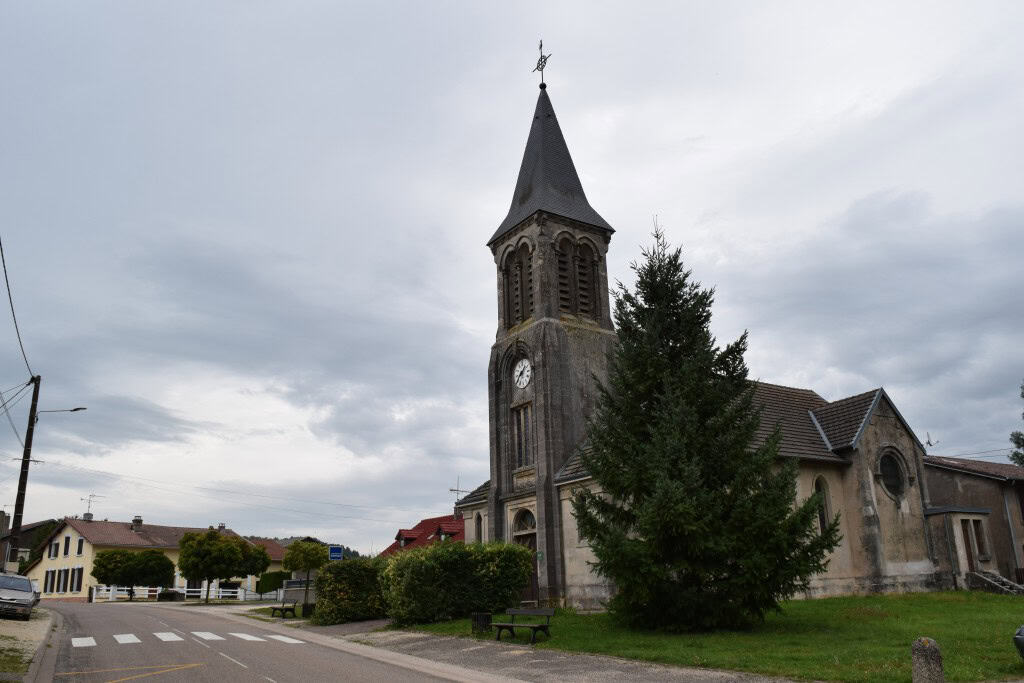
Les Éparges is a small commune in the Meuse department of northeastern France. It is part of the Grand Est region. The commune is situated on a prominent ridge of hills that overlooks the Woëvre plain. This elevated position gave the site immense strategic importance during World War I. With a population of just around 60 residents, the area is not a residential center but a major site of historical remembrance. It is located approximately 20 kilometers southeast of Verdun, the center of one of WWI’s longest battles.
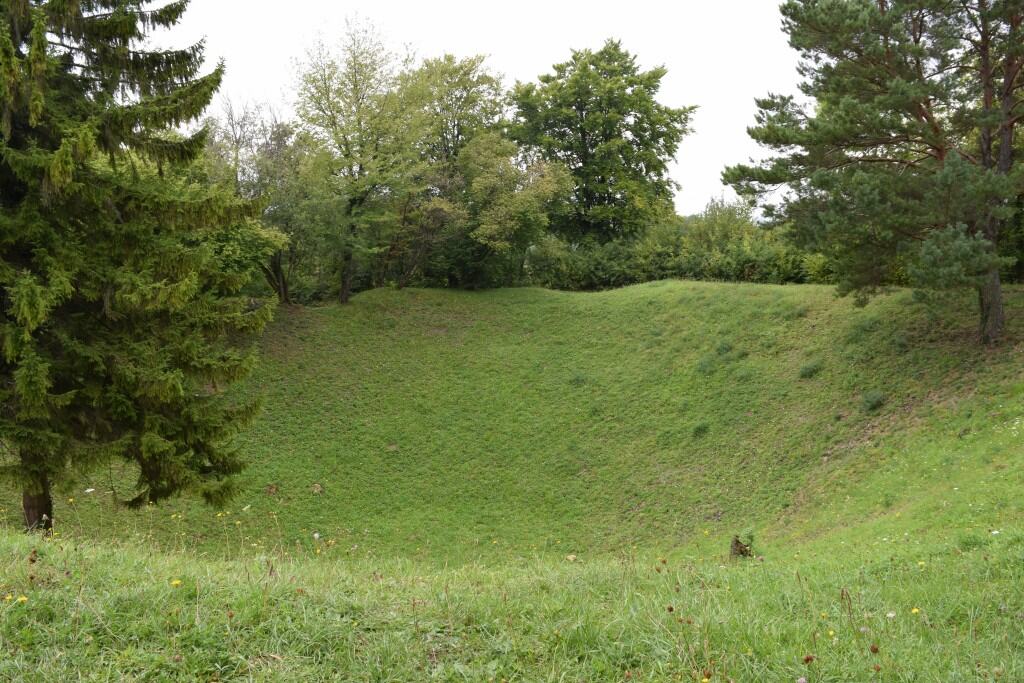
The character of Les Éparges is defined by its role as a preserved battlefield. The landscape is still visibly scarred by the craters and trenches from the intense fighting that took place here. The area is dotted with numerous monuments, memorials, and military cemeteries that honor the soldiers who fought and died on the ridge. It is a key location within the “Land of Memory” of the Great War in this part of France. Its quiet, forested environment stands in contrast to its violent past.


A Short History of Les Éparges
The history of Les Éparges is inextricably linked to the events of World War I. Before the war, it was a small, unremarkable agricultural village. Its location on a strategic ridge, however, transformed it into one of the most fiercely contested pieces of ground on the Western Front. The fighting here was characterized by conventional attacks followed by a long and brutal period of underground mine warfare. The memory of these battles, chronicled by several famous writers who fought here, defines the area’s historical identity.
The Battle of the Ridge (1915)
German forces occupied the strategic ridge of Les Éparges in September 1914, at the beginning of the war. This high ground provided them with a crucial observation point over the French positions on the Woëvre Plain below. The French high command recognized that control of the plain could not be achieved without first capturing this ridge. As a result, French forces launched a series of major offensives against the ridge between February and April 1915. This period of intense fighting, known as the First Battle of Les Éparges, led to devastating casualties on both sides for very little territorial gain.
The War of the Mines (1915-1918)
After the initial offensives failed to dislodge the German forces, the brutal fighting at Les Éparges moved underground. This initiated a prolonged period of mine warfare that lasted for over three years. Military engineers from both the French and German armies dug extensive networks of tunnels beneath the enemy’s trenches. They would then plant large quantities of explosives to destroy the positions above. Nearly 130 mines were exploded by both sides between 1915 and 1918. This relentless underground battle tore apart the landscape, creating the massive craters that are still visible today and completely destroying the original village of Les Éparges.

Things to Do and See
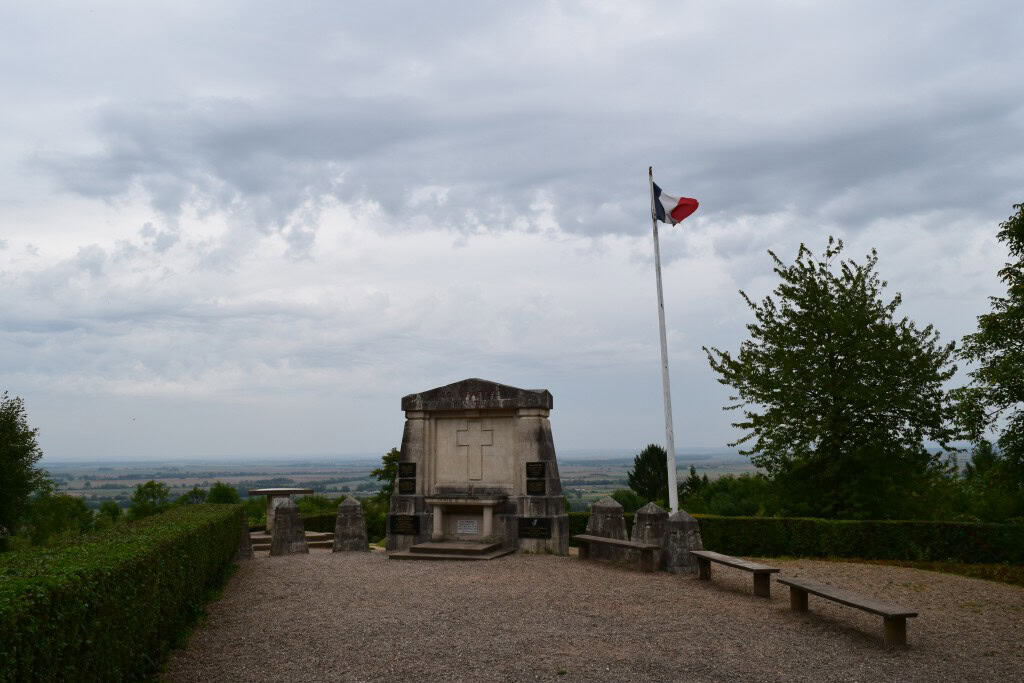
The sights at Les Éparges are primarily memorials and preserved battlefield landscapes that serve as a testament to the events of World War I. Visitors can explore the scarred terrain of the ridge, which still bears the marks of trench and mine warfare. Numerous monuments honor the different regiments and soldiers who fought here. The national necropolis provides a final resting place for many of the fallen.
Butte de Les Éparges (The Ridge)
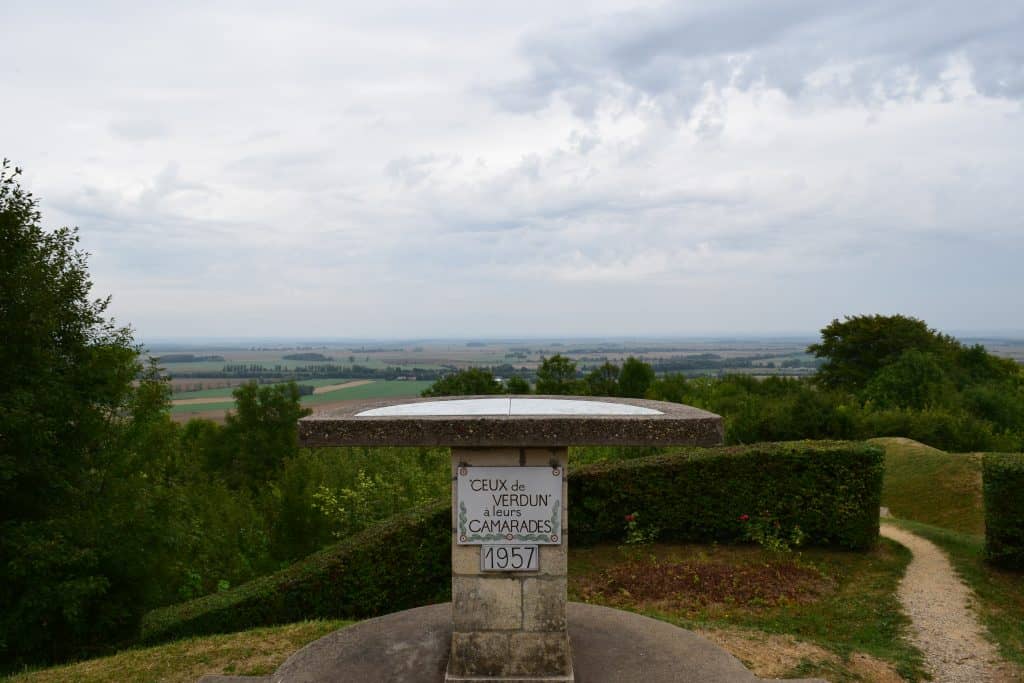
The Butte de Les Éparges itself is the central and most poignant sight. This ridge, which reaches an elevation of around 350 meters, bears the indelible scars of the intense fighting. Visitors can walk along marked paths that lead through preserved trench lines and past the vast, overlapping craters created by the mine warfare. Signs and interpretative panels are placed at key points along the ridge. These explain the strategic importance of different locations and the brutal nature of the battles fought here. The ridge offers a panoramic view that was once a key military observation point over the Woëvre Plain.
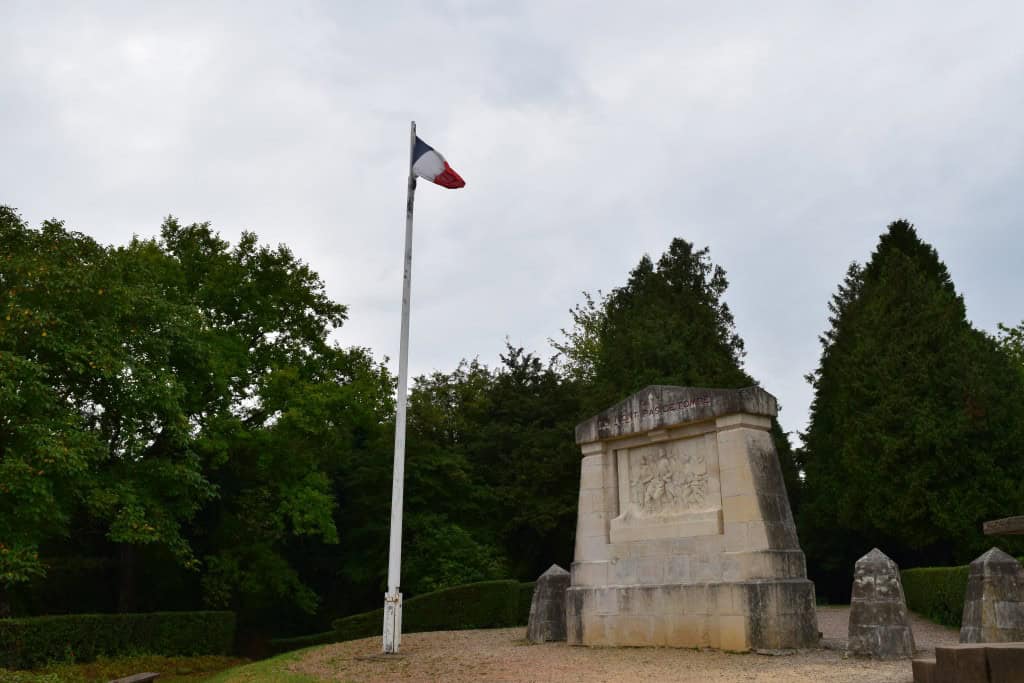
Monument du Point X
At the furthest eastern point of the Les Éparges ridge stands the Monument du Point X. This monument marks the site of the most advanced French position that was captured during the 1915 offensive. The monument is dedicated “à ceux qui n’ont pas de tombe” (to those without a grave). Its striking sculpture and somber inscription pay tribute to the thousands of soldiers whose bodies were never recovered or were left unidentifiable. It stands as a memorial to the unknown soldiers who died on this battlefield.
106th Infantry Regiment Monument (“Les Revenants”)
Also located on the ridge is the 106th Infantry Regiment Monument. It commemorates the severe losses suffered by this French regiment during the fighting. The work, sculpted by Maxime Real Del Sarte, is known as “Les Revenants” (The Ghosts or The Returning Spirits). It depicts a pyramid-like structure adorned with symbolic elements like severed hands reaching out from the ground, skulls, and crosses. It evokes the suffering and sacrifice of those who fought on these slopes, particularly during a devastating German artillery barrage in February 1915.
Engineers’ Memorial
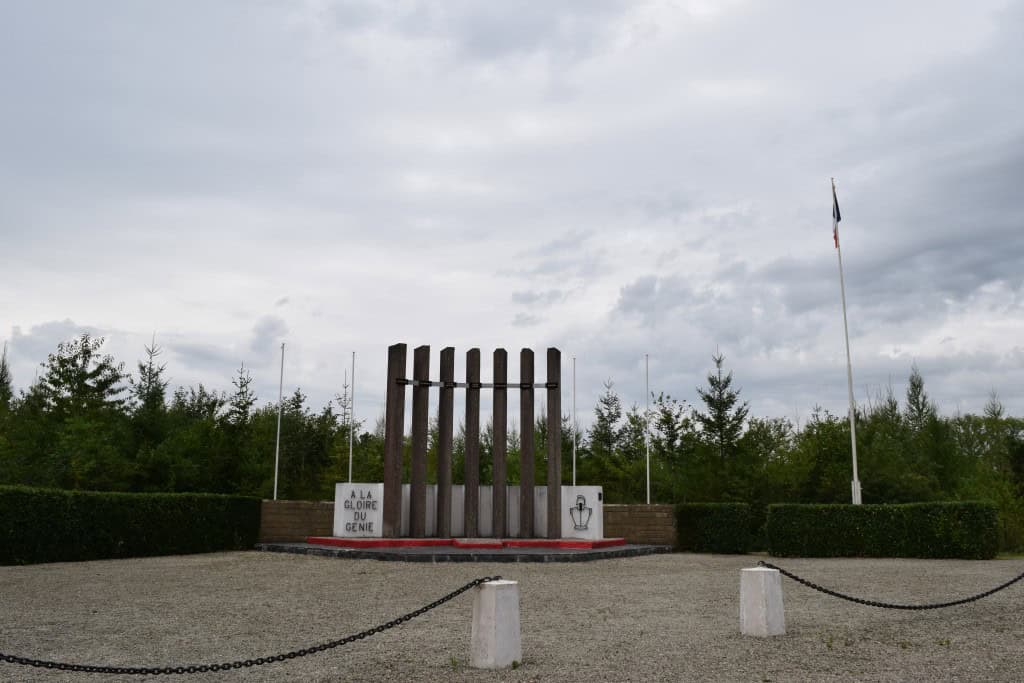
The Engineers’ Memorial (Mémorial des Sapeurs) pays tribute to the military engineers who suffered immense losses during the underground mine warfare at Les Éparges. This unique monument honors the “sapeurs,” who risked their lives digging tunnels and planting explosives directly beneath enemy lines. The monument consists of a semi-circular double wall inscribed with the names of the engineering units that fought here. It highlights the often-unseen but incredibly dangerous aspect of the Battle of Les Éparges.
Trottoir National Necropolis
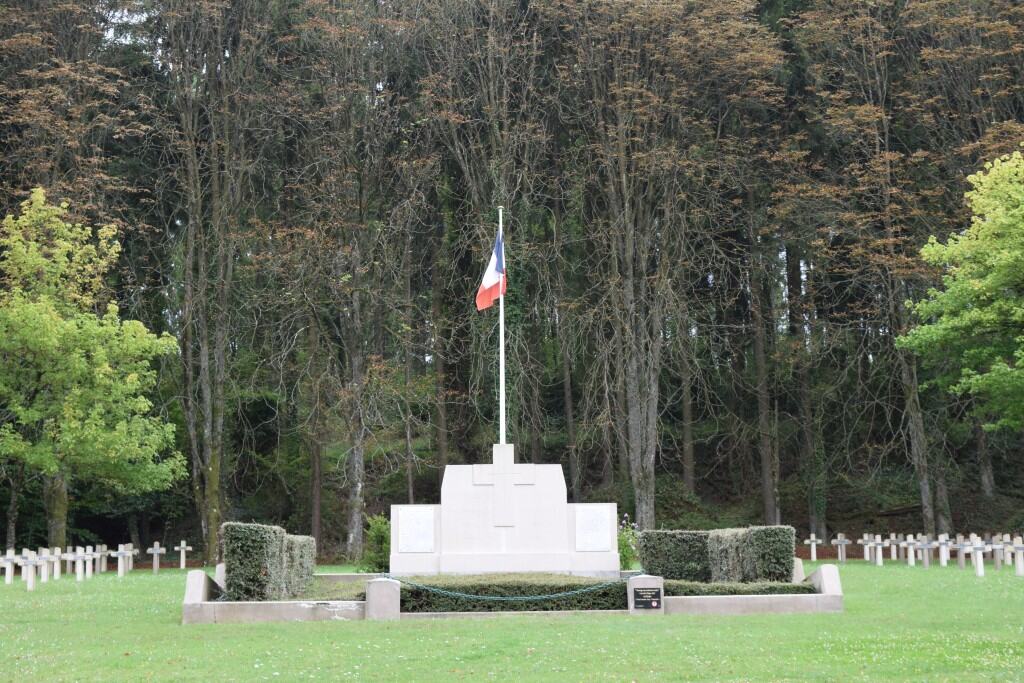
Stretching below the ridge of Les Éparges lies the Trottoir National Necropolis (Nécropole Nationale du Trottoir). This significant French military cemetery was established during the war to bury the fallen. It holds the tombs of 2,108 identified French soldiers, including ten graves marked with Muslim steles, reflecting the diverse origins of the French army. An ossuary within the cemetery also houses the remains of 852 unidentified soldiers. The cemetery provides a peaceful resting place for many who fell on the surrounding battlefields.
Alain-Fournier Monument & Glass Pyramid
A monument and a small glass pyramid commemorate the French writer Alain-Fournier. He was the author of the famous novel Le Grand Meaulnes. He disappeared during the fighting near Les Éparges in September 1914. For decades, his body was missing. It was finally found in a communal German grave in 1991. The glass pyramid protects the archaeological excavation site where his remains were exhumed. This discovery marked a significant moment in the archaeology of the Great War.


How to Get to Les Éparges
Reaching Les Éparges, a small commune in northeastern France with profound historical significance, requires planning. Known primarily for its pivotal role in World War I, it sits close to Verdun. While direct major transport links are limited, connecting via larger regional hubs makes the journey accessible. A car is the most recommended means of transport for visiting the scattered memorial sites.
The Open Road: Driving to the Battlefield
Driving offers the most flexibility for visiting Les Éparges and exploring the surrounding historical sites. The area is accessible via the major French motorway network. The A4 motorway, which connects Paris and Strasbourg, passes to the south of the region. From the motorway, a network of departmental roads leads to Verdun and then to Les Éparges. The site is well-signposted as a historical landmark. Parking is available at the various memorials and sites along the ridge.
Arriving by Air: Nearby Gateways
Les Éparges does not have its own airport. Several international airports are located within a reasonable driving distance. Metz-Nancy-Lorraine Airport (ETZ) is the closest, approximately 70 kilometers away. Luxembourg Airport (LUX) is another viable option, about 110 kilometers away. For wider international connections, Paris Charles de Gaulle Airport (CDG) is further, roughly 260 kilometers from Les Éparges. From any of these airports, onward travel requires a rental car.
Connecting by Coach
Direct long-distance bus services to Les Éparges do not exist. Instead, you would typically take a bus to a larger nearby town. Verdun is the most common hub for bus connections in the area. Companies like FlixBus and BlaBlaCar Bus operate routes to Verdun from major French cities, including Paris. From Verdun, a local bus service or a taxi would be needed to reach Les Éparges. These local services may be infrequent, so checking schedules in advance is essential.
On Track: A Journey by Rail
Les Éparges does not have its own train station. The primary high-speed rail connection to the region is the Gare Meuse TGV, located approximately 45 kilometers from Les Éparges. From Paris Est station, TGV high-speed trains reach Gare Meuse TGV in about one hour. Once at Meuse TGV, travelers would need to take a connecting bus service or taxi to Verdun. From Verdun, Les Éparges can be reached by a short taxi ride. Regional TER trains also serve Verdun itself from other regional centers like Metz.
Driving Distances
The driving distance from 10 regional cities, according to Google Maps.
- Metz, France – 62 kilometers (1 h 00 min)
- Luxembourg City, Luxembourg – 98 kilometers (1 h 20 min)
- Reims, France – 122 kilometers (1 h 40 min)
- Saarbrücken, Germany – 125 kilometers (1 h 40 min)
- Strasbourg, France – 203 kilometers (2 h 20 min)
- Paris, France – 280 kilometers (3 h 10 min)
- Frankfurt, Germany – 296 kilometers (3 h 20 min)
- Brussels, Belgium – 299 kilometers (3 h 10 min)
- Cologne, Germany – 305 kilometers (3 h 30 min)
- Lyon, France – 484 kilometers (4 h 50 min)
Looking to Explore more of France and Europe?