Karmėlava | Exploring Lithuania
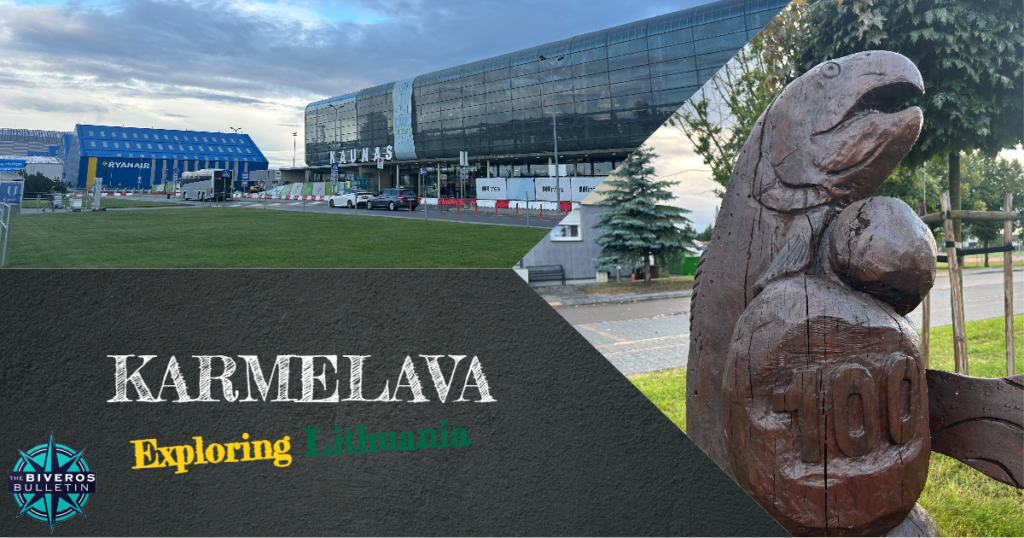
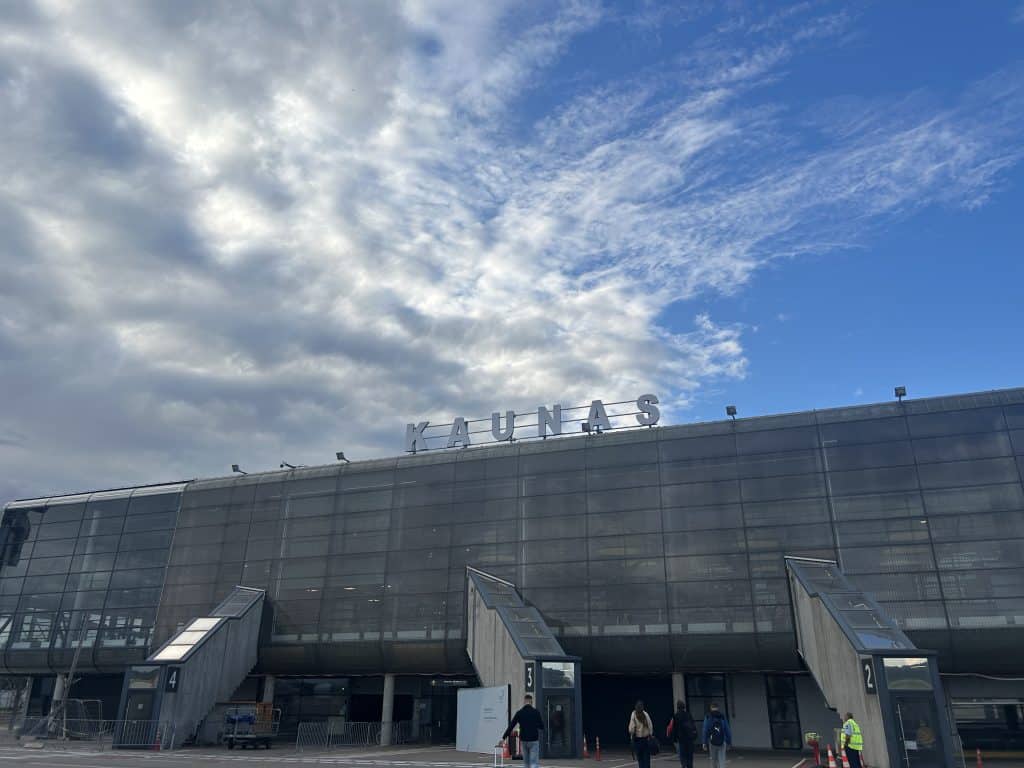
Karmėlava is a town and the center of an eldership in the Kaunas District Municipality of Lithuania. It is located approximately 14 kilometers northeast of the city of Kaunas, on the left bank of the Neris River. With a population of around 2,800 inhabitants, the town is primarily known as the location of Lithuania’s second-busiest airport, Kaunas International Airport (KUN). This facility is the defining feature of the town and has shaped its modern development and identity.
The identity of Karmėlava is that of a major transportation hub and a gateway to central Lithuania. The town serves as a crucial point of entry for international visitors, particularly those arriving on low-cost airlines or via air cargo. This modern role contrasts with its long history as a quiet agricultural settlement. Today, Karmėlava represents a blend of the old and the new, where the contemporary infrastructure of a major international airport exists alongside a historic town center and natural landscapes along the river. It is a place of transit and connection for the wider Kaunas region.


History of Karmėlava
The history of Karmėlava is a story of a small, centuries-old settlement that was transformed in the late 20th century by the construction of a major piece of national infrastructure. The area has been inhabited for hundreds of years, with the first written mention dating back to the late 14th century. For most of its existence, it was a small town in a rural, agricultural landscape. The most significant event in its history was the decision by the Soviet authorities to build a new airport here in the 1980s, a project that fundamentally changed its character and purpose.
A Village on the Neris
The first known written mention of Karmėlava dates back to the year 1387, in the chronicles of the Teutonic Knights. For centuries, it remained a small village and agricultural estate, its life revolving around the cycles of farming and its position on the Neris River. A key development in its local history was the construction of its first church. The current Church of St. Anne, a prominent local landmark, was built in the early 20th century. This solidified the town’s role as a local center for the surrounding villages and farms in the region.
The Soviet Era and the Airport
The most transformative period in Karmėlava’s history began in the 1980s. During this time, the Soviet government decided to build a new airport to serve the city of Kaunas, as the existing S. Darius and S. Girėnas Airport was too close to the city for expansion. Karmėlava was chosen as the site for this new facility. Construction took place throughout the decade, and the new airport was officially opened in 1988. Initially, it handled domestic flights within the Soviet Union, but it was designed with the capacity to become a major international airport.
Post-Independence Gateway
After Lithuania regained its independence in 1991, the airport at Karmėlava began its transition into a full-fledged international gateway. It officially became Kaunas International Airport in 1993. The airport’s major growth period occurred in the early 21st century when it became a key base for the low-cost airline Ryanair. This partnership led to a significant increase in passenger traffic and the number of destinations served. The airport has also become a major regional hub for air cargo, further cementing Karmėlava’s modern identity as a critical transportation and logistics center.
Sights in Karmėlava
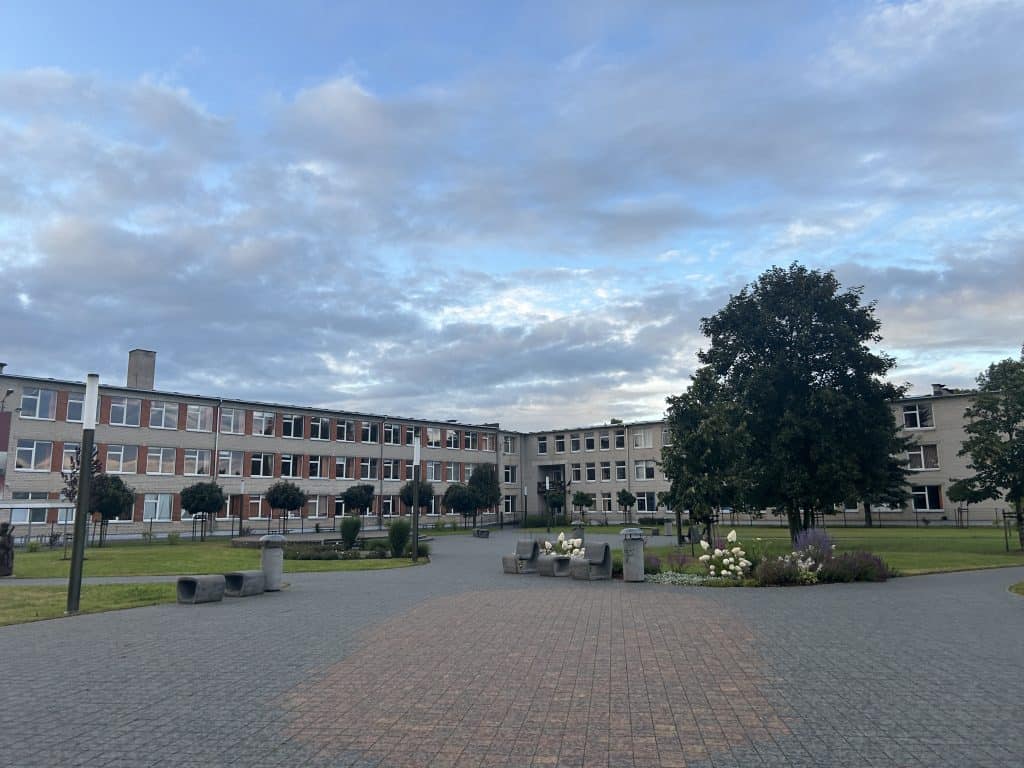
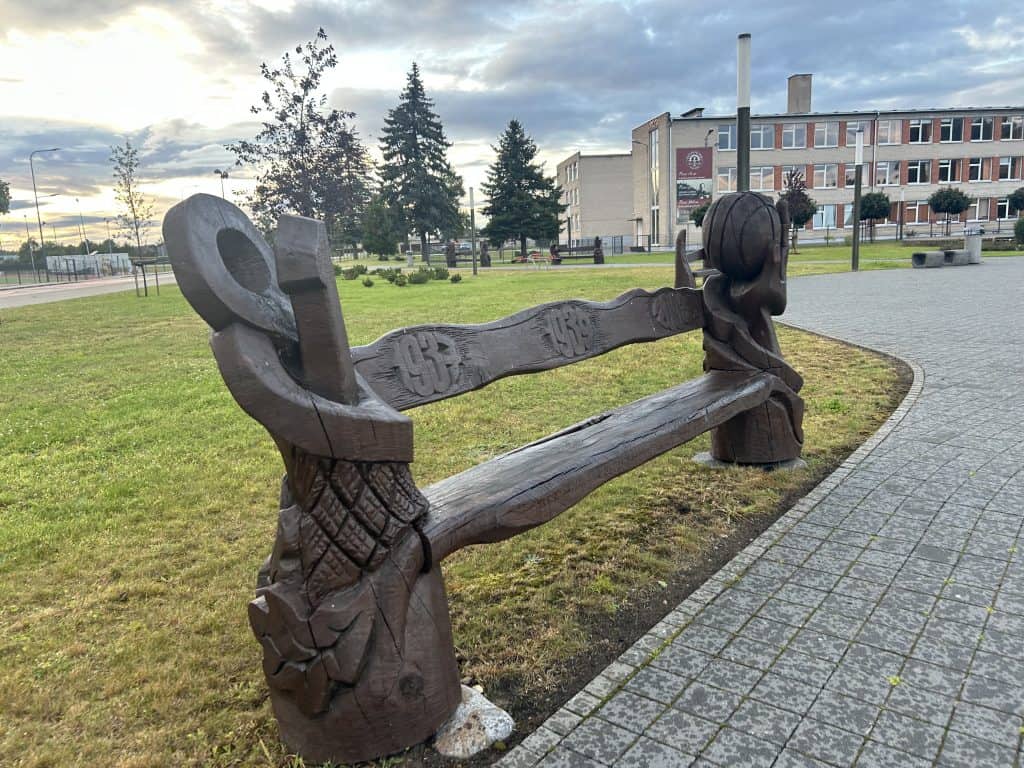
The sights in Karmėlava reflect its dual identity as both a historic settlement and a modern transportation hub. The most significant feature of the town is Kaunas International Airport, which defines its landscape and economy. Within the town itself, the main architectural and historical landmark is the Church of St. Anne. The natural surroundings of the town, particularly its proximity to the Neris Regional Park, offer scenic landscapes and recreational opportunities that stand in contrast to the nearby aviation infrastructure.
Kaunas International Airport (KUN)
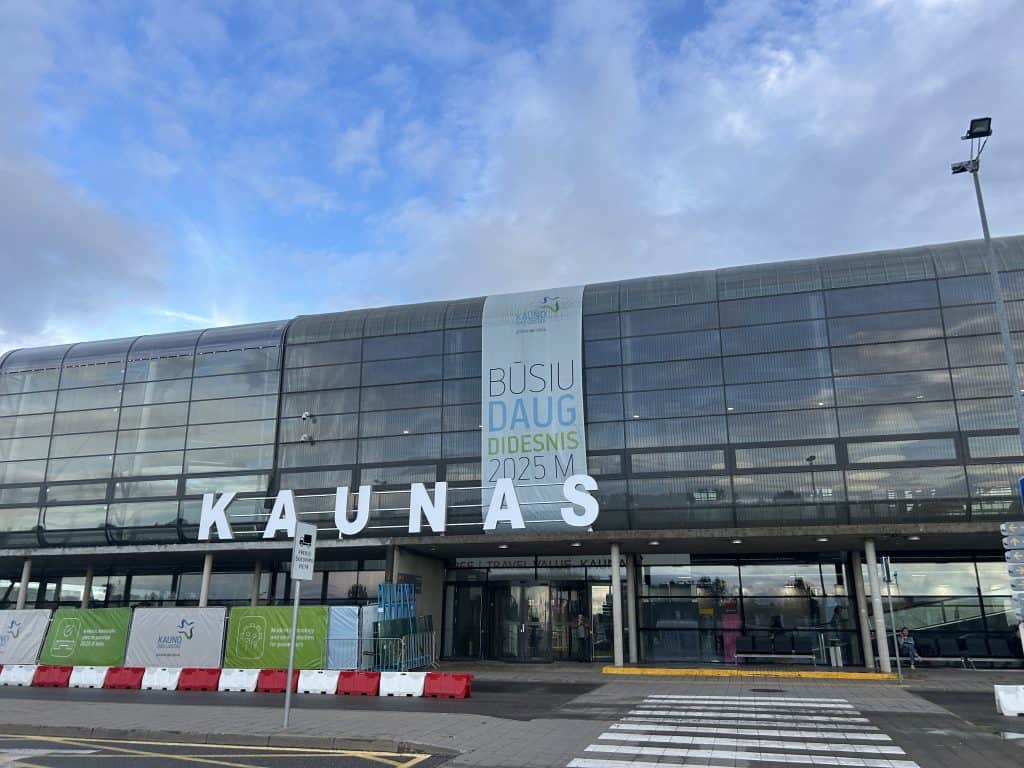
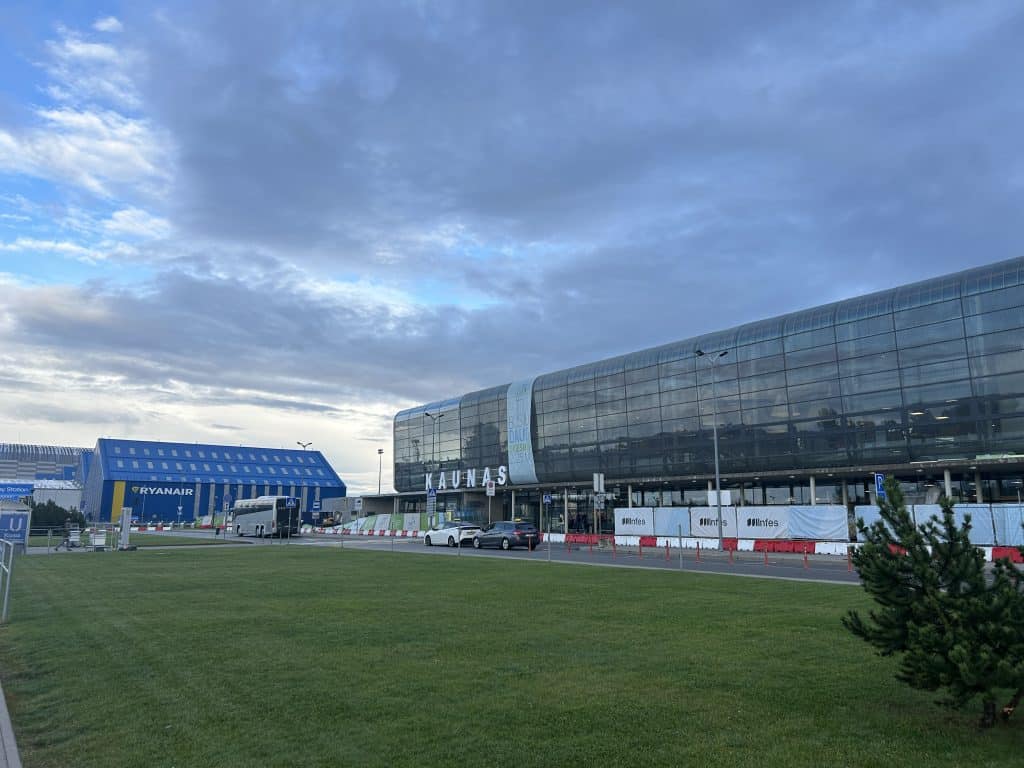
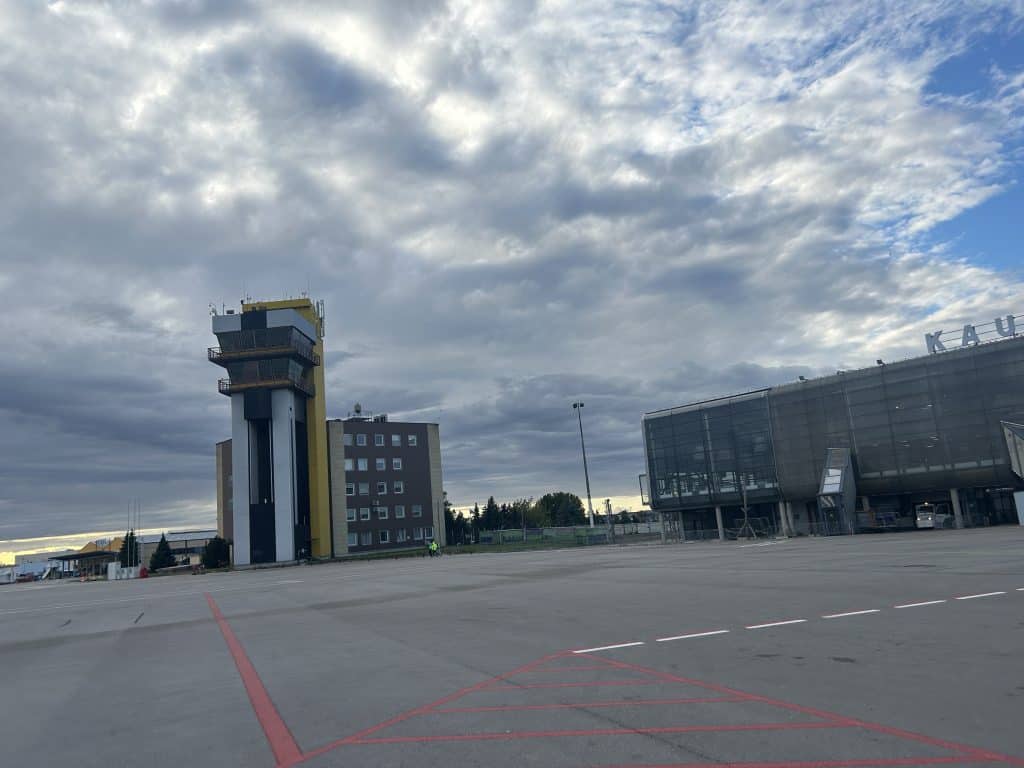
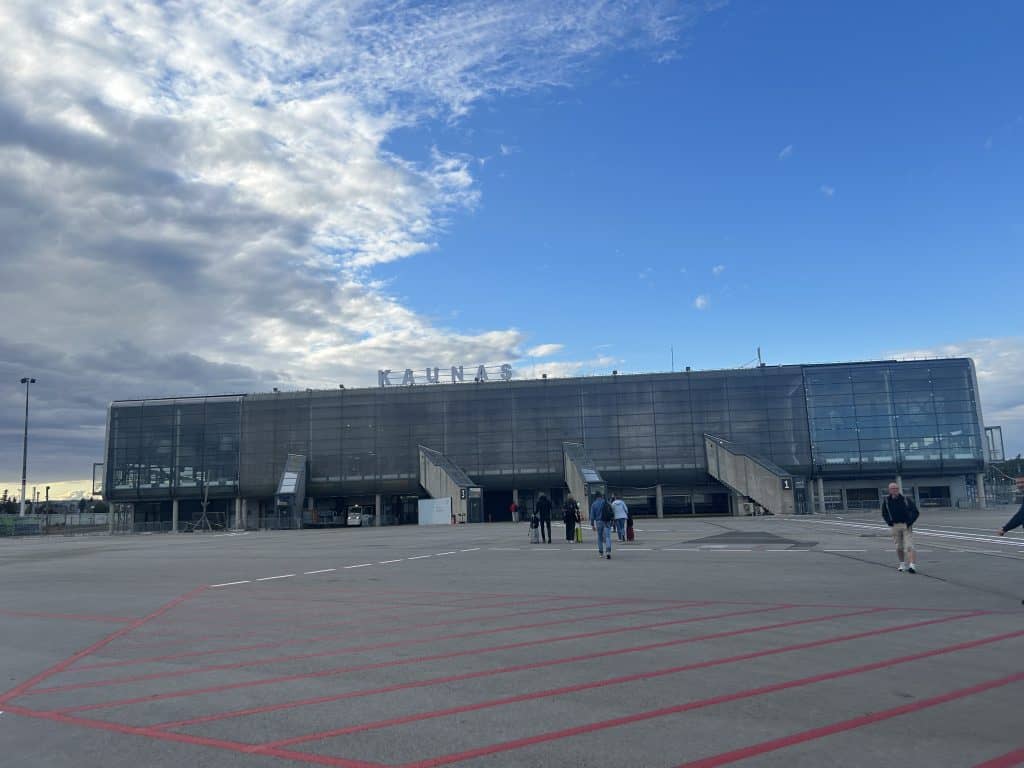
Kaunas International Airport (KUN) is the most prominent feature of Karmėlava. As the second-largest airport in Lithuania, it serves as a major gateway to the country. The airport infrastructure includes a modern passenger terminal, which was expanded and updated in 2008, as well as significant facilities for aircraft maintenance and air cargo. While an airport is a functional facility rather than a traditional tourist sight, its presence is the main point of interest in the town. It is a major base for the airline Ryanair and a key cargo hub for companies like FedEx and UPS.
Church of St. Anne
The Church of St. Anne is the main historical and architectural sight within the town of Karmėlava. The current brick church was constructed between 1907 and 1918, and it is a prominent example of the Neogothic architectural style. Its tall, slender spire is a major landmark in the local landscape. The church serves as the religious and community center for the town’s Catholic population. Its construction in the early 20th century marked an important stage in the town’s development from a small village into a more established local center, long before the airport was built.
Neris Regional Park
The town of Karmėlava is located on the edge of the Neris Regional Park, a large protected area that follows the course of the Neris River. This park is known for its scenic landscapes, its dense forests, and its rich biodiversity. The area offers numerous hiking and cycling trails that allow visitors to explore the natural beauty of the river valley. The park also contains several sites of archaeological and cultural importance, including ancient burial mounds and traditional villages. The proximity of this large natural park provides a quiet, green contrast to the bustle of the nearby airport.
How to Get to Karmėlava?
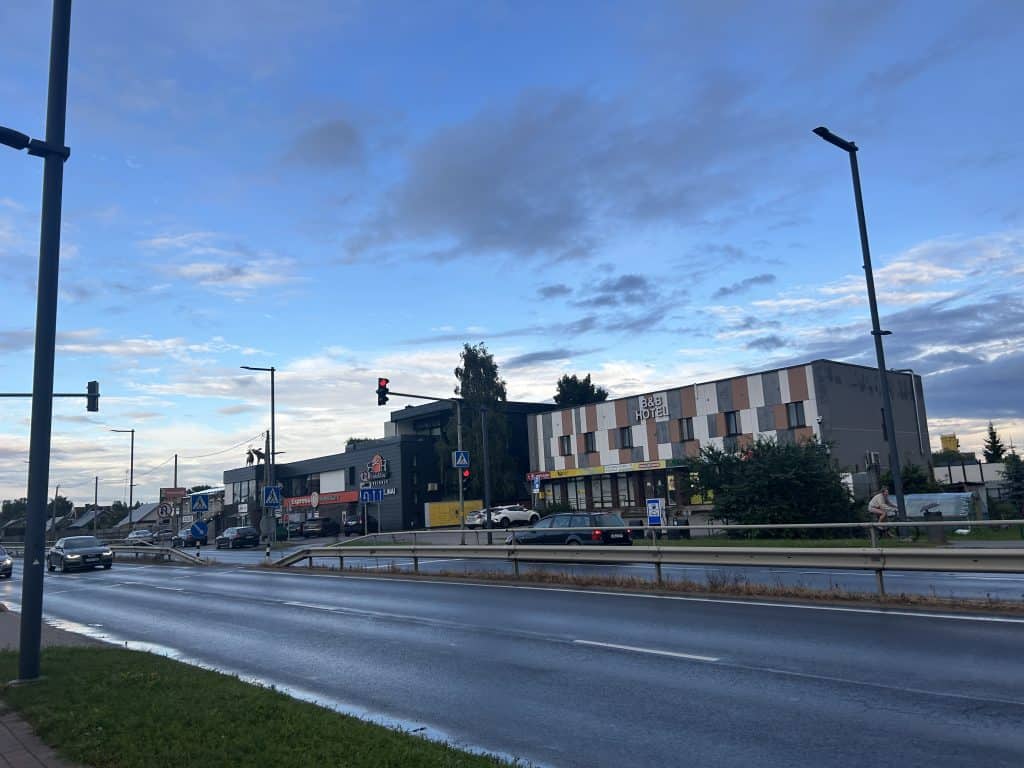
Karmėlava is a major transportation hub in Lithuania, and it is very well-connected and easy to reach. The town itself is small and compact, so the main residential and commercial areas are best explored on foot. For reaching the town and the wider region, several efficient options are available. The town’s primary role as a gateway is due to it being the location of Kaunas International Airport (KUN). The town is also located at the crossroads of several major national highways, making it easily accessible by road from all parts of Lithuania and from neighboring countries. This excellent transport infrastructure makes Karmėlava a primary entry point for the Kaunas region.
Gateways in the Sky
Kaunas International Airport (KUN) is located directly in Karmėlava, and it is the main way for international visitors to reach the town and the wider region. As the second-busiest airport in Lithuania, KUN is a major base for the low-cost airline Ryanair. It offers direct flights to many destinations across Europe, including cities in the United Kingdom, Ireland, Germany, and Spain. The airport is also a significant hub for air cargo. Frequent bus services and taxis provide a direct and easy connection from the airport terminal to the city center of Kaunas, which is about 14 kilometers away, making transfers for travelers very convenient.
Navigating by Road
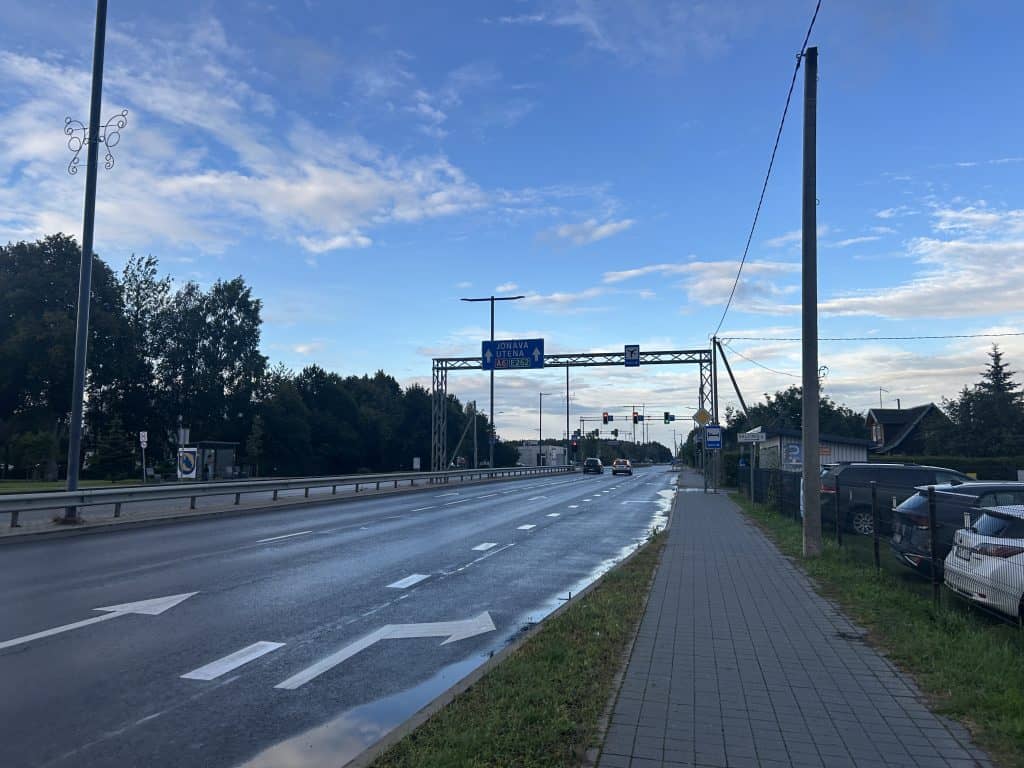
Driving to Karmėlava is very convenient, for the town is located directly on the A6 highway. This road connects Kaunas with the town of Zarasai on the Latvian border, and it also provides a fast link to the main A1 motorway. The A1 is the primary east-west artery in Lithuania, connecting Vilnius and Klaipėda. The town is also located close to the crucial pan-European road corridor, the Via Baltica (E67). This major highway connects Warsaw and Prague in the south with Riga and Tallinn in the north, placing Karmėlava at a strategic point in the regional road network.
Connecting by Bus
The public bus system is the main way to travel between Karmėlava and the city of Kaunas. The city’s public transport operator, “Kauno autobusai,” runs several bus routes that connect the airport and the town with the main bus and railway stations in Kaunas. The Route 29G is a frequent express service that provides a direct link between the airport and the city center. Local buses also serve the residential parts of Karmėlava, making it easy for residents to commute and travel within the district. This makes public transport a reliable option for reaching the area.
Driving Distances
The driving distance from 20 regional cities, according to Google Maps:
- Kaunas, Lithuania – 14 kilometers (0 h 20 min)
- Jonava, Lithuania – 20 kilometers (0 h 25 min)
- Kėdainiai, Lithuania – 40 kilometers (0 h 40 min)
- Alytus, Lithuania – 80 kilometers (1 h 10 min)
- Marijampolė, Lithuania – 75 kilometers (1 h 00 min)
- Vilnius, Lithuania – 90 kilometers (1 h 05 min)
- Panevėžys, Lithuania – 95 kilometers (1 h 00 min)
- Šiauliai, Lithuania – 145 kilometers (1 h 50 min)
- Suwałki, Poland – 140 kilometers (1 h 40 min)
- Klaipėda, Lithuania – 225 kilometers (2 h 10 min)
- Daugavpils, Latvia – 195 kilometers (2 h 30 min)
- Białystok, Poland – 255 kilometers (3 h 20 min)
- Kaliningrad, Russia – 265 kilometers (3 h 45 min)
- Riga, Latvia – 250 kilometers (3 h 10 min)
- Minsk, Belarus – 295 kilometers (3 h 30 min)
- Liepāja, Latvia – 315 kilometers (3 h 30 min)
- Warsaw, Poland – 415 kilometers (4 h 20 min)
- Gdańsk, Poland – 470 kilometers (6 h 10 min)
- Tallinn, Estonia – 555 kilometers (6 h 40 min)
- Tartu, Estonia – 520 kilometers (7 h 20 min)
Looking to Explore more of Lithuania and Europe?