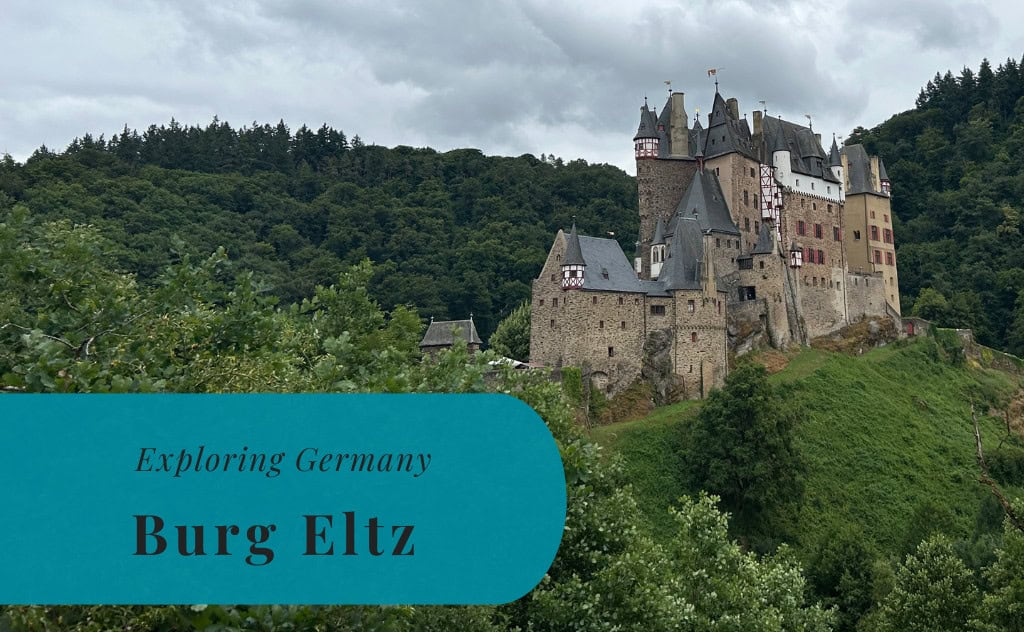
Burg Eltz, Rhineland-Palatinate | Exploring Germany
Burg Eltz, or Eltz Castle, is a medieval castle located in the state of Rhineland-Palatinate, Germany. The castle is situated in the hills above the Moselle River, nestled in a valley of the Elzbach river. It is located near the town of Wierschem, approximately 29 kilometers southwest of Koblenz. Burg Eltz holds a unique distinction: it has been owned and cared for by the same family for over 850 years, spanning more than 33 generations. Furthermore, it is one of the few castles in the region that has never been destroyed by war.
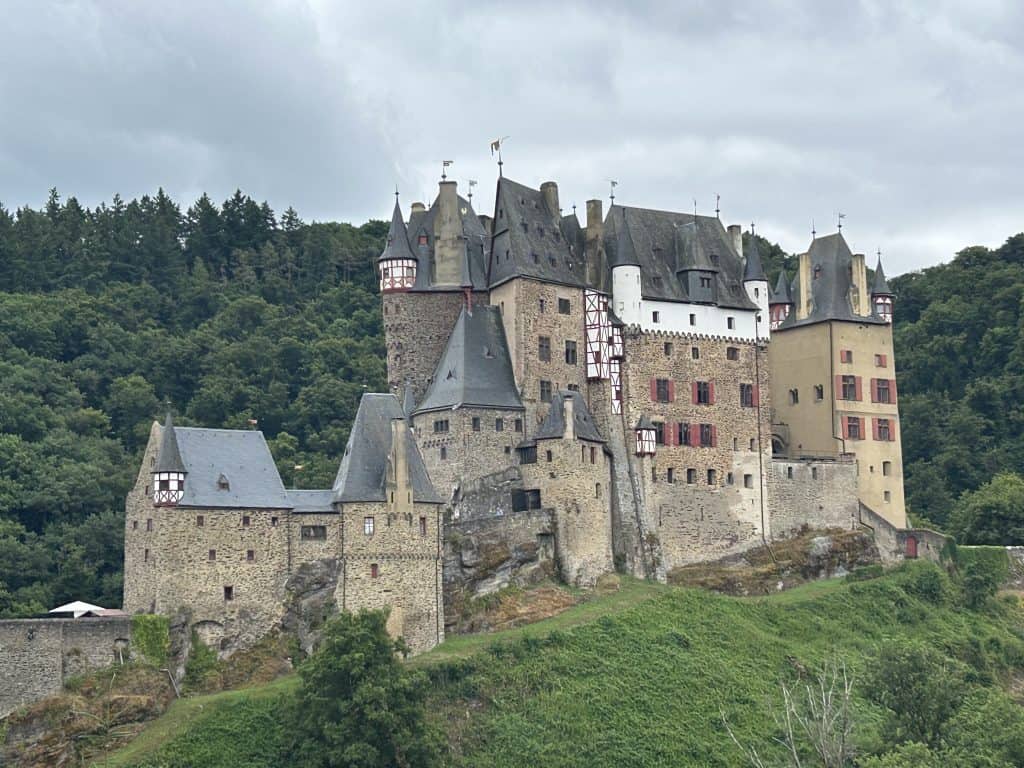
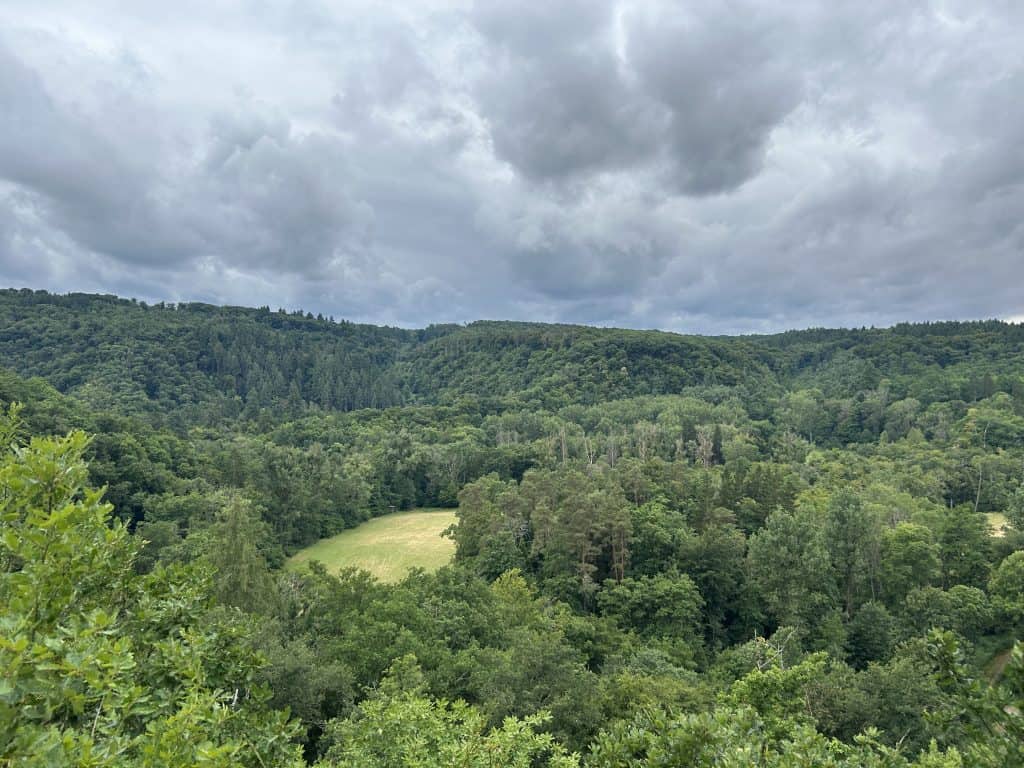
The character of Burg Eltz is that of an authentic medieval fortress that appears as if it has been untouched by time. Its location in a secluded forest, away from major roads, has helped to preserve its original state. The castle is not a single structure but a complex of different buildings and towers that were added by different branches of the Eltz family over the centuries. This has resulted in a unique architectural ensemble. Today, it is one of Germany’s most famous castles and a major tourist destination.

A Short History of Burg Eltz
The history of Burg Eltz is a story of a single family’s enduring legacy and the castle’s remarkable survival through centuries of conflict. Unlike most other castles in the region, Burg Eltz avoided destruction through a combination of skillful diplomacy and its strong defensive position. Its history is also unique due to its status as a Ganerbenburg, a castle shared by several branches of the same family. This arrangement shaped its architectural development, leading to the cluster of residential towers seen today.
Foundation and a Shared Inheritance
The history of the castle began in the 12th century. A simple Romanesque keep and residence were built on a large, elliptical rock in the middle of the Elzbach valley. The name “Eltz” was first mentioned in a document in 1157. By the 13th century, the castle and its estate were divided between three brothers of the Eltz family. This established Burg Eltz as a Ganerbenburg, or a castle of joint inheritance, where several family lines lived together. The three main branches were known by the crests on their coats of arms. These were the Kempenich (Golden Lion), the Rübenach (Silver Lion), and the Rodendorf (Buffalo Horns) families.
The Eltz Feud and Expansion
The only significant military conflict the castle faced was the Eltz Feud, which lasted from 1331 to 1336. The lords of Eltz, along with other local knights, resisted the territorial policies of the powerful Archbishop of Trier, Balduin von Luxemburg. The archbishop laid siege to the castle, building a small counter-castle on a nearby rock to bombard Burg Eltz with catapults. The feud ended with the knights’ surrender. After this, the castle continued to be expanded over the centuries. Each of the three family branches built their own residential towers and wings, creating the unique, clustered appearance of the inner courtyard.
Preservation and Modern Icon
The castle’s secluded location and the diplomacy of the Eltz family helped it to avoid destruction during the Thirty Years’ War and the wars of the 17th century. At a time when French troops destroyed most other Rhine castles. In the 19th century, during the Romanticism movement’s fascination with the Middle Ages, Count Karl zu Eltz began a major restoration of the castle. This careful restoration, which took place from 1845 to 1888, focused on preserving the historic character of the building rather than rebuilding it in a new style. Today, the castle is still privately owned by the Kempenich branch of the Eltz family and is a major, well-preserved museum.

Things to Do and See
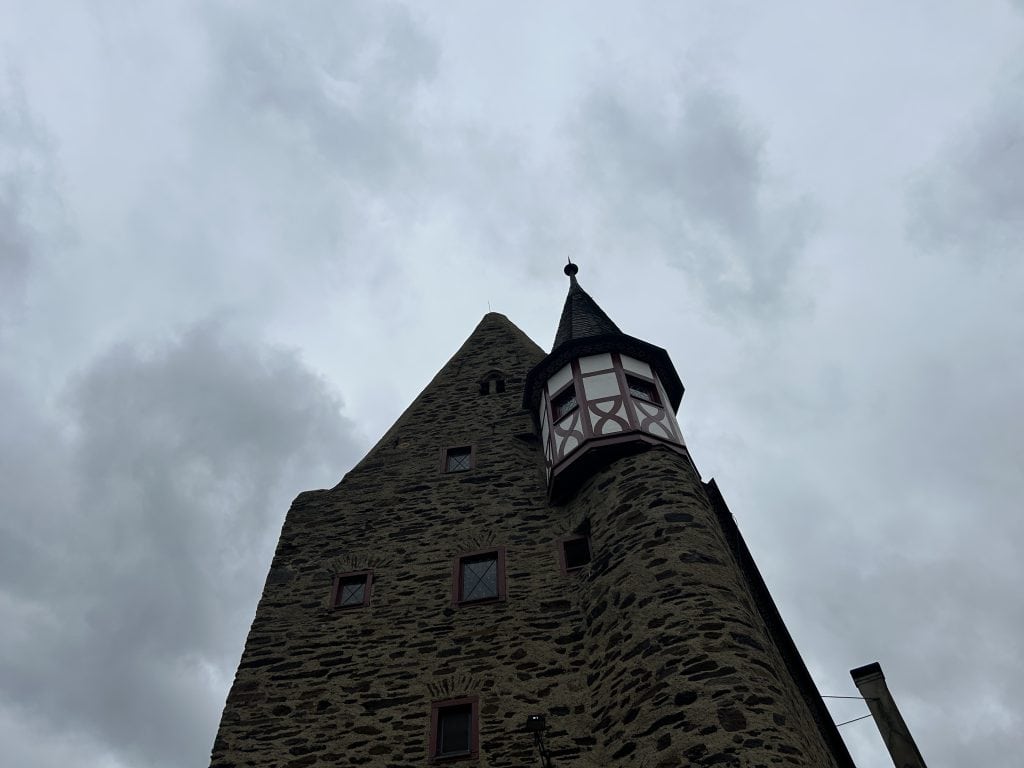
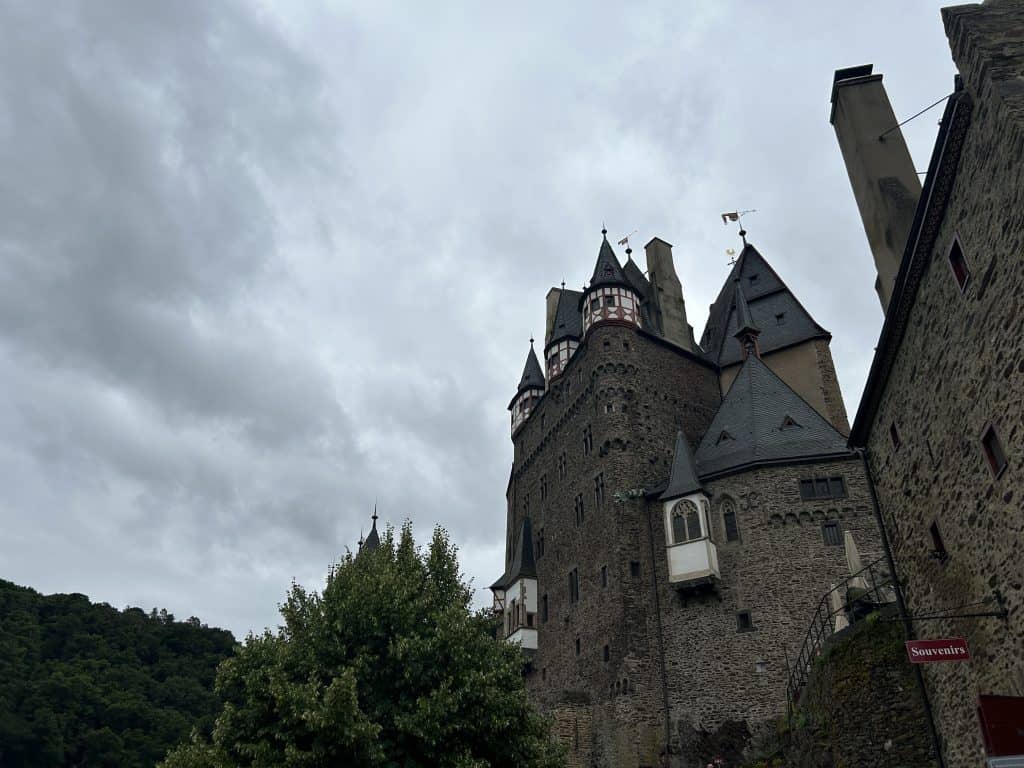
A visit to Burg Eltz provides an experience of an authentic and fully furnished medieval castle. The complex is a mix of architectural styles, primarily Romanesque and Baroque, reflecting centuries of continuous construction. The eight towers of the castle rise up to 35 meters high. The different residential wings of the three family branches are built around a small inner courtyard. The experience can be divided into exploring the free-to-access exterior and viewpoints, and the paid interior areas which require a guided tour.
The Exterior and Viewpoints
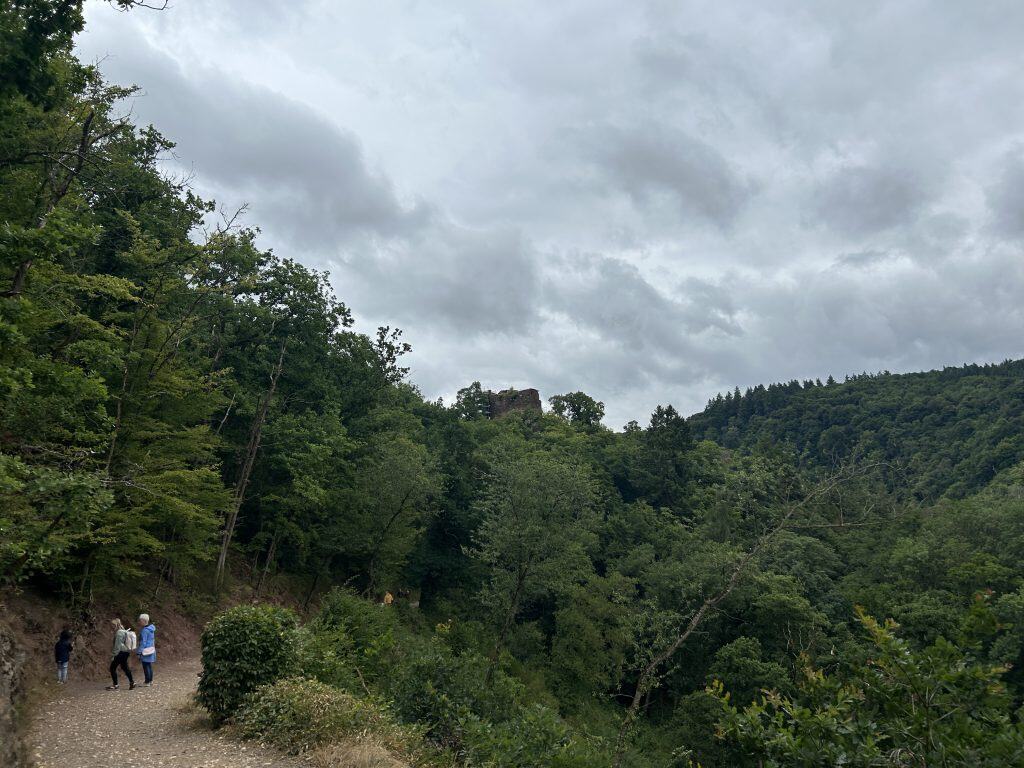
For visitors who choose not to take the internal guided tour, the exterior of Burg Eltz and its surroundings offer a significant experience. The main footpath from the car park leads directly to the stone bridge in front of the castle’s main gate. This allows for close-up views of the impressive architecture without needing an entry ticket. From this vantage point, you can appreciate the cluster of towers and the details of the facade. Another popular option is to view the castle from the various points along the “Traumpfad Eltzer Burgpanorama” hiking trail. A specific viewpoint on this trail provides the classic, elevated perspective of the castle nestled in the forest, which is one of the most famous photographic spots in Germany.
The Interior Tour
Access to the interior of the castle is by guided tour only. These tours are mandatory for entry into the residential rooms. The tours lead visitors through several of the historic rooms of the Rübenach and Rodendorf family wings. The rooms are furnished with original furniture from the past 500 years. Key rooms include the Armoury (Waffenkammer), which contains historic weapons and armor, and the Knights’ Hall (Rittersaal), which was the main meeting room for the family. The tour also includes the original 15th-century kitchen, which is preserved in its late medieval state.
The Treasury
The Treasury (Schatzkammer) is located in the cellars of the castle and can be visited separately from the guided tour, though it still requires an entry ticket. It contains one of the most important private collections of its kind in Europe. It showcases over 500 items of gold and silver work, jewelry, porcelain, and other precious artifacts from the Eltz family’s 850-year history. The collection provides a look into the wealth and artistic tastes of the nobility over several centuries. This exhibit offers a different perspective on the family’s long history.
The Inner Courtyard
The Inner Courtyard of the castle is a key architectural feature, accessible as part of the paid entry area. The small, enclosed space is surrounded by the half-timbered facades and towers of the different residential wings. All built by the three family branches. This gives the courtyard a unique and picturesque appearance. It serves as the starting point for the guided tours. The courtyard provides a direct look at how the castle grew over time as a shared residence. With different styles of architecture standing side-by-side.


How to Get to Burg Eltz
Reaching Burg Eltz requires travel to a remote valley in the hills between the Moselle and Rhine rivers. The castle is not located in a town but is situated in a forest. A car is the most common and practical way to visit, but options using public transport are available during the tourist season.
The Open Road: Driving to the Castle
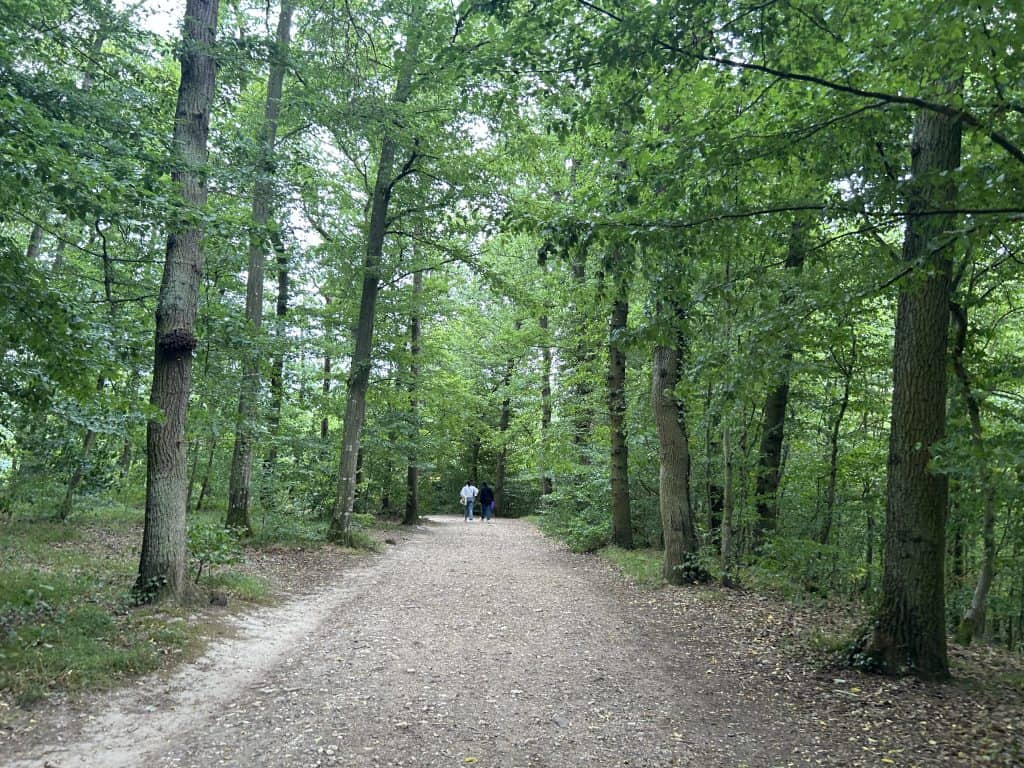
Driving is the most flexible option for visiting Burg Eltz. The castle is located near the A48 and A61 motorways. From the motorway, a network of well-maintained local roads leads to the official castle car park at Wierschem. From the car park, visitors can either walk a scenic footpath of about 1.3 kilometers down to the castle or take a shuttle bus (for a fee). The drive from Koblenz takes about 35 minutes.
Arriving by Air: Nearby Gateways
The closest airport with some international connections is Frankfurt-Hahn Airport (HHN). It is primarily served by low-cost carriers and is located about 50 kilometers away. The closest major international airports are Cologne Bonn Airport (CGN), approximately 100 kilometers away, and Frankfurt Airport (FRA), about 130 kilometers away. From any of these airports, a rental car is the most practical option for completing the journey to the castle.
Connecting by Coach
There are no direct long-distance bus services to Burg Eltz. Travel by coach would typically involve taking a service from a company like FlixBus to the main bus station in the nearby city of Koblenz. From Koblenz, travelers would then need to transfer to a regional train, followed by a local bus or taxi to reach the castle.
On Track: A Journey by Rail
The closest train stations to Burg Eltz are located in the Moselle River valley. The stations at Moselkern and Hatzenport are on the Mosel line (Moselstrecke), which connects Koblenz and Trier. From the Moselkern station, a marked footpath of about 5 kilometers leads through the forest to the castle. During the tourist season, a public bus, the Burgenbus (Line 330), also connects several of the train stations in the valley with the castle car park.
Driving Distances
The driving distance from 10 regional cities, according to Google Maps:
- Koblenz, Germany – 36 kilometers (0 h 40 min)
- Trier, Germany – 93 kilometers (1 h 10 min)
- Cologne, Germany – 102 kilometers (1 h 20 min)
- Luxembourg City, Luxembourg – 128 kilometers (1 h 50 min)
- Frankfurt, Germany – 144 kilometers (1 h 50 min)
- Brussels, Belgium – 294 kilometers (3 h 30 min)
- Strasbourg, France – 309 kilometers (3 h 30 min)
- Stuttgart, Germany – 329 kilometers (3 h 40 min)
- Amsterdam, Netherlands – 367 kilometers (4 h 10 min)
- Paris, France – 510 kilometers (5 h 30 min)
Looking to Explore more of Germany and Europe?