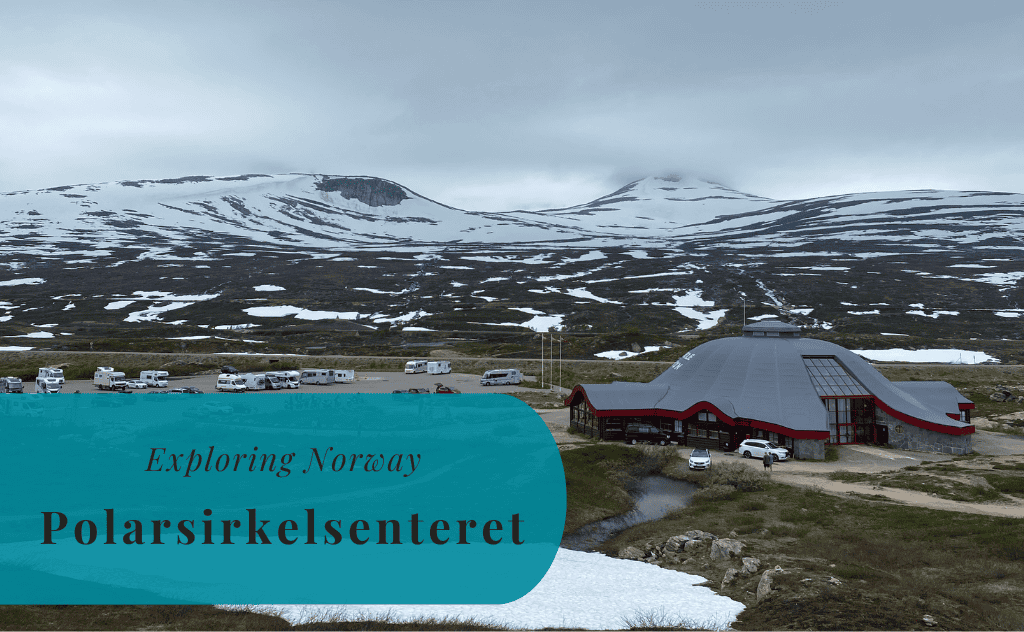
Polarsirkelsenteret, Helgeland | Exploring Norway
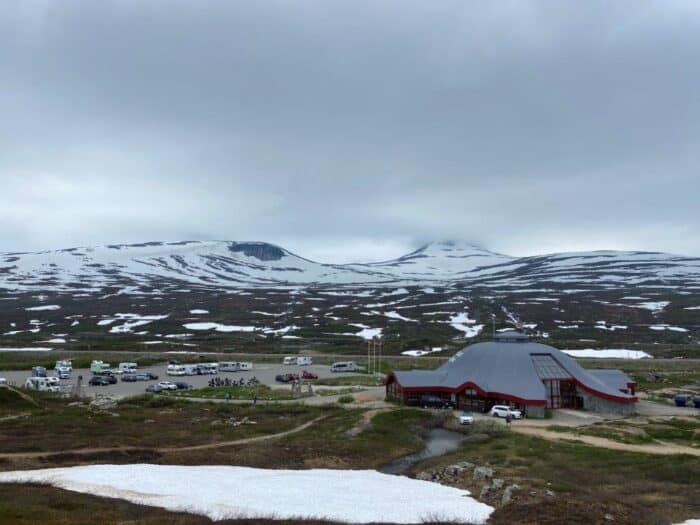
Polarsirkelsenteret, or the Arctic Circle Center, is a tourist center located on the Saltfjellet mountain plateau in Nordland county, Norway. The center is situated at an altitude of approximately 680 meters above sea level. It is positioned directly on the line of the Arctic Circle, at a latitude of 66°33′ North. The center is not a town but a purpose-built visitor complex that marks this significant geographical line for travelers on the main E6 highway, which is the primary north-south road in Norway.
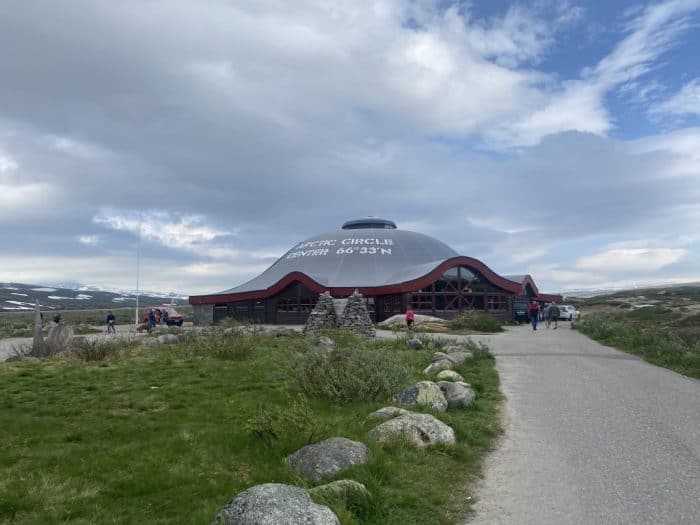
The identity of Polarsirkelsenteret is that of a symbolic gateway to the Arctic region. The center’s unique architecture is designed to blend in with the surrounding mountain landscape, and the line of the Arctic Circle itself is marked through the middle of the building. Inside, the 1,300 square meter complex houses a cafeteria, a cinema and exhibition hall, and a large souvenir shop. Today, the Arctic Circle Center is a popular and natural stopping point for the thousands of tourists who travel along the scenic Arctic Highway each year, offering a place to rest, learn, and commemorate their crossing into the Arctic.

History of Polarsirkelsenteret
The history of the Polarsirkelsenteret is directly linked to the development of the modern road network across the wild and remote Saltfjellet mountain range. For centuries, this high plateau was a challenging and often dangerous barrier for travelers. The construction of a new, modern highway across the mountains in the late 20th century made the area accessible year-round for the first time. The Arctic Circle Center was built to coincide with the opening of this new road, and it created a major new tourist attraction on this historic route.
The Old Saltfjellet Road
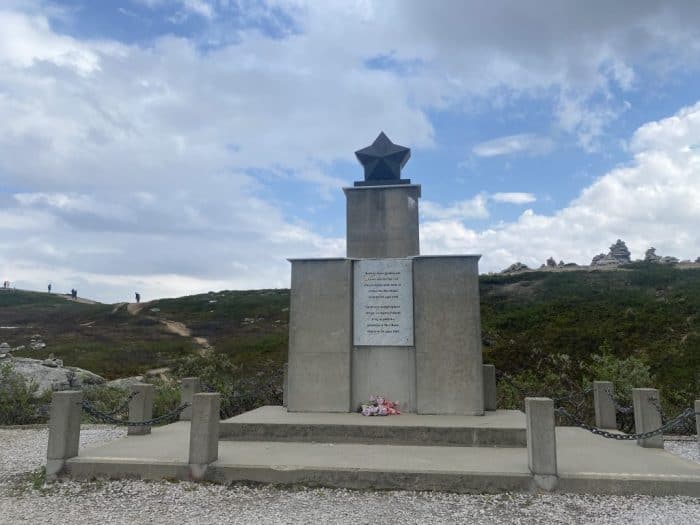
For centuries, travel across the Saltfjellet mountains was done on foot or with horses along simple tracks. The first road over the mountain was built in the late 19th century, but it was a simple gravel road that was closed for much of the year due to the harsh winter conditions. A key and tragic chapter in the history of the road came during World War II. During the German occupation of Norway, thousands of prisoners of war, primarily from Yugoslavia, were used as forced labor to build and improve the road under horrific conditions. Many of these prisoners died, and several memorials to them can be found along the modern highway today.
A New Highway
The post-war era saw a major investment in the modernization of the Norwegian road network. The old road over the Saltfjellet was no longer adequate for modern traffic. A major project was undertaken to build a new, modern, all-weather highway, the E6, across the mountain plateau. This new road was a major feat of engineering, and it was designed to be open throughout the year, except during the most extreme weather conditions. The construction of this new highway was a key part of connecting northern and southern Norway.
The Arctic Circle Center
The new E6 highway over the Saltfjellet was officially opened on July 13, 1990. To coincide with this important event, the Arctic Circle Center was also opened on the same day. The center was designed by the architect Svein Tønsager. Its unique, circular design was created to harmonize with the surrounding natural landscape of the mountain plateau. The center immediately became a popular and essential stopping point for travelers on the new road, and it has since become one of the most well-known tourist attractions in northern Norway.

Sights at Polarsirkelsenteret
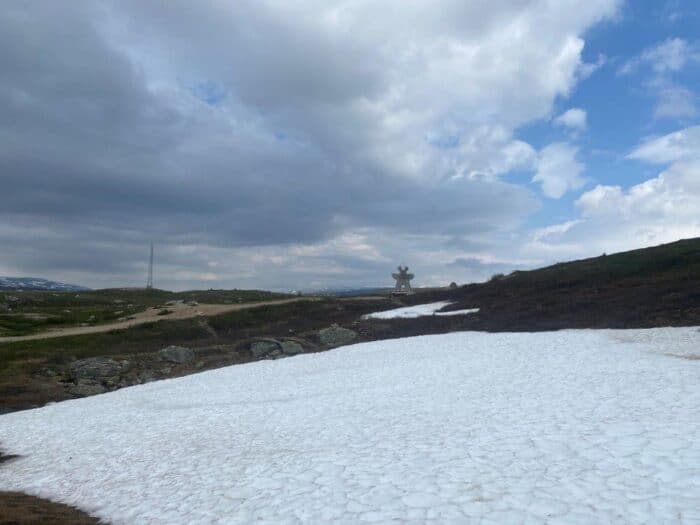
The sights at the Polarsirkelsenteret are centered around its unique geographical location and its function as a visitor center. The main attraction is the experience of physically crossing the Arctic Circle, which is clearly marked both inside and outside the building. The center itself offers several points of interest, including a small cinema and exhibition hall. The surrounding landscape of the Saltfjellet mountain plateau, which is part of a large national park, is a magnificent sight in itself.
The Arctic Circle Monument
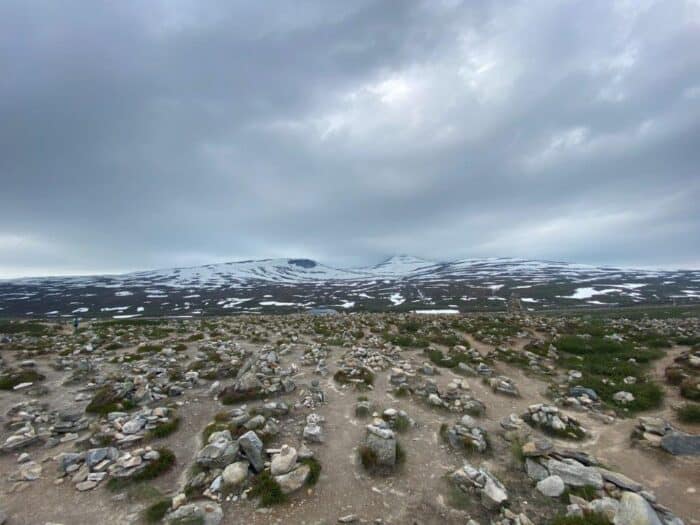
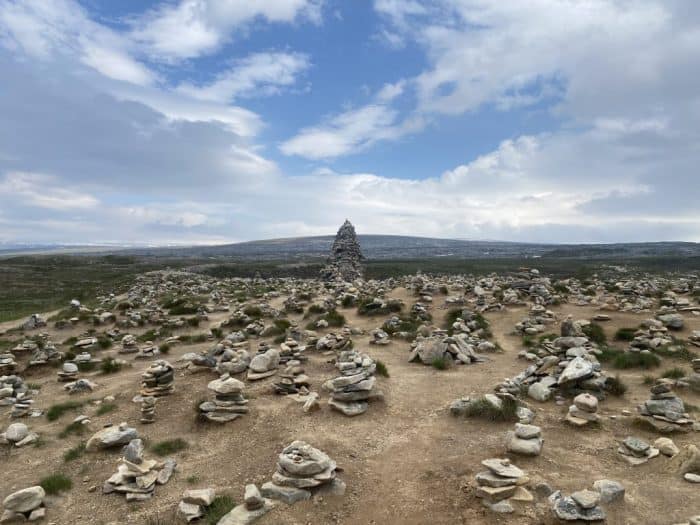
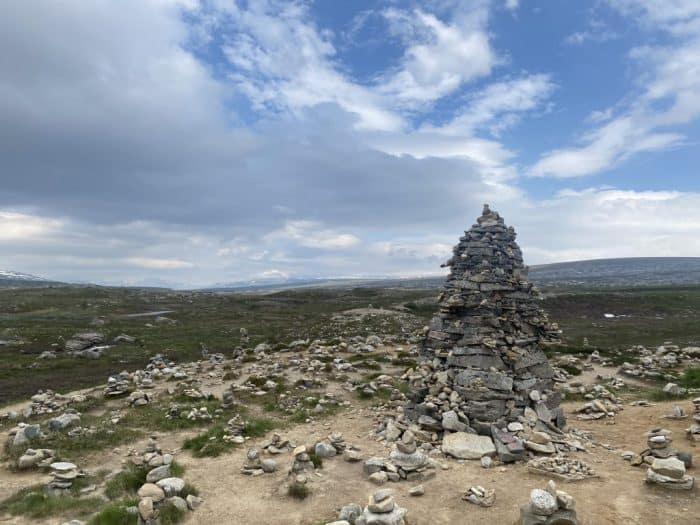
The most important sight at the center is the monument that marks the exact line of the Arctic Circle. This simple but iconic monument is a popular spot for photographs. It allows visitors to commemorate the moment they have officially entered the Arctic region. The line of the Arctic Circle also runs directly through the main building of the visitor center itself. In the area surrounding the center, there are also thousands of small stone cairns that have been built by visitors over the years to mark their passage.
The Visitor Center
The Arctic Circle Center building is a major sight in itself. Its unique, circular design is an interesting example of modern architecture that has been adapted to a natural setting. Inside the center, there is a small cinema and an exhibition hall that provides information about the Arctic Circle and the surrounding Saltfjellet mountain environment. The center also has a large and very popular souvenir shop, where visitors can buy a variety of Arctic-themed souvenirs. It is also possible to get a special Arctic Circle postmark on postcards and letters sent from the center’s own post office.
Saltfjellet-Svartisen National Park
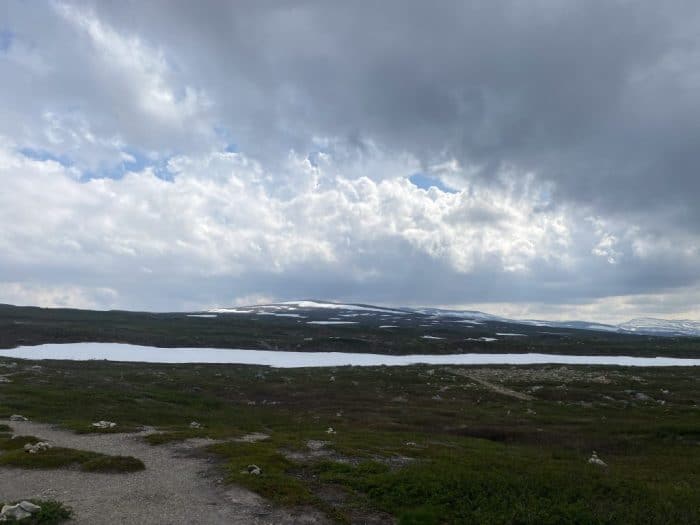
The Arctic Circle Center is located within the magnificent Saltfjellet-Svartisen National Park, which is one of the largest and most varied national parks in all of Norway. The park is a vast wilderness area that stretches from the coast in the west to the Swedish border in the east. It is home to the Svartisen glacier, which is the second-largest glacier in Norway. The landscape of the park is incredibly diverse, with high mountains, deep valleys, and large, open plateaus. The area is a paradise for hikers and nature lovers.
How to Get to Polarsirkelsenteret?
The Polarsirkelsenteret is located on the Saltfjellet mountain pass in Nordland county, Norway. The main gateways for international visitors are the airports in the nearby towns of Mo i Rana (MQN) and Bodø (BOO). From these towns, the journey to the Arctic Circle Center is a scenic drive on the main E6 highway. A car is the recommended mode of transport for reaching this remote but very accessible landmark.
Driving to the Center
Driving to the Arctic Circle Center is a spectacular journey through the high mountains of northern Norway. The center is located directly on the main E6 highway, approximately 80 kilometers north of the town of Mo i Rana and 90 kilometers south of the town of Fauske. The road over the Saltfjellet is a designated National Scenic Route, and it offers breathtaking views of the wild and beautiful mountain landscape. The road is of a high standard and is kept open year-round, except during periods of extreme weather.
Arriving by Air
The closest airport to the Arctic Circle Center is Mo i Rana Airport, Røssvoll (MQN). This is a small regional airport with connections to other cities in Norway. The larger Bodø Airport (BOO) is located further to the north, and it is a major regional hub with direct flights to Oslo and other international destinations. From either of these airports, you would need to rent a car or take a long-distance bus to reach the Arctic Circle Center.
Driving Distances
The driving distance from 20 regional cities, according to Google Maps:
- Mo i Rana, Norway – 80 kilometers (1 h 10 min)
- Fauske, Norway – 90 kilometers (1 h 20 min)
- Bodø, Norway – 150 kilometers (2 h 20 min)
- Mosjøen, Norway – 170 kilometers (2 h 20 min)
- Sandnessjøen, Norway – 180 kilometers (2 h 50 min)
- Brønnøysund, Norway – 250 kilometers (3 h 40 min)
- Narvik, Norway – 330 kilometers (4 h 40 min)
- Harstad, Norway – 380 kilometers (5 h 30 min)
- Östersund, Sweden – 480 kilometers (6 h 30 min)
- Kiruna, Sweden – 480 kilometers (6 h 40 min)
- Trondheim, Norway – 550 kilometers (7 h 40 min)
- Luleå, Sweden – 550 kilometers (7 h 10 min)
- Tromsø, Norway – 580 kilometers (8 h 20 min)
- Umeå, Sweden – 580 kilometers (7 h 50 min)
- Rovaniemi, Finland – 680 kilometers (8 h 40 min)
- Oulu, Finland – 730 kilometers (9 h 20 min)
- Alta, Norway – 750 kilometers (10 h 30 min)
- Oslo, Norway – 1050 kilometers (14 h 30 min)
- Bergen, Norway – 1100 kilometers (16 h 30 min)
- Helsinki, Finland – 1400 kilometers (18 h 30 min)
Looking to Explore more of Norway and Europe?