
Exploring Qatar
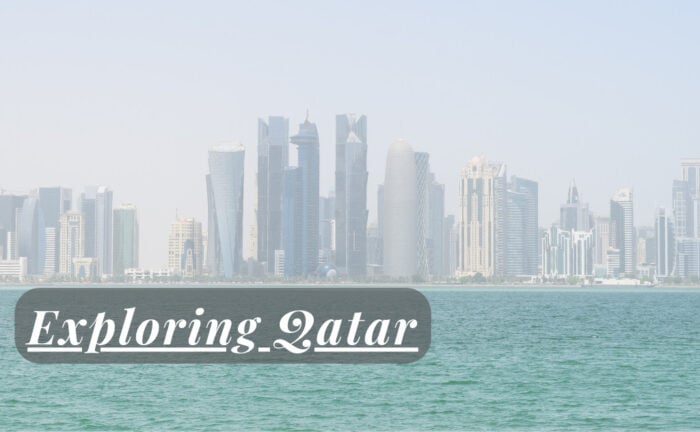
Exploring Qatar
Qatar is a sovereign state located in Western Asia. It occupies the small Qatar Peninsula, which projects into the Persian Gulf from the northeastern coast of the Arabian Peninsula. The country’s capital and largest city is Doha. Qatar is known for its high-income economy, which is driven by its vast reserves of natural gas and oil. This has funded rapid modernization and the development of large-scale architectural and infrastructure projects.
The cultural identity of Qatar is shaped by its Bedouin heritage and its adherence to Islamic traditions. This local culture exists alongside a cosmopolitan environment created by a massive expatriate population, which makes up the majority of the country’s residents. This has resulted in a society where traditional Qatari customs coexist with influences from around the world, particularly from South Asia, Southeast Asia, and other Arab nations. English is widely spoken as a lingua franca, especially in business and service industries.
For the traveler, Qatar offers a destination defined by the contrast between its futuristic capital city and the surrounding desert landscape. The country has invested heavily in developing its tourism infrastructure, with a focus on luxury hotels, world-class museums, and international sporting events. It gained significant global attention as the host of the 2022 FIFA World Cup. Key experiences include exploring the modern skyline of Doha, visiting cultural institutions like the Museum of Islamic Art, and venturing into the desert to see the “inland sea.”
Population of Qatar
The population of Qatar is approximately 2.8 million people. A unique characteristic of the country’s demographics is the composition of its population. Qatari citizens make up a small minority of the total number of residents, estimated at around 10-15%. The vast majority of the population consists of expatriate workers and their families from countries all over the world.
The largest expatriate communities come from South Asian countries, such as India, Nepal, and Bangladesh, as well as from Southeast Asian countries like the Philippines. There are also significant numbers of residents from other Arab nations, Europe, and North America. The population is almost entirely urbanized and is heavily concentrated in the capital city of Doha and its surrounding municipalities, including Al Rayyan and Al Wakrah.
Location of Qatar
Qatar is located in the Middle East, on the northeastern coast of the Arabian Peninsula. The country’s territory is a peninsula that extends north into the Persian Gulf. It shares its only land border with Saudi Arabia to the south. To the west, it has a maritime border with the island nation of Bahrain. The United Arab Emirates and Iran are also located nearby across the waters of the Persian Gulf.
This strategic location in the Persian Gulf has been historically important for trade and pearl diving. In the modern era, its position has made it a key player in the global energy market due to its proximity to major shipping lanes. The country’s geography as a peninsula gives it a long coastline relative to its land area.
Geography of Qatar
The geography of Qatar is defined by its desert landscape. The country is a low-lying peninsula, with its highest point being only about 103 meters above sea level. The terrain is generally flat and rocky, with some low hills.
The Desert Landscape
The majority of the country is a rocky and sandy desert. The surface is characterized by sabkhas, which are flat, coastal salt pans, and areas of wind-blown sand. There are no permanent rivers or lakes in the country. Water is primarily obtained through desalination plants. The desert landscape is home to flora and fauna that have adapted to the arid conditions.
The Coastline
Qatar has a long coastline that borders the Persian Gulf. The coastline is a mix of sandy beaches and rocky areas. The capital city, Doha, is located on a large, sheltered bay on the eastern coast. The coastline has been significantly developed in recent decades, with large-scale land reclamation projects creating new areas for development, such as “The Pearl-Qatar” artificial island in Doha.
The Inland Sea (Khor Al Adaid)
One of Qatar’s most significant natural features is the Khor Al Adaid, or the “Inland Sea.” It is located in the southeastern corner of the country, on the border with Saudi Arabia. This is a large tidal embayment where the sea encroaches deep into the desert. The area is characterized by large, shifting sand dunes that meet the water. It is a recognized UNESCO nature reserve and one of the few places in the world where the sea extends deep into the heart of a desert.
Entry Points to Qatar
As a major international business and transit hub, Qatar is primarily accessed by air. The country has one of the world’s most modern airports, which serves as the main entry point for almost all international visitors. Land and sea entry points are less common for international travelers.
Major International Airports
The primary and sole international gateway to the country is Hamad International Airport (HIA) in Doha. Opened in 2014, it is a major global transit hub and the base for the national carrier, Qatar Airways. The airport is known for its modern architecture and extensive facilities. It handles flights from hundreds of destinations across six continents, connecting Qatar directly with major cities in Europe, Asia, North America, Africa, and Oceania.
Land Border Crossings
Qatar shares a single land border with Saudi Arabia to the south. The main border crossing is at Abu Samra. This crossing is used for road travel between the two countries. Its accessibility for foreign travelers can be subject to the prevailing political situation in the region and visa requirements for Saudi Arabia. It is primarily used for commercial transport and by residents of the Gulf Cooperation Council (GCC) countries.
Sea Ports
The main seaport in the country is Hamad Port, located south of Doha. It is one of the largest ports in the Middle East and is the primary hub for Qatar’s cargo and maritime trade. For passenger travel, Doha has developed a new Grand Cruise Terminal. This facility is designed to serve the growing number of international cruise ships that include Qatar as a port of call on their itineraries in the Persian Gulf. There are no regular international passenger ferry services to Qatar from other countries.
Join Us in Exploring Qatar

Exploring More of Europe?
Join us in exploring more of what the world has to offer.