
Exploring Canada
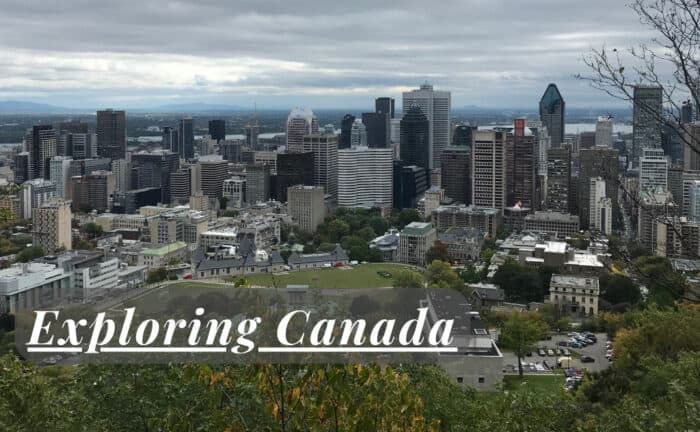
Exploring Canada
Stretching from the Atlantic to the Pacific and north to the Arctic Ocean, Canada is a country of immense geographical scale. As the world’s second-largest country by total area, its vast landscapes range from temperate rainforests and fertile prairies to the Rocky Mountains and arctic tundra. This geography has fostered a wide array of ecosystems and natural wonders. Canada is a constitutional monarchy with two official languages, English and French, reflecting its historical foundations.
The cultural tapestry of Canada is as varied as its geography. Its identity has been shaped by its Indigenous peoples, including First Nations, Inuit, and Métis, who have inhabited the land for millennia. The subsequent history of French and British colonization, followed by extensive modern immigration, has created a national identity often described as a “cultural mosaic.” This term reflects a society where different cultural groups maintain their distinct identities while contributing to the whole.
For the modern traveler, this history and geography have created a country of endless possibilities. Canada contains some of the world’s most livable and cosmopolitan cities, such as Toronto, Montreal, and Vancouver. These dense urban centers stand in sharp contrast to the vast areas of wilderness that define much of the country. A trip here can involve exploring the historical roots of its founding nations, experiencing diverse culinary traditions, or immersing oneself in its natural landscapes.
Population of Canada
The population of Canada is approximately 41 million people. This population, however, is not evenly distributed across the country’s vast land area. The vast majority of Canadians live in a relatively narrow band in the southern part of the country, within a few hundred kilometers of the U.S. border. This concentration is due to a combination of historical settlement patterns, economic opportunities, and a more temperate climate.
The most densely populated region in the country is the Quebec City–Windsor Corridor. This area in Central Canada includes the two largest metropolitan areas, Toronto and Montreal, as well as the national capital, Ottawa. Other significant population centers are found on the West Coast in the Metro Vancouver area. The Prairie provinces also contain major cities, including Calgary and Edmonton. This distribution means that while Canada has several large cities, much of its northern territory remains very sparsely populated.
Location of Canada
Canada occupies the northern part of the continent of North America. It is bordered by the United States to the south and to the northwest, where it shares a border with the state of Alaska. The country extends from the Atlantic Ocean in the east to the Pacific Ocean in the west. To the north, its territory reaches the Arctic Ocean. This vast expanse gives Canada the world’s longest coastline, bordering three different oceans.
The country also shares a maritime border with Greenland, a territory of Denmark, to the northeast. Its border with the United States is the world’s longest international land border. This strategic location has played a significant role in its economic and political history. It has made Canada a key hub for trade between Europe, Asia, and the rest of the Americas.
Geography of Canada
The geography of Canada is exceptionally diverse, featuring a wide range of climates and seven distinct physiographic regions. The country’s immense size means that a traveler can experience everything from the temperate rainforests of the West Coast to the arctic tundra of the North.
The eastern part of the country is home to the Appalachian Region, an extension of the Appalachian Mountains that creates the hilly terrain of the Atlantic provinces. West of this are the Great Lakes and St. Lawrence Lowlands, a fertile and highly populated region that is the industrial and agricultural heartland of Canada. Covering a vast portion of central and eastern Canada is the Canadian Shield, an ancient area of exposed rock, numerous lakes, and boreal forest.
In the center of the country are the Interior Plains, also known as the Prairies. This is a vast agricultural region in the provinces of Manitoba, Saskatchewan, and Alberta. To the west, the landscape rises dramatically with the Western Cordillera, a series of mountain ranges that includes the famous Rocky Mountains. The far north of Canada is composed of the Canadian Arctic, a vast, sparsely populated region of tundra and islands that extends toward the North Pole.
Entry Points to Canada
As a major destination for international travel and immigration, Canada has numerous entry points. For most international visitors, the primary points of entry are the country’s major international airports. Land border crossings from the United States are also key entry points for travelers arriving by road.
Major International Airports
Canada is served by a network of modern international airports that connect it to all corners of the globe. The busiest airport in the country is Toronto Pearson International Airport (YYZ), which is the primary hub for Central Canada and travel to the eastern United States. On the West Coast, Vancouver International Airport (YVR) serves as the main gateway to Asia and the Pacific. In the French-speaking province of Quebec, Montréal–Trudeau International Airport (YUL) is the main hub. Other major international gateways include Calgary International Airport (YYC), which serves the Prairie provinces and is a hub for travel to the Rocky Mountains.
Land Border Crossings
Canada shares the world’s longest undefended international border with the United States. There are over 100 land border crossings between the two countries, which can be crossed by car, bus, or train. Major crossings are located near large population centers. These include the crossings between Ontario and New York (near Niagara Falls) and between Ontario and Michigan (at Windsor/Detroit). Other key crossings are found between Quebec and New York/Vermont, and between British Columbia and Washington State (near Vancouver/Seattle).
Sea Ports
Canada has major ports on both the Atlantic and Pacific coasts, which are primary entry points for cruise ships. The Port of Vancouver is a major hub for Alaska-bound cruises and is the busiest port in the country. On the East Coast, the Port of Montreal and the Port of Halifax are key entry points for transatlantic cruises and shipping. While less common for independent passenger travel, arriving by cruise ship is a popular way to see Canada’s coastlines.
Join Us in Exploring Canada


Exploring More of the World?
Join us in exploring more of what the World has to offer.