Anderssjöåfallet, Härjedalen | Exploring Sweden
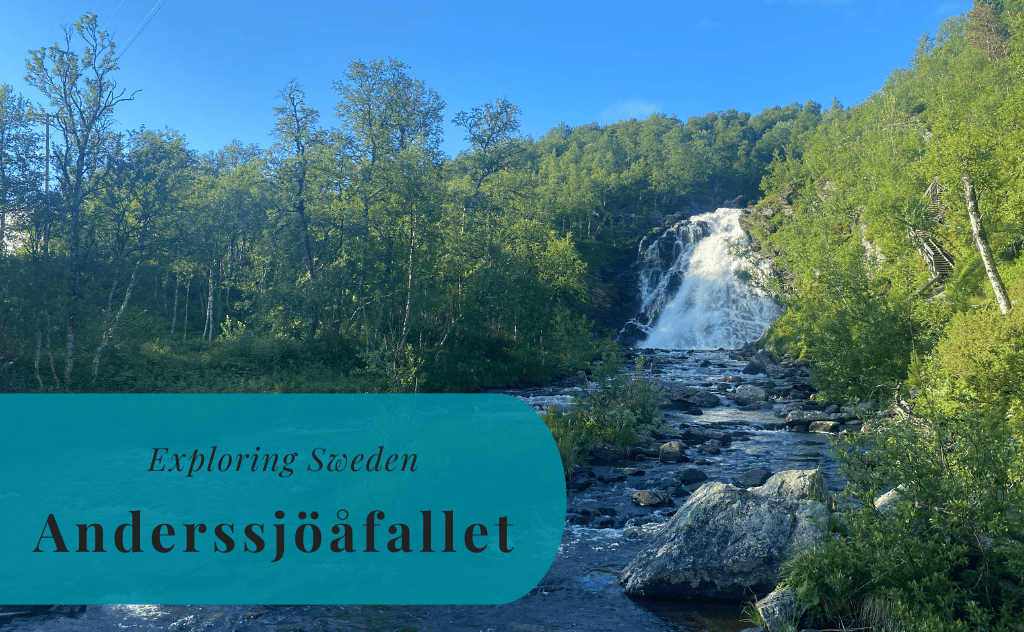
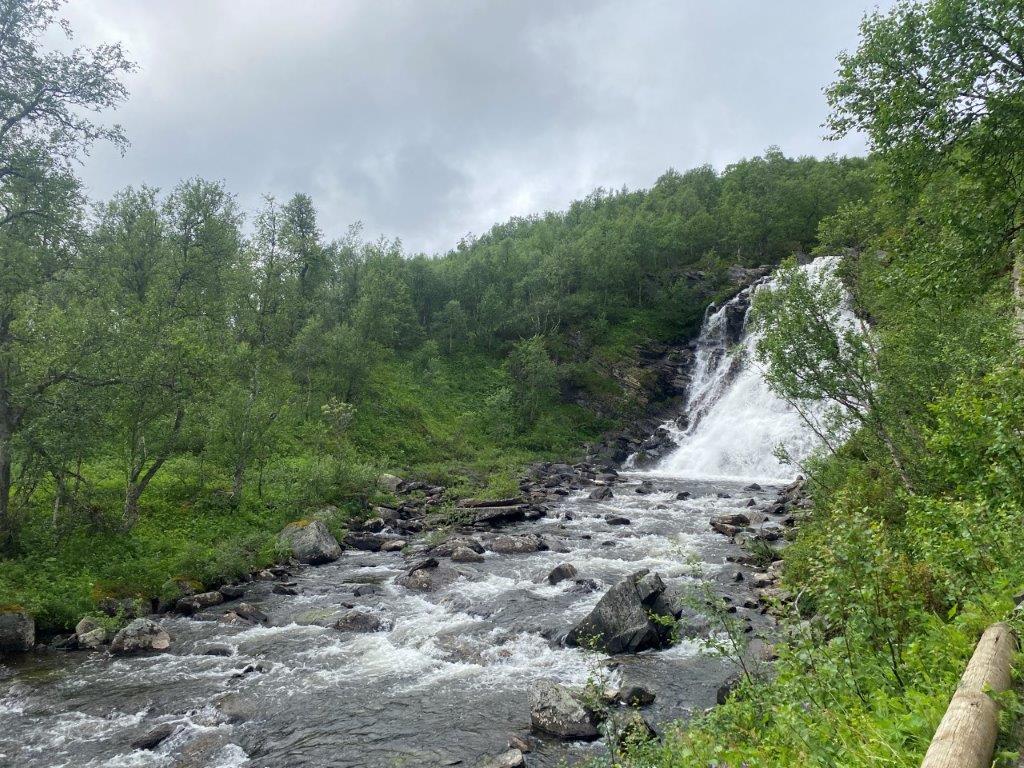
Anderssjöåfallet is a waterfall located in the Tänndalen area of Härjedalen province, Sweden. The waterfall is situated in the Funäsfjällen mountain region, a popular destination for tourism and outdoor recreation. The site is not a town but a natural attraction, and it is easily accessible from the main road. It is characterized by its series of cascades that flow down a steep mountainside, and a well-maintained wooden staircase that runs alongside the falls.
The identity of Anderssjöåfallet is that of an accessible and well-organized nature experience. The site has been developed to allow visitors to get very close to the powerful waterfall in a safe manner. A large wooden staircase, with over 300 steps, allows for a dramatic ascent right next to the flowing water. At the base of the falls, there is a parking area with information signs, picnic tables, and a wind shelter. Today, Anderssjöåfallet is a popular stopping point for travelers and a starting point for longer hikes into the surrounding mountains.




History of Anderssjöåfallet
The history of Anderssjöåfallet as a developed tourist attraction is a relatively modern story of making a natural wonder more accessible. While the waterfall itself is an ancient feature of the landscape, its development into a popular and safe site for visitors is a result of recent efforts to enhance the tourist infrastructure of the Funäsfjällen region. The key development was the construction of a large wooden staircase and, more recently, the addition of stone steps that were laid by Sherpas from Nepal.
A Natural Landmark
For centuries, Anderssjöåfallet was simply a natural waterfall in the mountainous landscape of Härjedalen. It was known to local residents and to the few hardy travelers who passed through the remote Tänndalen valley. The power of the waterfall is greatest during the spring snowmelt, when a massive volume of water thunders down the mountainside. For a long time, the steep and difficult terrain made it challenging to get close to the falls or to climb up alongside them.
The development of tourism in the Funäsfjällen region in the 20th century brought more visitors to the area. The main road, Riksväg 84, which passes directly by the waterfall, made the location much more accessible. The potential of the waterfall as a major tourist attraction was recognized, and plans were made to develop the site. This included the creation of a proper parking area and the construction of facilities to make the visitor experience more comfortable and safe.
The Modern Staircase
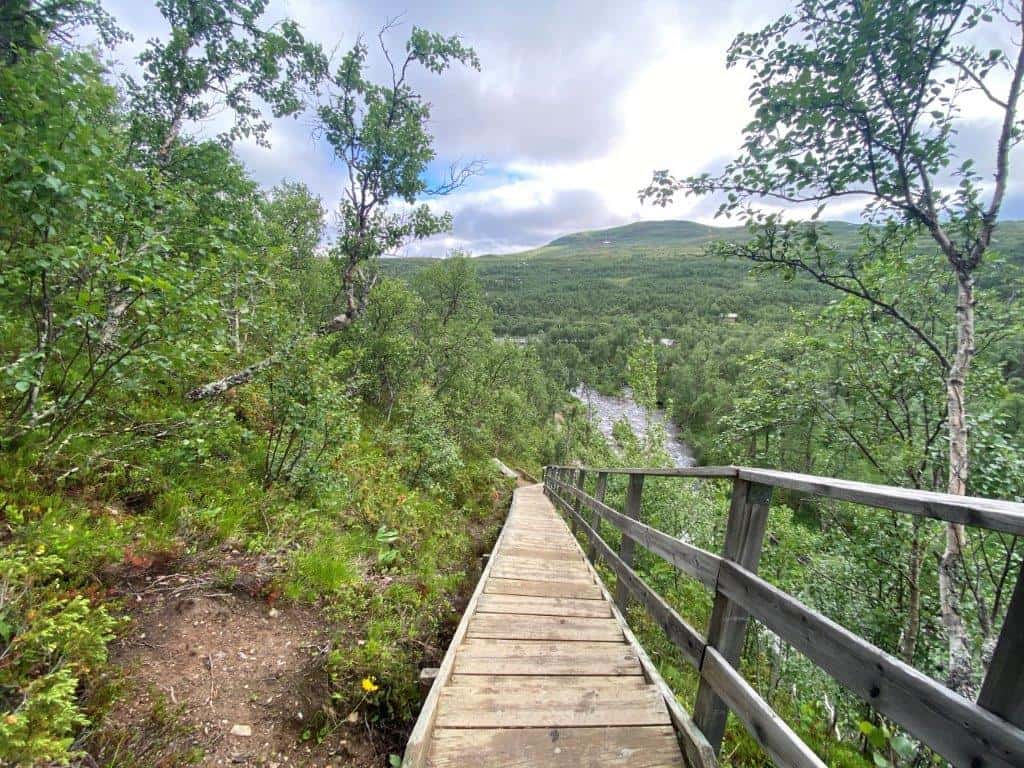
The most significant development at Anderssjöåfallet was the construction of the large wooden staircase that runs alongside the main part of the waterfall. This impressive structure, which has 303 steps, allows visitors to safely climb the steepest section of the falls. The staircase provides a very close and dramatic experience of the powerful, cascading water. In recent years, the trail system at the site has been further improved. A section of the path has been laid with beautiful stone steps, which were expertly constructed by a team of specialized trail builders, or Sherpas, from Nepal. This has further enhanced the quality of the visitor experience and the durability of the trail.



Sights in Anderssjöåfallet
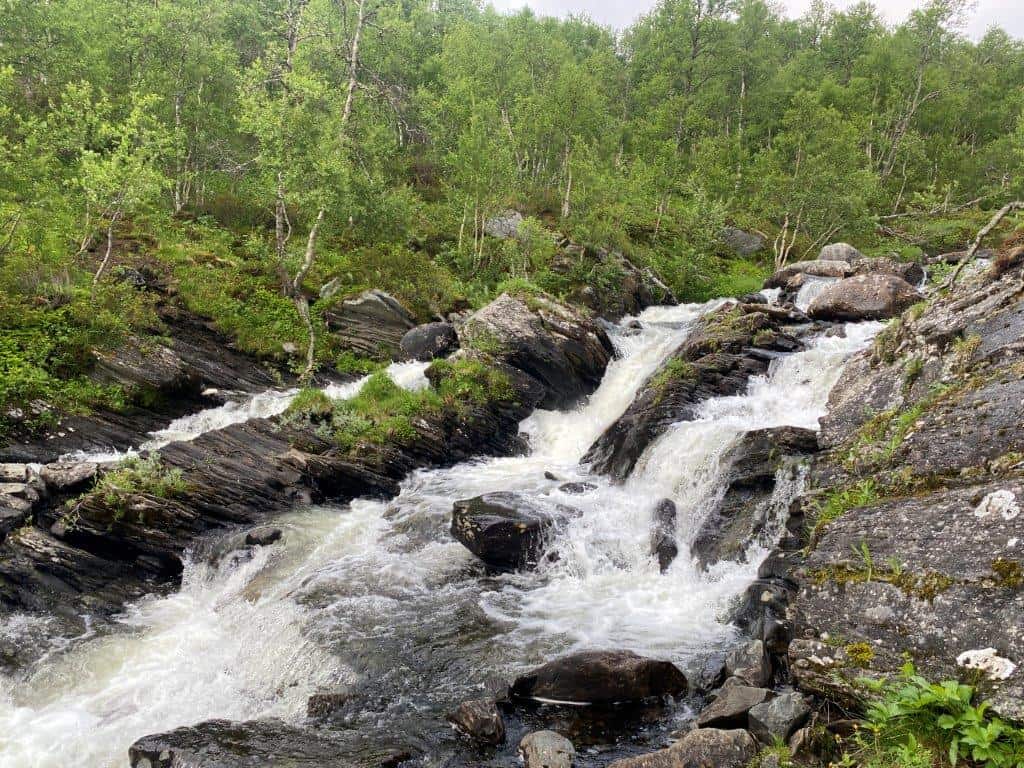
The sights at Anderssjöåfallet are centered entirely around the magnificent waterfall and the impressive man-made structures that have been built to enhance the visitor experience. The main attraction is the powerful waterfall itself, which is particularly impressive during the spring snowmelt. The 303-step wooden staircase is a major sight in itself, as are the beautiful stone stairs laid by Nepalese Sherpas. The small lagoons at the top of the falls provide a tranquil contrast to the rushing water below.
The Waterfall
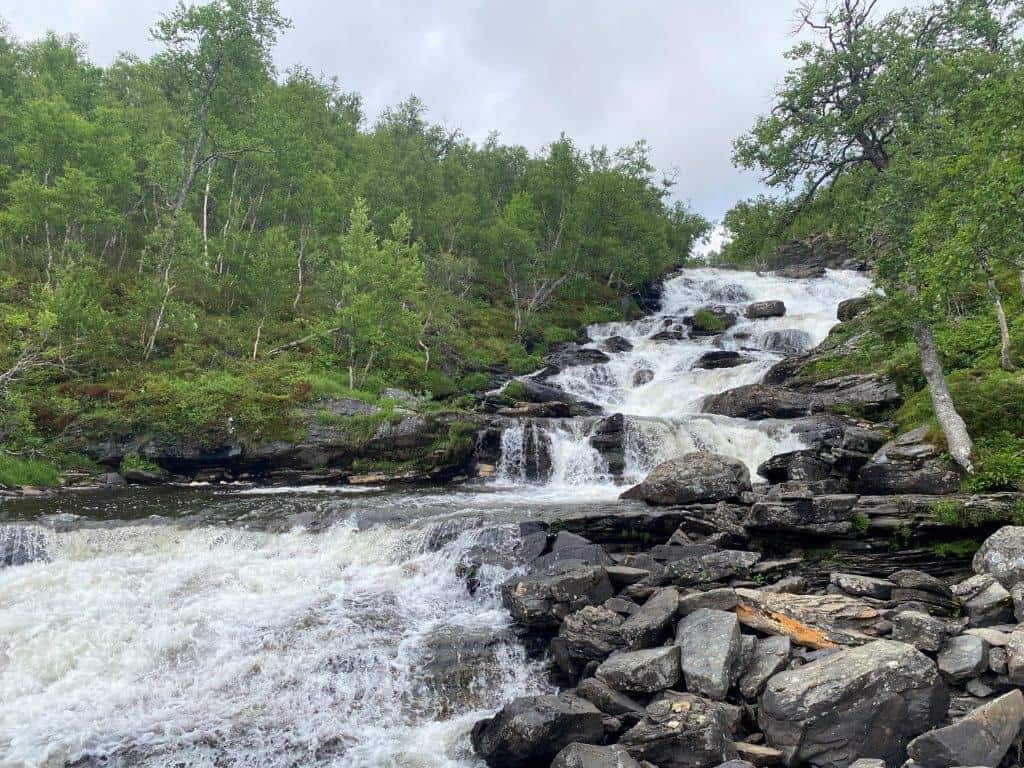
The main sight is, of course, the Anderssjöåfallet waterfall itself. The waterfall cascades down a steep and rocky mountainside in a series of powerful drops. The volume of water can vary greatly depending on the season, and it is at its most powerful and dramatic during the spring snowmelt in May and June. The sound of the thundering water and the spray from the falls create an immersive and impressive natural spectacle. The waterfall is a beautiful example of the raw natural power of the Swedish mountains.
The Wooden Staircase
A key feature of the site is the large and well-built wooden staircase that runs alongside the main section of the waterfall. With 303 steps, the staircase allows for a safe and relatively easy ascent up the steepest part of the slope. The stairs are built very close to the waterfall, which provides visitors with a very close and dramatic perspective of the rushing water. There are several small platforms along the way that provide excellent opportunities for photography and for simply stopping to admire the view.
The Sherpa Stairs
In addition to the main wooden staircase, a section of the hiking trail at Anderssjöåfallet features beautiful and expertly crafted stone stairs. These stairs were built by a team of specialized trail builders, or Sherpas, from Nepal. The use of Sherpas to build sustainable and beautiful mountain trails has become a popular practice in Norway and Sweden. The stone steps are a work of art in themselves, and they are a testament to the incredible skill and craftsmanship of their builders. They also make the trail more durable and easier to walk.

How to Get to Anderssjöåfallet
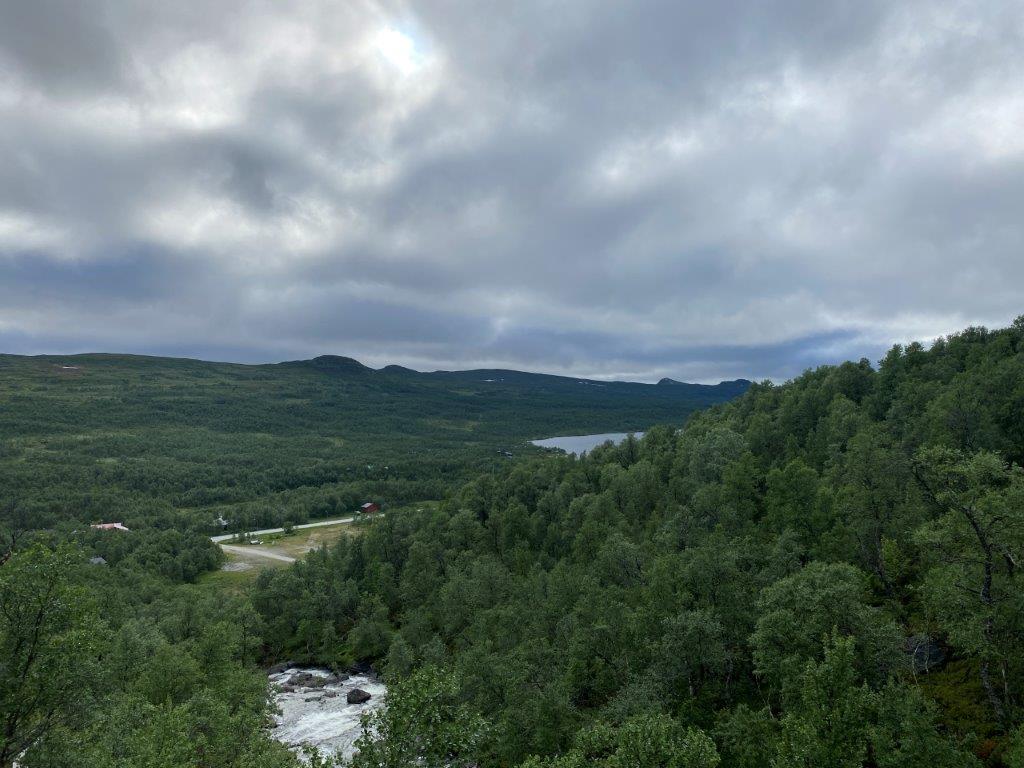
Anderssjöåfallet is located in the Tänndalen valley, in the province of Härjedalen, Sweden. The waterfall is situated in a remote and mountainous part of the country, and a car is the most common and recommended mode of transport for reaching this natural attraction. The site itself is explored on foot via a well-maintained trail and staircase system. For visitors relying on public transport, it is possible to take a bus to a nearby town and then arrange a taxi. Additionally, for hiking enthusiasts, the waterfall can be reached on foot by following the local trail systems from nearby villages and mountain resorts.
Driving to the Waterfall
Driving to Anderssjöåfallet is a scenic journey through the mountains of Härjedalen. The waterfall is located directly on the main Riksväg 84 highway, approximately 20 kilometers west of the town of Funäsdalen. The parking area for the waterfall is clearly signposted from the main road, making it a very easy and accessible stop for those traveling by car. The journey from the south of Sweden involves a long drive into the mountainous interior of the country. The road is paved and well-maintained year-round, though winter conditions can require appropriate tires and cautious driving.
Connecting by Bus
The nearest town with a regular bus service is Funäsdalen. The regional public transport company, Länstrafiken Jämtland Härjedalen, operates bus services that connect Funäsdalen with the city of Östersund and other regional centers. From the bus station in Funäsdalen, visitors would need to hire a local taxi for the final 20-kilometer journey to the waterfall, as there is no direct public bus stop at the site. This option is possible for those without a car, but it requires more advance planning and coordination with local taxi services. It is a viable option for reaching the general area before embarking on other activities.
Hiking from Nearby Towns
It is also possible to reach Anderssjöåfallet by hiking from several nearby locations in the Funäsfjällen region. A network of marked summer trails connects the waterfall with the village of Tänndalen and the mountain resort of Hamra. These trails wind through the beautiful mountain birch forests and across the open fells of the Hamrafjället nature reserve. A popular route is to start in Tänndalen and follow the trails west towards the waterfall. This provides a full-day hiking experience with the waterfall as a spectacular destination, and it allows visitors to fully immerse themselves in the local mountain landscape.
Driving Distances
The driving distance from 20 regional cities, according to Google Maps:
- Tänndalen, Sweden – 5 kilometers (0 h 10 min)
- Funäsdalen, Sweden – 20 kilometers (0 h 20 min)
- Røros, Norway – 60 kilometers (0 h 50 min)
- Sveg, Sweden – 140 kilometers (1 h 40 min)
- Trondheim, Norway – 200 kilometers (2 h 40 min)
- Östersund, Sweden – 240 kilometers (3 h 00 min)
- Mora, Sweden – 280 kilometers (3 h 30 min)
- Sundsvall, Sweden – 380 kilometers (4 h 30 min)
- Falun, Sweden – 380 kilometers (4 h 40 min)
- Oslo, Norway – 450 kilometers (5 h 30 min)
- Gävle, Sweden – 480 kilometers (5 h 30 min)
- Karlstad, Sweden – 480 kilometers (5 h 40 min)
- Örebro, Sweden – 530 kilometers (6 h 00 min)
- Västerås, Sweden – 540 kilometers (6 h 10 min)
- Uppsala, Sweden – 550 kilometers (6 h 10 min)
- Stockholm, Sweden – 610 kilometers (6 h 50 min)
- Jönköping, Sweden – 680 kilometers (7 h 50 min)
- Gothenburg, Sweden – 700 kilometers (8 h 20 min)
- Malmö, Sweden – 950 kilometers (10 h 50 min)
- Copenhagen, Denmark – 980 kilometers (11 h 10 min)
Explore More of Uppland and Sweden