Exploring Monaco
A visit to the Principality of Monaco offers a look into one of the world’s most unique and compact sovereign states. Located on the French Riviera, this city-state is the second-smallest independent nation in the world, after Vatican City. It is a constitutional monarchy, famously ruled by the House of Grimaldi for over 700 years. The principality is a major center for finance and tourism, and it is known for its high-profile international events, most notably the Formula 1 Monaco Grand Prix.
The character of Monaco is defined by a blend of its long history, its scenic Mediterranean location, and its modern identity as a center of luxury. The old town of Monaco-Ville sits on a large rocky headland, preserving its historic character. This stands in contrast to the famous district of Monte Carlo, with its grand casino and luxury hotels. This combination of a historic fortress-state and a modern hub for wealth and entertainment gives the principality its specific character.
Population of Monaco
The population of Monaco is approximately 39,000 residents. A unique characteristic of the country’s demographics is the composition of its population. Native Monegasque citizens make up a minority of the total number of residents, estimated at around 20-25%. The vast majority of the population consists of foreign residents from over 140 different nationalities. The largest expatriate communities are from France and Italy, which together make up about half of the total population. The official language is French, though Italian, English, and the traditional Monégasque language are also spoken.
Location of Monaco
Monaco holds a prime position on the French Riviera on the Mediterranean coast. It is located in Western Europe. The principality is bordered by France on its northern, western, and eastern sides. Its southern side is bordered by the Mediterranean Sea. Monaco is effectively an enclave within France. It is located approximately 15 kilometers east of the French city of Nice and just a few kilometers from the Italian border. This strategic location has been a key factor in its history and its development as a trading and financial hub.
Geography of Monaco
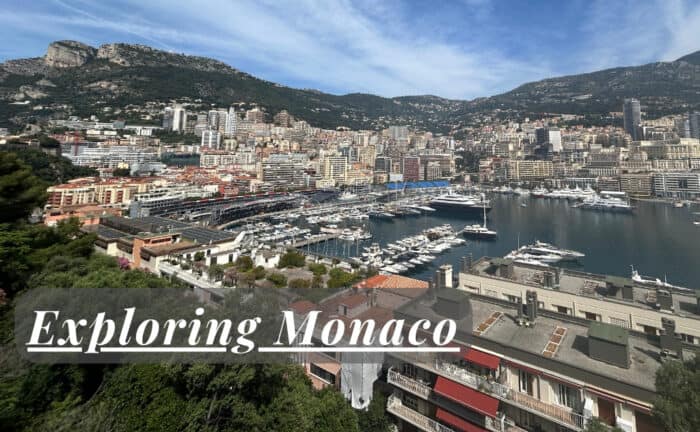
The geography of Monaco is entirely urban and coastal, with a total area of just over 2 square kilometers. The country is built on the steep slopes of the foothills of the Alpes-Maritimes mountains, which descend to the sea. This has resulted in a very dense, vertically built urban landscape. The main natural geographical feature is the Rock of Monaco (Le Rocher), a large rocky headland that juts out into the sea. This is the site of the historic old town, Monaco-Ville. Due to its small size, the country has undertaken significant land reclamation projects to expand its territory, most notably the entire district of Fontvieille. The country also has two major harbors: Port Hercules and the port of Fontvieille.
Entry Points to Monaco
Monaco’s integration with the transport network of its neighbor, France, makes it highly accessible. While it does not have its own major international airport, connections by air, land, and sea are efficient and frequent.
- By Air: The primary air gateway to Monaco is the Nice Côte d’Azur Airport (NCE) in France. The airport is located approximately 30 kilometers away. It is one of France’s busiest airports with extensive international connections. From the airport, regular express bus services and regional trains provide direct connections to the principality. There is also a helicopter transfer service that connects the airport with the Monaco Heliport in just a few minutes.
- By Land: Monaco is well-connected to the French road and rail networks. The A8 motorway, which runs along the French Riviera, passes just above the principality, with several exits providing access. The town is also served by the Gare de Monaco-Monte-Carlo, an underground railway station. This station is a major stop on the regional TER train line that connects all the towns on the French Riviera between Cannes and the Italian border.
- By Sea: Monaco’s main harbor, Port Hercules, is a major entry point for cruise ships and private yachts. The deep-water port can accommodate large vessels. Many Mediterranean cruises include Monaco as a key port of call. While there are no regular international passenger ferry services to Monaco, the port is a hub for the international yachting community.
Join Us in Exploring Monaco

Exploring More of Europe?
Join us in exploring more of what Europe has to offer. It is not only Monaco that we have been exploring.